Two opposition alliances in a decade have collapsed for the same reason: leaders who agreed on what they were against, but not on who among them mattered less. A third attempt is now underway. Liberia cannot afford a third failure.
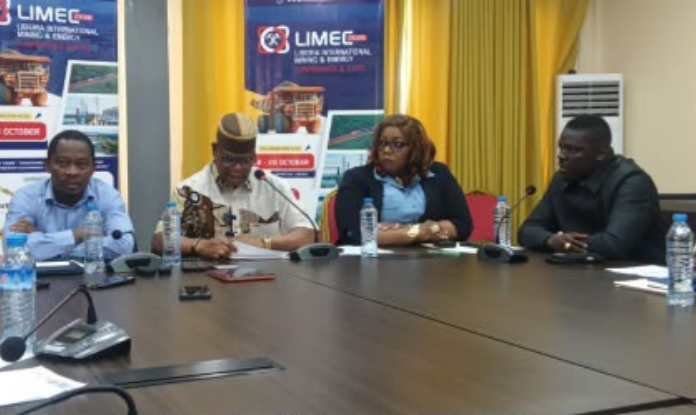
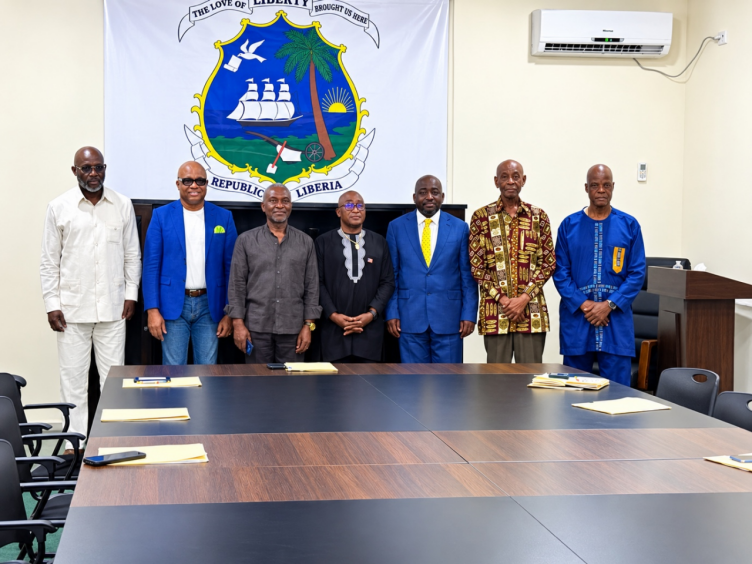
WE WANT TO BELIEVE IN SUNDAY’S ROUNDTABLE. Liberia’s opposition parties, gathered under George Weah’s roof at the Jamaica Resort, agreed to build a steering committee and, eventually, a framework for working together ahead of 2029. On paper, it is a modest, careful step. It should be judged as one. But this newspaper has watched this movie before and so has every Liberian old enough to remember 2016 and 2019, so we are going to say plainly what optimism alone will not fix: this effort will fail exactly like the last two did, unless the people in that room are honest about why the last two failed.
THEY DID NOT FAIL BECAUSE LIBERIANS stopped wanting an alternative to the party in power. They failed because the leaders building the alternative could not stop competing long enough to build it. The 2016 Ganta accord produced statements and handshakes and nothing that survived contact with an actual election. The 2019 Collaborating Political Parties did better — it won Senate seats; it built real infrastructure — right up until a dispute over its own governing document turned ally against ally. Within six months, three of its four founding parties had walked out. What remained managed less than two percent of the presidential vote in 2023 and formally dissolved in 2024. Both collapses trace back to the same root: coalition-building in Liberia keeps getting treated as a contest over whose turn it is to lead, rather than a project bigger than any one leader’s ambition.
WHAT WOULD ACTUALLY BE DIFFERENT
A STEERING COMMITTEE IS NOT a guarantee of anything. It is a tool, and it will do exactly as much good as the people using it are willing to let it do. If this attempt is going to end differently than the last two, three things need to happen that did not happen before.
FIRST, THE FRAMEWORK DOCUMENT the committee is now drafting needs to settle, in writing and in advance, how internal disputes get resolved — before there is a dispute to resolve. The CPP did not die because its members disagreed. Alliances always disagree. It died because when the disagreement came, over the framework document itself, there was no trusted process to settle it, so the fastest way out was to walk. A framework agreed to under pressure, after a fight has already started, is not a framework. It is a ceasefire, and ceasefires break.
SECOND, THE LEADERSHIP QUESTION must be answered honestly at some point, and burying it indefinitely is not the same as solving it. Organizers are right to avoid rushing into a 2029 ticket the way CPP did. But if this coalition survives long enough to matter, someone will eventually have to stand at the top of it, and everyone else will have to accept not being that person. That is the moment that broke the last alliance. Pretending the moment will not come again is not strategy. It is postponement.
Every one of these men has led a party, and most have wanted to lead a country. That is not disqualifying. But it is exactly the instinct that has killed this project twice, and nothing about human nature suggests it will behave differently a third time without real safeguards.
THIRD, AND HARDEST: every leader at that roundtable needs to ask honestly whether they are in the room to hold a government accountable, or to position themselves for 2029. Both motives can coexist in the same person. But a coalition built mostly on the second motive, dressed in the language of the first, will not survive its own founders’ ambitions any better than the CPP did. Liberians can tell the difference, eventually, even when it takes a while.
A SMALLER PATTERN INSIDE A LARGER ONE
IT IS WORTH NAMING what this really is. Liberia is Africa’s oldest republic, and for most of its nearly two centuries it has cycled through the same failure in different costumes: leaders who treat public office and political movements alike as instruments of personal advancement rather than public trust, and a governing class that reorganizes itself every few years without ever quite reforming itself. Opposition alliances collapsing over who leads them is not a separate problem from the corruption dockets sitting untried in Margibi, or from a $317 million cocaine seizure implicating the country’s own security officials, or from a government pledging “no sacred cows” while critics count the cows it has left standing. They are the same disease. It is the habit of putting the individual before the institution, term after term, government after government, opposition and incumbent alike, and it is the reason a country with Liberia’s history, resources and resilience keeps having to rebuild the same trust from the same low starting point.
NONE OF THAT is an argument against this week’s effort. It is the argument for taking it seriously enough to get right. Liberians did not gather in Ganta in 2016, or sign the CPP charter in 2019, because they lacked appetite for a credible alternative. They gathered because they wanted one, twice, and watched it dissolve into the same rivalries it was built to overcome. A third attempt that repeats that pattern will not just cost the men in that room a coalition. It will cost the country another cycle of cynicism about whether unity, accountability and reform are things Liberia’s political class is even capable of delivering to itself, let alone to the people it asks to vote for it.
THE STEERING COMMITTEE reconvenes within two weeks. What it produces will say more about whether this country’s opposition has learned anything than any speech delivered at the Jamaica Resort. We hope, genuinely, that it has. Liberia does not need another alliance built to serve the ambitions of the people inside it. It needs one built to outlast them — because the country, not any one of its would-be leaders, is the only party in this story that cannot afford to lose again.
Support Independent Journalism
Your support helps FrontPage Africa continue delivering independent, credible, and impactful journalism. Every contribution strengthens our ability to investigate, inform, and hold power accountable while keeping quality journalism accessible to our readers.
Support our journalism or subscribe to receive the latest FrontPage Africa stories and updates.