MONROVIA — The Liberia Bank for Development and Investment on Saturday commemorated its 60th anniversary, using the milestone celebration as an opportunity to reflect on the challenges facing Liberia’s banking sector and to reaffirm the government’s commitment to rebuilding confidence between the state and financial institutions.
By: Julius Konton
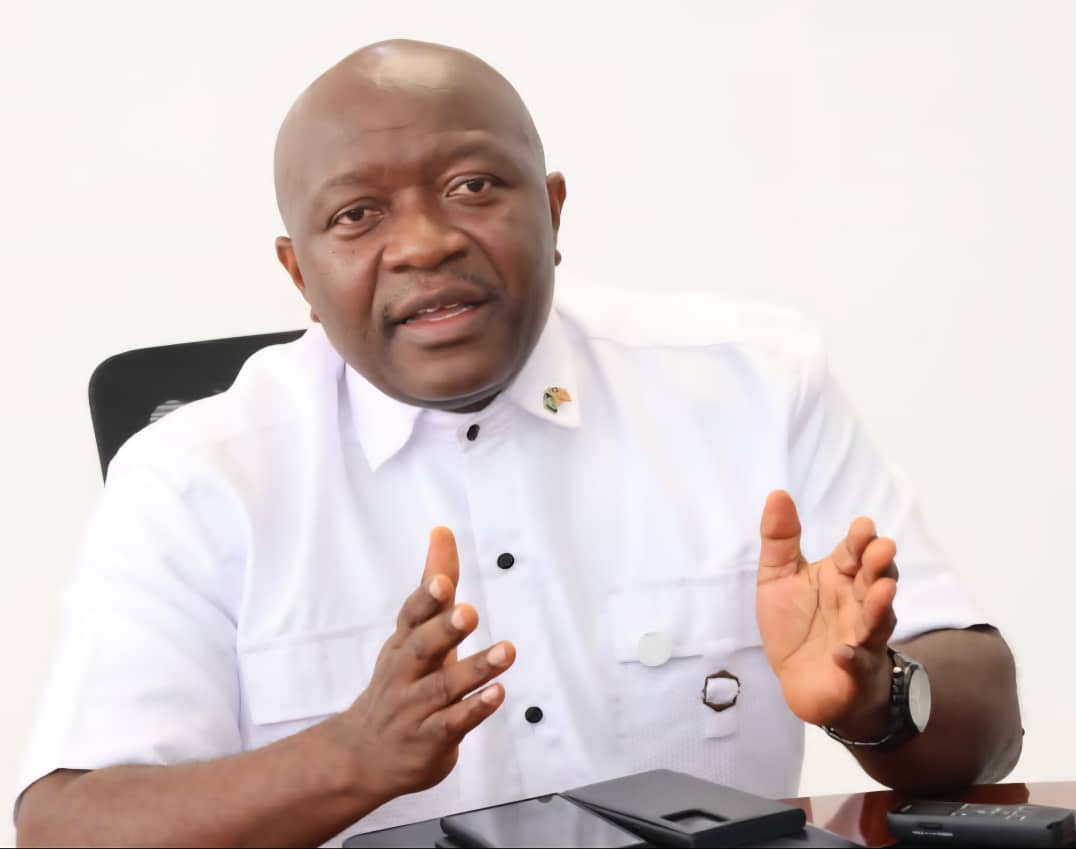
Speaking at the ceremony, Finance and Development Planning Minister Augustine Kpehe Ngafuan congratulated LBDI on six decades of operation but acknowledged that Liberia’s banking sector has yet to reach its full potential. He said that while progress has been made, significant work remains to strengthen financial intermediation and support economic growth.
Ngafuan described LBDI as a unique institution within Liberia’s financial system because of its strong government ownership and its role as a commercial bank. He said that this relationship with government has at times been beneficial but has also placed pressure on the bank, particularly during periods of fiscal stress. According to him, some of the difficulties experienced by LBDI and
other commercial banks were not the result of poor internal management but were linked to broader government financial challenges.
The finance minister openly admitted that past government defaults on obligations to commercial banks weakened trust in the financial system. He said government must accept responsibility for those failures and commit to being a positive force rather than a burden on financial institutions. He stressed that humility and accountability are necessary if confidence is to be restored and sustained.
Ngafuan credited President Joseph Boakai with launching a financial sector resuscitation plan that has begun to improve key performance indicators within the banking system. He said conditions at LBDI have improved significantly compared to the period before the current administration took office, noting that the bank’s aggregates and financial indicators are showing positive movement.
While acknowledging that LBDI still faces challenges, he praised its management and staff for stabilizing operations in an increasingly competitive banking environment.
Liberia’s banking sector currently consists of nine licensed commercial banks operating in an economy estimated at about 4.5 billion United States dollars. Despite this, financial intermediation remains below regional averages, limiting access to credit for businesses and households. Ngafuan said strengthening banks is essential to unlocking private sector growth and expanding economic opportunities.
A major focus of the minister’s address was the government’s plan to repay outstanding debts owed to commercial banks. He disclosed that more than 90 million United States dollars has been allocated in the proposed 2026 national budget for debt servicing to banks. He described the move as a deliberate effort to reverse years of strained relations and to ensure that government is no longer viewed as a chronic defaulter.
Ngafuan said the government is determined to regain the confidence of financial institutions so they can fully perform their role of financing and empowering the private sector. He emphasized that rebuilding trust between banks and government is central to economic recovery and long term stability.
The minister also highlighted improved coordination between the Ministry of Finance and the Central Bank of Liberia, describing the relationship as one of the strongest in recent years. He said effective collaboration between fiscal and monetary authorities has contributed to improved liquidity management, better inflation control and a more stable macroeconomic environment. According to him, this cooperation is also laying the foundation for the expansion of digital financial services.
Looking ahead, Ngafuan announced plans to launch mobile money interoperability between Liberia’s two major mobile network operators. He said the reform will significantly enhance financial inclusion and improve transaction efficiency across the economy. He noted that mobile money transactions already account for more than 40 percent of domestic retail payments and are expected to increase further once interoperability becomes fully operational.
The finance minister urged banks to prepare for intensifying competition within the West African region by embracing innovation, digitalization and product diversification. He warned that institutions that fail to adapt risk falling behind as the financial landscape evolves. He also called for stronger partnerships between government and the banking sector as Liberia works to overcome growth constraints.
Support Independent Journalism
Your support helps FrontPage Africa continue delivering independent, credible, and impactful journalism. Every contribution strengthens our ability to investigate, inform, and hold power accountable while keeping quality journalism accessible to our readers.
Support our journalism or subscribe to receive the latest FrontPage Africa stories and updates.