MONROVIA – For most Liberians, the diaspora has a familiar face: the money transfer queue on Randall Street, the phone call before school fees are due, the barrel shipped home before Christmas.
By Rodney D Sieh, [email protected]
A new report suggests that picture captures only part of what Liberians abroad have to offer.
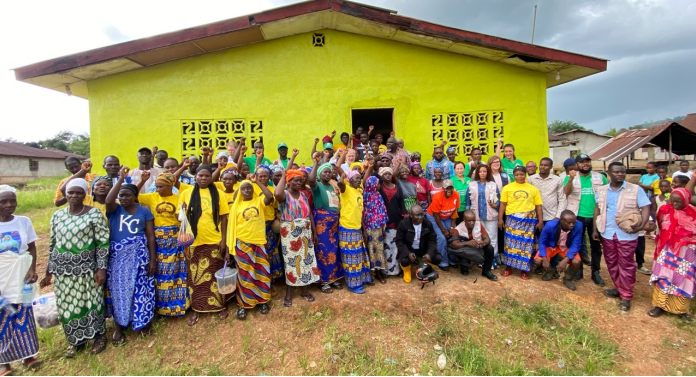
In hospitals, classrooms and social service agencies across Minnesota, Pennsylvania, New Jersey, Maryland and Texas, tens of thousands of Liberian Americans go to work each day in the fields Liberia struggles hardest to staff. According to the report, nearly 20,000 of them work in education, health care and social assistance alone.
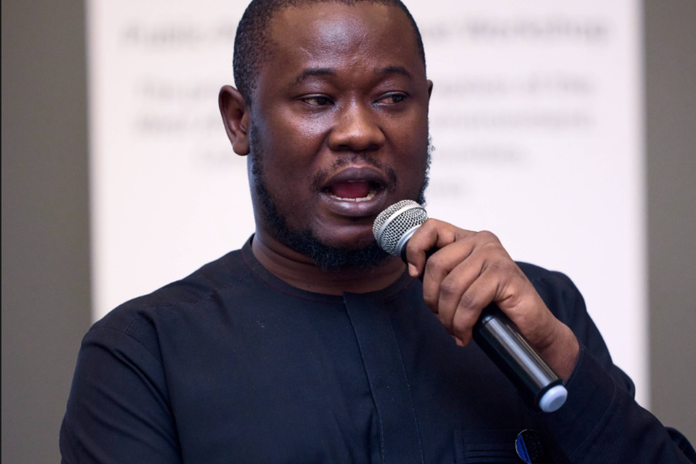
“The report moves this conversation from assumptions to evidence,” said Axel Addy, the former Commerce and Industry Minister whose firm, Ecocap Investment Group, commissioned the study.
Counting the Community
The report, Liberian Americans: An Economic Profile, was published this month by Liberia Diaspora Exchange (LDx). It arrives as the government hosts the second edition of the Liberia Diaspora Annual Conference.
Data and analysis come from Professor Bruce P. Corrie of Concordia University-St. Paul in Minnesota, home to the largest Liberian community in the United States. The study draws on U.S. Census Bureau survey estimates for 2017 to 2021.
Its central estimate is that 86,657 Liberian Americans live in 28,881 households across the United States. Together those households earn about US$2.2 billion a year, and the median household earns US$61,453.
Liberians have long talked about the diaspora in rough terms: “plenty people in America,” “the ones sending money.” The report replaces those impressions with figures, each checked against published Census tables and each carrying a margin of error.
Degrees, Not Just Dollars
The most striking numbers are about education.
Among Liberian Americans aged 25 and older, 91 percent have finished high school. About 34 percent, or roughly 17,600 people, hold a bachelor’s degree or higher. Some 6,200 hold a master’s, professional, or doctorate.
Their work follows that training. Of 45,372 employed Liberian Americans, 43 percent work in education, health care and social assistance. Among women alone, more than 12,300 work in health care and social assistance.
The authors note that this workforce matches the Human Capital Development pillar of the government’s ARREST Agenda for Inclusive Development, which covers education, health and skills training.
For a country where university departments run short of qualified lecturers and hospitals short of specialists, the implication is plain. Much of the expertise Liberia hopes to build is already Liberian. It simply lives elsewhere.
A Settled People
The profile also shows a community that has put down roots.
About 65 percent of Liberian Americans were born abroad, and 58 percent of those have become U.S. citizens. Another 35 percent were born in the United States, a generation raised on stories of home rather than memories of it.
One in three households owns its home. Corrie estimates their residential property is worth about US$2.3 billion, though the report stresses this is a derived estimate, not a Census total.
Prosperity is uneven. About 27 percent of households earn under US$35,000 a year, while 40 percent earn US$75,000 or more. Minnesota, the largest community with 13,545 people, has the lowest per capita income among the leading states at US$20,244. Maryland’s smaller community of 4,936 has the highest at US$39,136.
That spread matters for how Liberia approaches its diaspora. The report is careful to say that many households have the capacity to save or invest, and many do not. Not every Liberian American is a potential investor. Far more may be potential teachers.
Beyond the Money Transfer
Money still matters enormously. World Bank figures cited in the report show personal remittances to Liberia from all countries rose from about US$346 million in 2019 to about US$1.02 billion in 2024, equal to 21.3 percent of GDP.
But remittances largely flow household to household. They pay fees and rent, and they cushion hard times. They rarely build institutions.
The report argues that skills can do what cash alone cannot, if there is a system to carry them.
That system does not yet exist in any organized form. Diaspora doctors and professors visit home often, and some give a lecture or spend a day at a clinic. Those efforts are mostly informal, arranged through personal contacts, and gone when the visitor flies back.
Building the Bridge
LDx proposes to change that through a Diaspora Knowledge Transfer Programme:
• Ministries, universities, hospitals and TVET institutions would request lectures, training or mentoring.
• LDx would vet visiting diaspora professionals and match them to those requests.
• The host institution would approve each session and its honorarium.
• Sessions would be recorded with the speaker’s consent and stored online, so a single lecture could keep teaching long after the visitor leaves.
A first test is already under way on paper. The University of Liberia and LDx signed a memorandum of understanding this year for a 12-month pilot that includes diaspora guest lectures and mentorship.
LDx was established by Ecocap with support from the USAID-funded Liberia Economic Policy Dialogue Activity, implemented by Nathan Associates. Addy said the initiative “seeks to build a structured bridge for two-way social and business engagement, connecting Liberia with the talent, time and resources of its diaspora.”
He said he believes in “the power of Liberia’s Diaspora Engagement Policy to build a structured and productive relationship between Liberia and its citizens abroad.” He also commended the Ministry of Foreign Affairs and the Ministry of State for advancing the policy, and congratulated the government on the diaspora conference.
Old Walls Still Standing
Goodwill alone will not be enough. The report revisits barriers the government itself named in its 2016 Diaspora Engagement Policy, and many will sound familiar to anyone who has tried to come home and do business:
• Mistrust between Liberians at home and abroad
• Disputes over land and inheritance
• Investment rules with capital thresholds too high for most diaspora savers
• Embassies unable to give clear answers on residency, entry or business registration
• Lingering uncertainty over what rights the diaspora actually holds
The report recommends publishing clear guidance through foreign missions, focusing outreach on the five largest state communities, and tracking results with simple indicators: sessions delivered, trainees reached, investments made.
The authors also acknowledge the limits of their own data. It covers only the United States and only the period 2017 to 2021, and it cannot measure who wants to invest, return or teach.
From Assumptions to Evidence
What the data can do is end the guessing.
For decades, Liberia has spoken of its diaspora as a resource without being able to say precisely what that resource is. Now, for its largest diaspora community at least, the country has a count, an income, an education profile and a map.
The next queue on Randall Street will still be there. The question the report leaves with policymakers is whether, alongside it, Liberia can build a second channel: one that brings home not only what its people abroad earn, but what they know.
Addy urged Liberians at home and abroad to read the full report on the LDx Community Exchange platform at https://liberian-diaspora-exchange.mn.co/.
Support Independent Journalism
Your support helps FrontPage Africa continue delivering independent, credible, and impactful journalism. Every contribution strengthens our ability to investigate, inform, and hold power accountable while keeping quality journalism accessible to our readers.
Support our journalism or subscribe to receive the latest FrontPage Africa stories and updates.