As terrestrial rain continues to fall in Monrovia and most parts of Liberia, many Liberians are staggered about the unexplained unswerving rainfall in the dry season. Historically, Liberia have experienced a two seasonal pattern; rainy and dry (mid-April to mid-October). Though too early to call a change, but recent local and global data have shown a gradual climatic dysregulation.
By Engr. Patrick Trokon Nah, contributing writer
In fact, up to today heavy rains have swamped Liberia and much of West Africa since late 2023, extending far beyond the normal rainy‐season window. Regional and global hydrometeorological data show that 2024 was the warmest year recorded since 1850 and a National Oceanic and Atmospheric Administration (NOAA) climate report found the “wettest November global precipitation estimates on record, with an intense band of rainfall across the planetary Intertropical Convergence Zone (ITCZ). In practice, the ITCZ – the tropical rain belt – remained unusually active and far south, funneling moisture over the Guinea‐Coastal countries, including Liberia, Sierra Leone, Guinea, etc. al. Theoretically, the hydrological cycle explains that in a hotter world the air holds more water vapor, i.e., the hotter biosphere, there’s a higher rate of evaporation of surface water (rivers, oceans). This evaporation produces the catalyst and condition for more rain formation. As Wassila Thiaw, a NOAA scientist explained to Reuters, “global warming has increased the frequency and intensity of rainfall” across Africa, while natural cycles are also at play – West Africa is “going through a decades‐long natural cycle of wetter monsoons” following the droughts of the late 20th century. Together, these trends helped fuel the record rainfall.
Sea-surface warming of the Atlantic also played a key role. Research by NOAA shows that tropical Atlantic temperatures have been at record highs, especially in the “Main Development Region” for storms. With trade winds unusually weak, this Atlantic warmth “enhanced the West African monsoon,” strengthening the humid Atlantic airflow into the interior. In other words, the Gulf of Guinea and Atlantic Ocean fed extra moisture into the monsoon. The World Meteorological Organization (WMO) similarly reported that 2024 saw record high of about 1.5 ֯C in Atlantic surface temperatures. More warming of the oceans means more evaporation – supercharging the seasonal rains to extend beyond the normal. In practice, meteorologists observed that the usual retreat of rains was delayed. In August 2024, for example, UN and African Centre of Meteorological Application for Development (ACMAD) forecasts warned that about 100,000 or Liberians residing in Monrovia and other coastal cities would face moderate to heavy rain in early July – peak monsoon time – underscoring how persistent the system is becoming.
Large-scale climate patterns further amplified the annual precipitation. A developing El Niño in late 2023 (warm tropical Pacific) and a simultaneous positive Indian Ocean Dipole injected extra energy into atmospheric circulations. Accordingly, in the WMO report “State of Climate in Africa” reported that the 2023–24 El Niño and IOD played major roles in shifting rainfall patterns across the continent. In West Africa this meant the Intertropical Convergence Zone and monsoon trough were more active than usual the observed periods. Climatologically data also point out to an intense Sub-Saharan heating in late 2024, which pulled the monsoon belt further north than usual and drove torrential rain even over normally arid areas. Although El Niño can sometimes suppress West African rains, the combination of these factors in late 2023 actually coincided with an unusually strong monsoon circulation. In short, multiple teleconnections aligned to extend the season of prolonged rainfall along Liberia’s coast.
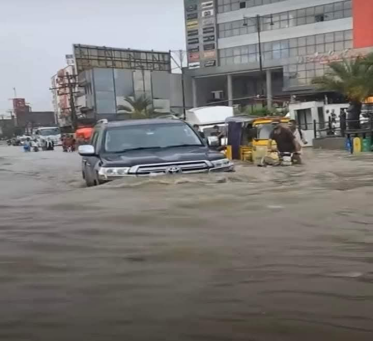
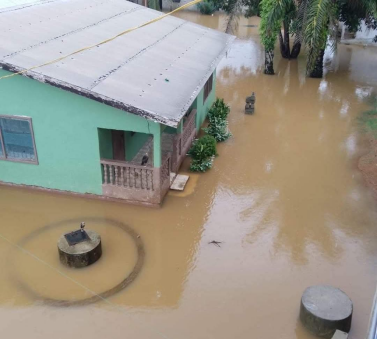
The National Disaster Management Agency (NDMA) in recent years have reported that severe flooding in Monrovia and surrounding low-laying communities have affected over 60,000 residents. Based on the increasing trend, the impacts of flooding is expected to grow from bad to worst invigorated by extremely poor drainage system and lack of city planning.
More rainfall will cause the surge in ocean and river levels; uncontrolled runoff will cause increase flash flood in the city limits thereby creating traffic and traveling impediments, water pollution, damage to property and displacement of people in low-laying communities including Clara Town, Doe Community, West Point, New Kru Town, etc. Eventually, most of the low-laying communities in parts of Monrovia even far from rivers are being waterlogged, also affecting local farming activities across the country.
The WMO recounts those torrential rains across the region led to devastating floods that affected over four million people” in West Africa during 2024. In Nigeria and the Sahel region, for example, floodwaters have killed hundreds and displaced hundreds of thousands.
This research is intended to provide education about the slight shift in Liberia’s weather pattern from the normal “two‐season” West African cycle to a one long wet season – as evidence by accelerating climate disruptions. As stated by Celeste Saulo, the WMO Secretary‐General, the record warmth and extreme rains “reflect the urgent and escalating realities of climate change across the continent.”
In summary, Liberia’s unseasonal rains phenomena stem from the perfect storm derived from a warmer West Africa plus natural climate variability occurring on the global scale. A blanket of record-high ocean and land temperatures — fueled in part by El Niño and a positive Indian Ocean Dipole — kept the ITCZ entrenched over West Africa. At the same time, an exceptionally warm Atlantic reinforced the West African monsoon flow. It is worth noting that such a combination of factors is becoming more likely as the planet warms up annually. As a country, we must all join the global rally to reduce the anthropogenic effects on the environment to secure a sustainable future for our one planet.
About the author
Engr. Patrick Trokon Nah is a Lecturer in Hydrology, Faculty of Earth Sciences, College of Engineering, University of Liberia.
Support Independent Journalism
Your support helps FrontPage Africa continue delivering independent, credible, and impactful journalism. Every contribution strengthens our ability to investigate, inform, and hold power accountable while keeping quality journalism accessible to our readers.
Support our journalism or subscribe to receive the latest FrontPage Africa stories and updates.