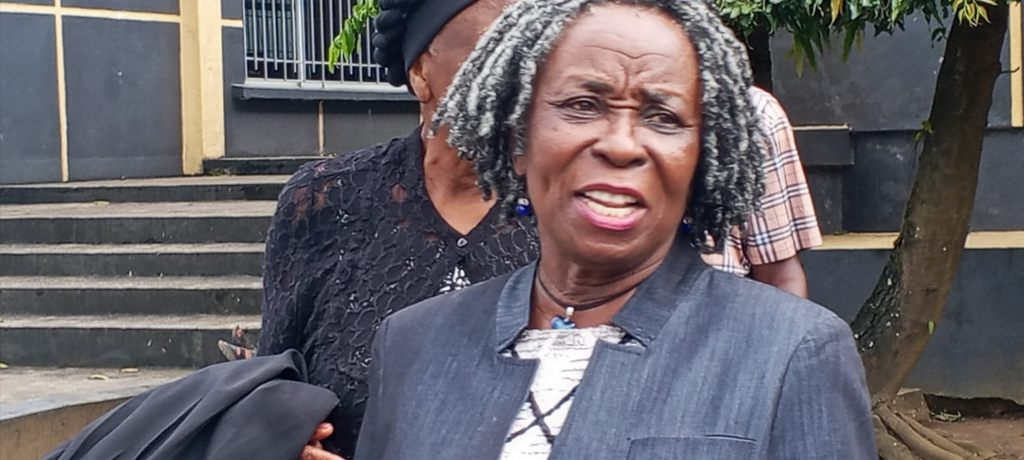
Monrovia-Former General Services Agency Director General Mary T. Broh, delivered one of the defense’s strongest accounts Monday, September 28, in Liberia’s ongoing Saudi-donated rice trial, telling Criminal Court “C” that the government officials involved in handling the controversial donation “did a fantastic job” and questioning how they could be accused of stealing rice that, according to her testimony, was subsequently distributed to communities and government institutions.
By: Willie N. Tokpah
Broh, appearing as a Subpoenaed witness on Monday, September 28, maintained that the movement of the Saudi-donated rice to the GSA was carried out through an inter-agency arrangement involving the Ministry of Foreign Affairs, the National Disaster Management Agency, NDMA, the Ministry of Internal Affairs and the GSA.
Her testimony provided a detailed account of how the GSA came to warehouse thousands of bags of the donation and sought to distance the accused officials from any suggestion that the movement of the rice was undertaken for personal benefit.
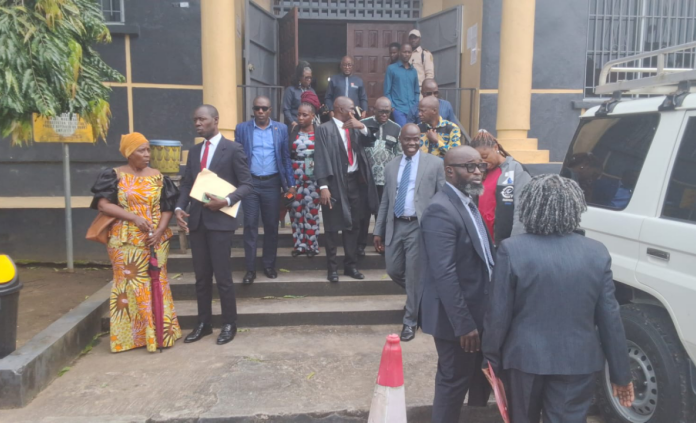
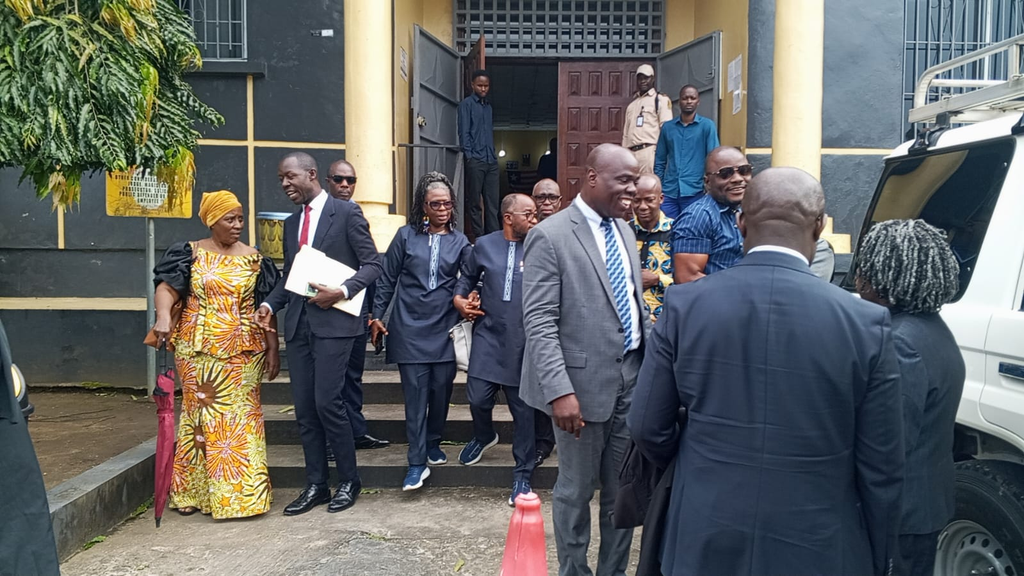
And as she walked out of the courtroom after her testimony, Broh was reportedly heard making an even more direct statement about the accused, “The people are innocent, the people didn’t do anything.”
The remark was made outside the witness stand and was therefore not evidence given under oath. But it underscored the position Broh had advanced during her testimony, that the officials involved were performing government duties and that the movement of the rice should not automatically be interpreted as theft.
“The People Did a Fantastic Job,”
Broh’s most striking testimony came when she addressed the allegation that the Saudi rice had been stolen or improperly diverted.
She questioned what happened to the rice that was actually distributed to communities and government institutions.
According to her testimony, “the people did a fantastic job.”
Broh challenged the suggestion that the movement of rice from one government institution to another, or its distribution to institutions and communities, in itself established that the officials had stolen the donation.
Her testimony presented a different picture from the prosecution’s case, one in which govand ernment officials were attempting to move, warehouse and distribute a large humanitarian donation through several state institutions.
She raised a concern, in substance, whether the officials had stolen the rice, what became of the rice that ultimately reached communities and institutions.
That question is central to the defense’s effort to distinguish between accounting discrepancies, administrative decisions and proof of criminal appropriation.
‘The People Are Innocent’
Broh’s statement after leaving the courtroom added an unusually personal dimension to her testimony.
As she reportedly walked away from the proceedings, she was heard saying, “The people are innocent, the people didn’t do anything.”
The statement appeared to refer to the officials whose handling of the Saudi rice has become the subject of criminal proceedings.
Broh did not make that statement while testifying under oath, and it therefore carries a different evidentiary status from her testimony before the judge and jury.
But it closely reflected the position she presented while on the witness stand, that the officials were acting pursuant to government instructions and an inter-agency mandate.
‘When He Called, We Must Work for Him’
Broh told the court that she became involved after receiving a call from then Foreign Affairs Minister Dee-Maxwell Saah Kemayah.
“When I got the call from Ambassador Kemayah, he said he needed my assistance in term of warehousing the Saudi Donated rice at the GSA,” Broh testified.
She maintained, that Kemayah was a government colleague and that when he called for assistance, she agreed.
A meeting was subsequently held at the GSA involving the Ministry of Foreign Affairs, Ministry of Internal Affairs, NDMA and GSA.
According to Broh, Kemayah chaired the meeting, but she emphasized that the resulting mandate came from the meeting involving the institutions and not from Kemayah acting alone.
That distinction is important to the defense because the prosecution has alleged that Kemayah and former Deputy Foreign Minister Thelma D. Sawyer became improperly involved in the handling and distribution of rice that had been donated for disaster victims.
Broh’s account, however, was that the process involved several government agencies.
25,000 Bags Came
Through GSA
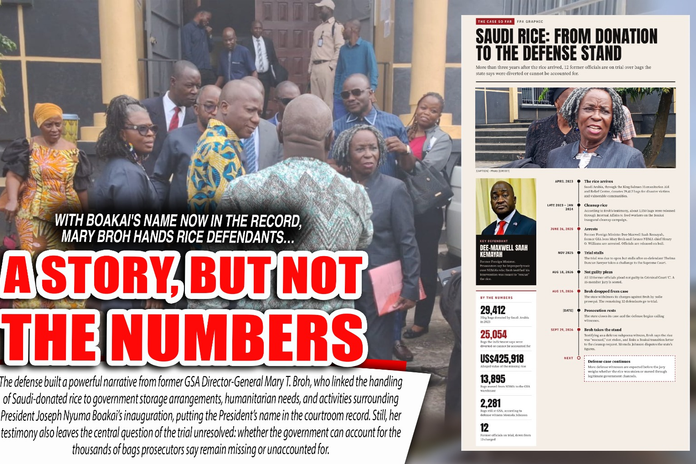
Broh confirmed that 11,200 bags of the Saudi-donated rice were stored at GSA.
She further testified that 13,895 additional bags were moved from NDMA to GSA.
According to her account, the rice came into GSA custody through two deliveries, with the total quantity estimated at approximately 25,195 bags.
Broh also challenged the use of figures contained in the indictment when compared with the actual movement records.
She told the court that the indictment cited one quantity, but that the gate passes showed a higher figure.
For that reason, she suggested that the quantities should have been calculated from the gate passes and other actual movement records.
Distribution Was Never Halted
Broh further testified that she did not know of any decision halting the distribution of the Saudi rice.
“The general distribution was never halted under GSA,” she told the court.
She acknowledged that portions of the rice were distributed to institutions including the Liberia National Police, Ministry of Justice and Ministry of National Defense, although the original donation was intended for disaster-affected persons.
But Broh offered an explanation for such institutional distributions.
She said that when she received a mandate to move rice to another location or institution, she could not simply reject the instruction when government officials had provided reasons for doing so.
She pointed particularly to prisons, saying a shortage of food in correctional facilities could create serious problems and even lead to scuffles.
In her view, preventing such a situation could itself be considered a disaster-related concern.
‘We Were Following Instructions’
Broh also told the court that she was never provided a concept note explaining the broader project.
Instead, she said, she was following instructions arising from the inter-agency meeting.
She said Kemayah did not tell her why he wanted the rice moved from NDMA.
His instruction, according to Broh, was that the rice should be moved as soon as possible.
She said GSA had the capacity to warehouse and implement the relevant part of the op eration.
Broh further explained, that Madan Thelma Duncan Sawyer became involved in a particular aspect of the implementation but was not involved in every stage of the process.
No Knowledge, ,of Sale
Broh den,i,ed having knowledge of the donated rice.
She also said she was unaware of any investigative committee allegedly established by Kemayah to examine the rice issue.
Madam Broh at the same time m, maintained that the meeting she attended concerned the movement of rice from NDMA to GSA.
Her testimony therefore sought to draw a line between the administrative movement of the rice and the allegations of subsequent misuse or sale.
Bonner Testimony Adds to Defense Challenge
Broh’s testimony followed that of defense witness Kpakolo Bonner, who testified last week about the distribution of rice to Norvling Town Community in Paynesville.
Bonner, a resident of the community and an employee of the Forestry Development Authority, testified that rice distributed to the community was intended for people affected by flooding.
He said the rice was distributed openly to affected residents, including people whose homes had been destroyed or damaged by floodwaters.
Bonner said he signed for rice as acting youth chairman and participated in verification and distribution.
However, when shown a waybill in court, he disputed the signature appearing on the document, saying it was not his.
His testimony has given the defense another basis for questioning whether every discrepancy in the documentary record can automatically be attributed to the defendants.
A Case Turning on Where the Rice Went
The prosecution has presented evidence alleging that substantial quantities of the Saudi donation were improperly handled or diverted.
The defense, however, has increasingly focused on the question of where the rice actually went and whether the documentary evidence can establish criminal responsibility beyond a reasonable doubt.
Broh’s testimony was particularly significant because she occupied a senior position at the GSA, one of the institutions that physically handled a substantial quantity of the rice.
Rather than denying that the rice was moved, she acknowledged the transfers and distributions but described them as actions taken within an inter-agency framework.
Her testimony therefore gives the defense an argument that the existence of transfers, gate passes or institutional distributions should not by itself establish criminal intent.
The Saudi Donation
The Saudi government donated 29,412 bags of 25-kilogram rice to Liberia as humanitarian assistance.
The prosecution has alleged that thousands of bags were subsequently misapplied, diverted or stolen.
The defendants have denied the allegations and have maintained that the rice was handled as part of government efforts to respond to vulnerable and disaster-affected populations.
As the defense case continues, Broh’s testimony places emphasis on the distinction between the movement of the rice and the alleged criminal taking of the rice.
And her two statements, one from the witness stand that “the people did a fantastic job” and the other reportedly made as she left the courtroom that “the people are innocent, the people didn’t do anything”, have become the clearest expression yet of her view of the officials whose actions are now being examined by the court.
Support Independent Journalism
Your support helps FrontPage Africa continue delivering independent, credible, and impactful journalism. Every contribution strengthens our ability to investigate, inform, and hold power accountable while keeping quality journalism accessible to our readers.
Support our journalism or subscribe to receive the latest FrontPage Africa stories and updates.