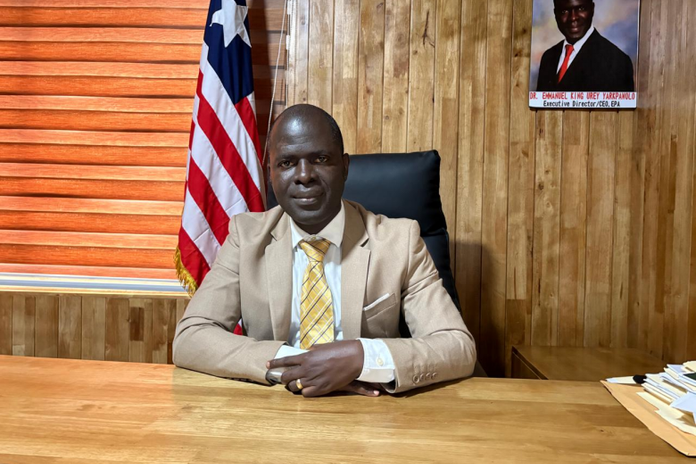
In an age of rapid technological advancement and the rise of ubiquitous social media, there is a growing conversation (I had a one-on-one with Hon. Chuchu Jones and a young intellectual, Alhaji Kromah )surrounding the distinction between academic qualifications and practical experience.
By: Austin S Fallah, [email protected], contributing writer
While a degree can symbolize an individual’s journey through academic institutions, it does not automatically confer expertise in a given field.
The proliferation of self-proclaimed specialists/experts on social media platforms has exacerbated the notion that academic credentials alone can establish one as an expert.
I will explore the divide between holding a degree and possessing a career, the implications of this gap in various disciplines, and the necessity of practical experience as a vital component of actual expertise.
To begin with, it is vital to understand what a degree represents.
Attaining a degree often requires years of dedication to studying a subject.
Students engage in classrooms with lectures, assignments, and examinations designed to equip them with foundational knowledge about their field.
In many respects, obtaining a degree can be likened to receiving a commitment certification.
However, it is essential to delineate that acquiring knowledge through academic study does not equate to applying it effectively in real-world scenarios.
In Liberia, for example, aspiring professionals might acquire degrees from various institutions, yet without the infrastructure or support to gain hands-on experience, their academic achievements may remain just that, achievements within the walls of their educational institutions.
This scenario raises an important question:
How competent are you if you have theoretical knowledge but lack practical engagement?
Many individuals may emerge from their studies with theoretical prowess but little ability to navigate the practical challenges of their respective fields.
This misalignment proves that experience is indispensable in cultivating genuine expertise.
Furthermore, the rise of social media has further complicated the expertise landscape.
Many users, equipped with a smartphone and a platform, often disseminate opinions on various subjects, touting themselves as ‘experts’ in political science, health, sociology, medicine, accounting, finance, economics, journalism, and beyond, without the backing of substantive experience or formal qualifications.
While promoted through likes and shares, such designations can mislead the public into accepting unverified claims.
This phenomenon emphasizes the distinction between professionals, individuals with rigorous academic training and practical experience, and self-styled experts who rely more on sensationalism than a solid knowledge foundation.
For instance, consider the fields of journalism and media.
A journalist’s role involves gathering, analyzing, and reporting accurate information.
In contrast, talk show hosts primarily offer opinions, often fostering discussion rather than delivering factual reporting.
Although these roles may seem similar, they occupy disparate domains within the media landscape.
The confusion between journalism and entertainment highlights the risk associated with conflating credentials with legitimacy; talk show hosts may use their platforms to influence public perception, but they often lack the investigative training requisite for journalism’s rigors.
As such, the distinction becomes blurred, creating a potential crisis of trust among audiences, trust that is pivotal in fields requiring accuracy and accountability.
Moreover, the critique of individuals claiming expertise without substantive experience can extend to disciplines such as economics, accounting, finance, nursing, medicine, social work, etc.
In economics, individuals with degrees may not possess the nuanced understanding of economic indicators and their implications if they lack real-world interactions with markets and economic policies.
Similarly, while theoretical knowledge is crucial in medicine, practical experience in patient care transforms a medical graduate into a competent physician.
The stakes in medical practice can not be embellished; decisions based on incomplete knowledge can have dire consequences for individuals and communities.
For example, Liberians read and saw the fake doctor who took the life of an innocent and promising young lady.
Adding a further layer to this discussion is the field of nursing, where practitioners undergo extensive academic and clinical training to hone their skills.
Lectures alone cannot replicate the intricate blend of compassion, science, and critical thinking required in nursing.
Without integrating clinical experience, nurses may be ill-prepared for real-life scenarios, which can be quite different from the controlled environments of academic settings.
Investing in practical experience through internships, residencies, or entry-level positions is not merely an option; ensuring that theory translates into tangible capability is necessary.
Gaining experience as an investment rather than a cost can not be overemphasized.
Many new graduates approach the job market, perceiving that entry-level positions or internships merely hinder financial success.
However, these opportunities serve as crucial investments in their professional development.
Individuals cultivate the contextual knowledge that enhances their qualifications by dedicating time to learn from senior professionals, engaging with real challenges, and participating in collaborative environments.
Such experiences shape individuals beyond what static classroom learning can provide and prepare them to address the complexities of their respective fields.
In addition to the pragmatic benefits of experiential learning, there are broader implications for those who challenge the legitimacy of self-proclaimed experts in various fields.
When individuals with degrees but limited experience assert their authority in public health or economics, there can be severe consequences, particularly concerning policy and public safety.
Consider the misinformation around public health during crises, such as the COVID-19 pandemic.
Messages promulgated by individuals without corresponding expertise can have a cascading effect on societal behavior and public trust, revealing the potential danger that the blurring of lines between degree-holding individuals and genuine experts can introduce.
Thus, one might argue for a more regulated approach to expertise, requiring individuals to demonstrate academic qualifications and considerable practical experience.
A meaningful understanding of a discipline necessitates blending theoretical education with empirical practice.
This dual approach ensures that professionals can thoughtfully engage with their fields’ challenges and promote ethical standards in their practices.
The distinction between having a degree and pursuing a genuine career is paramount today.
A degree serves as a stepping stone and a testament to an individual’s commitment to their field, yet experience refines that knowledge and cultivates actual expertise.
As the Liberian society continues to navigate the complexities introduced by the digital age and the democratization of information, it becomes increasingly crucial to recognize the value of practical experience in the journey toward mastery.
As aspiring professionals, individuals should prioritize gaining relevant experience as an investment in their future.
At the same time, society must foster a culture that values expertise over mere claims of authority.
In doing so, Liberians can elevate their understanding of truth and integrity in various disciplines, ultimately benefiting individuals and communities alike.
Support Independent Journalism
Your support helps FrontPage Africa continue delivering independent, credible, and impactful journalism. Every contribution strengthens our ability to investigate, inform, and hold power accountable while keeping quality journalism accessible to our readers.
Support our journalism or subscribe to receive the latest FrontPage Africa stories and updates.