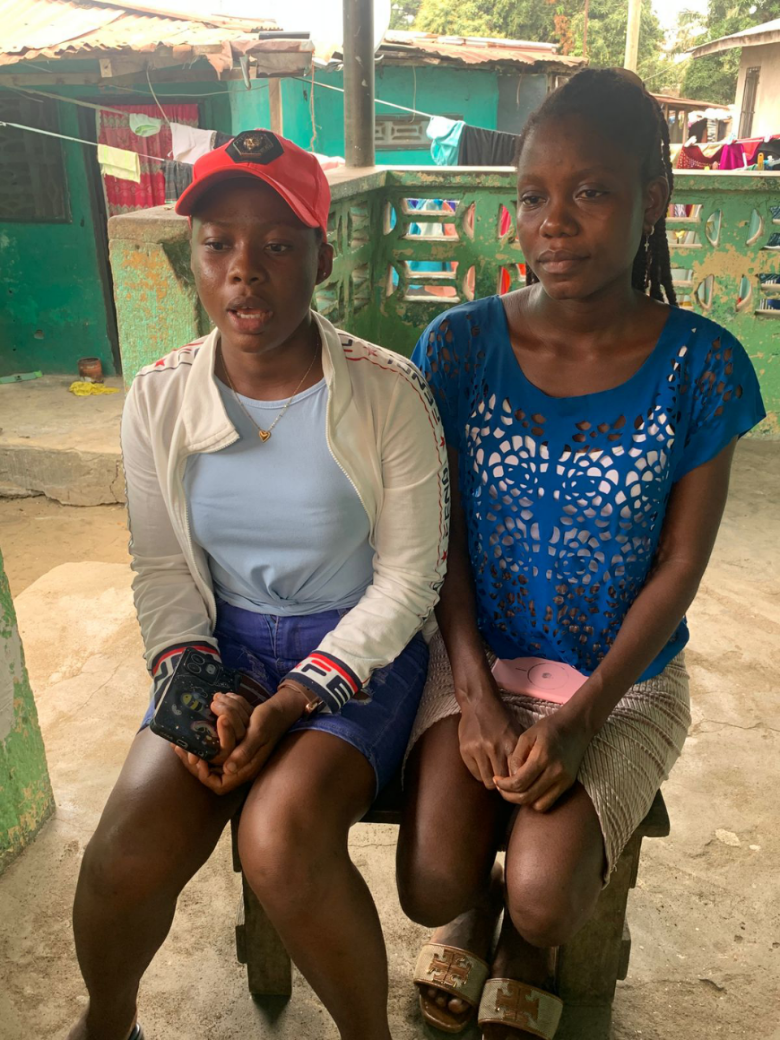
Monrovia – When Bendu Suah lost her father several years ago, her world crumbled, and with it, her hope of an education was gone.
By Gerald C. Koinyeneh, [email protected]
At her lowest point, she had resigned herself to the fate that school was a luxury she could no longer afford. And then her mother, the one she had been counting on to fill the void, fell ill.
Across Liberia, Bendu’s story is a familiar one in low-income homes, where the death of a breadwinner often triggers a financial crisis that makes education a second choice. The pattern, experts say, reflects a deeper structural crisis. According to World Bank estimates, roughly 6 out of 10 Liberians live in poverty — a figure that is even higher when measured against the lower-middle-income threshold of $3.65 per day.
In a 2024 report, the Swedish International Development Cooperation Agency (Sida) placed that share at nearly 70 percent against that benchmark. The World Bank further states that poverty has driven Liberia’s school completion rate to one of the lowest in Africa and the world.
The UNICEF goes further, suggesting that poverty has sharply increased the dropout risk even among students already enrolled.
According to UNICEF, as many as 50 percent of school-age students are currently out of school — a figure the organisation called a “direct threat to human capital development” — warning that an uneducated generation will perpetuate cycles of poverty, inequality, and social instability.
These statistics were the lived experience of Bendu. But in 2022, help arrived. The Malakai Foundation was accepting applications for its annual intake, offering fully funded scholarships to students from low-income households.
With little expectation, she applied and sat the Foundation placement test among 50 applicants from across Montserrado County and emerged as one of the few to pass. The news stopped her cold.
“When I saw my name on that list, I broke down and just cried right there. I was going through a lot to even stay in school, so I had been praying for something, like that, for a long time,” Bendu recalled, as wiping her eyes. “And there it was, my name. That day, I felt like God finally looked at me and said, ‘You also deserve a chance.
Stories like Bendu’s are the reason Malakai Collins Ndorley founded the Malakai Foundation. A Liberian immigrant based in Canada, Ndorley had witnessed firsthand as a student in Liberia how classmates were forced to drop out simply because they could not afford their fees.
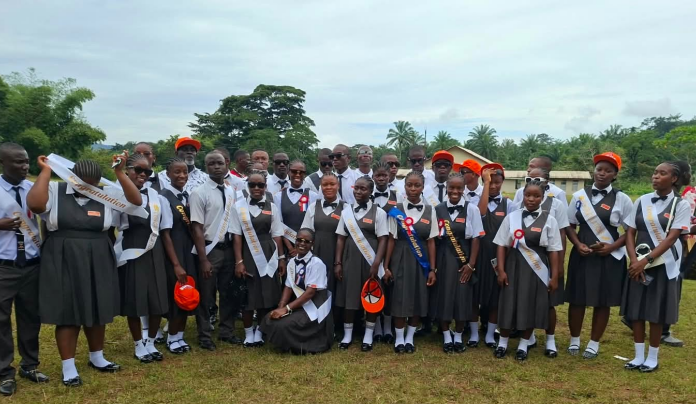
That memory, in part, inspired Ndorley to make the scholarship fully funded. Founded in 2021 and largely self-funded, the Malakai Foundation only accepts a small number of students each year for its fully covered scholarship which includes benefits such as tuition at any school or university of choice, learning materials, and quarterly living stipends.
“When I had the means to do something, coming back was never a question. The only question was how,” Malakai said. “And I decided early that if I was going to do this, it had to be fully funded because a half opportunity is still no opportunity for a family choosing between school fees and food.
To qualify, students must come from low-income households, score at least 85 percent on a placement test, and maintain the same average every academic period to retain the scholarship.

According to the Foundation, the grade requirement is intended to preserve limited scholarship resources for high-performing students regardless of background. Of the 30 scholarships awarded since 2021, only 17 students have managed to retain their slot, with Bendu among them. The rest lost it to the grade requirement, which Malakai says is non-negotiable.
“Our model treats our students as scholars, not charity cases. That psychological shift matters enormously,” Ndorley said, unapologetically. “Our standards are designed to encourage consistent effort, help students build the habits necessary for long-term success, and prevent complacency.”
“We know that students from low-income households will always face some kind of social challenge,” she added. “That is why living expenses are included in the package — so that the only thing on a beneficiary’s mind is their grades. If you fall below the standard, you lose the scholarship. For us at the Malakai Foundation, excellence is non-negotiable.
Yet for critics, while the Malakai Foundation has improved educational opportunities for nearly a dozen students — including supporting two from high school through university — the grade requirement is where the problem lies. Critics argue that the 85 percent threshold evaluation every academic period rather than semester, places undue pressure on students already navigating poverty and its compounding challenges.
They contend that shorter evaluation cycles leave little room for students to recover from setbacks such as illness, food insecurity, family emergencies, or emotional instability. In their view, a semester-based evaluation would reduce the risk of students losing the scholarship over a single bad period.
But for Irena Vaine, a scholarship beneficiary, the criticism, while genuine, misses the Foundation’s founding principle. To lower the bar, she argued, would be to underestimate the academic ability of the very students the Foundation was established to help.
The 23-year-old, who has held the foundation scholarship since 2023, had known long before it arrived what it meant to sit in a classroom wondering if tomorrow would be her last day in it. Before the scholarship, Irena had grown accustomed to the quiet indignity of being sent home regularly for unpaid fees — an experience she says, for the first time, no longer defines her mornings.
“The Foundation’s standards are a reminder that this opportunity could easily belong to someone else,” she reflected. “There are many others who deserve this, and being among the few who meet the bar makes me take nothing for granted. Knowing this pushes me to study harder to maintain my place. I do not want to return to the days of being sent home for unpaid fees.”
“So, while the concerns make sense, this is a fully funded scholarship — our living expenses are covered,” she said. “Dropping the grade requirement would be a disservice to those of us who have been working hard every period to hold our place.”
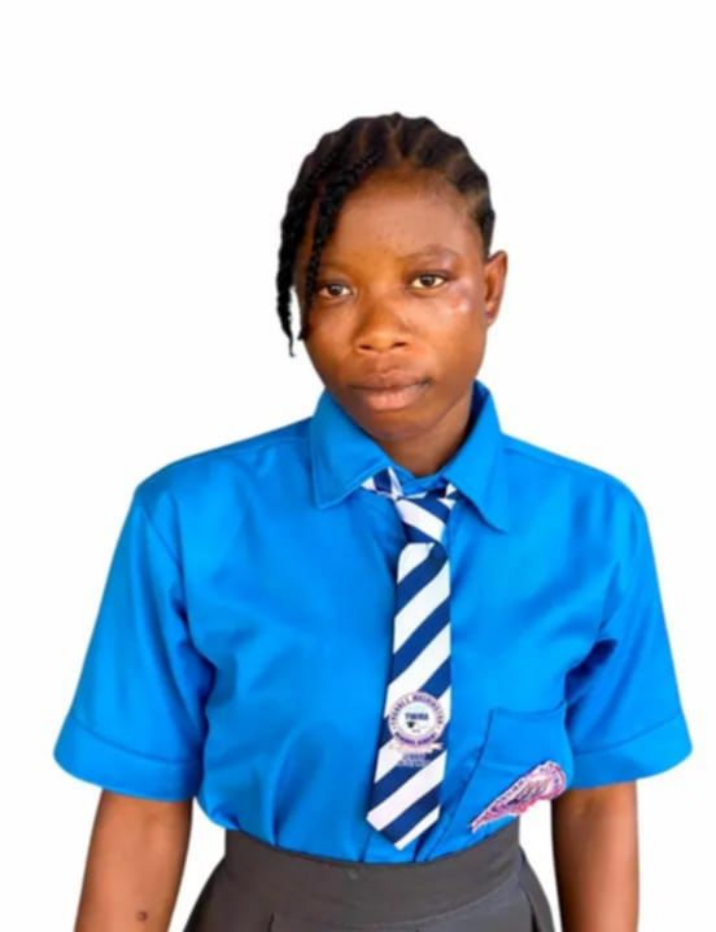
But Irena is not the only one who remembers those mornings. Her mother, Jestina Vaine, carried those mornings differently, and although she never let Irena see the weight of it, the quiet dread of fees season was a burden she bore alone every term.
That burden, Jestina says, is gone, and Irena, she adds, is focused on one thing — retaining the scholarship. She added that what pleases her most is the security of the scholarship — the knowledge that Irena will be supported through to university fills her with a great sense of relief.
“I am proud of what the Malakai Foundation has done — not just opening the door to education but instilling discipline and resilience in our children,” Jestina said. “Before, my worry was fees. Now my worry is gone, and my daughter’s only worry is her grades. That is a different kind of family.”
For Sinnah Suah (not related to Bendu), the Malakai Foundation’s scholarship is the reason she graduated from high school. The 24-year-old, who became a scholarship recipient in the 11th grade in 2024, had largely depended on extended family for help with fees — money that was hard to come by and never guaranteed.
The breaking point came when her mother told her there was simply nothing left to give that year — but to wait for the following year. Then the Foundation arrived. With tuition, learning materials, and a quarterly living stipend covered, Sinnah finished high school in 2025 and is now studying for a BSc in public health.
“There were terms when I went to school not knowing if I would be there the following week,” she recalled, her voice quieting. “You sit in class and you are not really learning — you are waiting. Waiting to be called out, waiting to be sent home, waiting for something to interrupt what little you have.”
“I remember my mother came home and said, ‘Sinnah, you have been selected.’ I did not believe her. I made her repeat it three times. I was like wow, so I am back in school with full support. The joy was too much,” she added. “If not for the Malakai Foundation, I would not be in university today. I am grateful — not just for the fees, but for the chance to become something.”
For some families, the fear lives not with the child but with the parent. Precious Andrew, a single mother of two, could tell you exactly what that fear looked like as paying school fees was a burden she could not easily afford.
“I was crying every night, asking God how to help,” Precious said, the weight of those years still audible in her voice. “I had to tell her, ‘No school this year.’ You cannot imagine how that breaks my heart.”
But since 2021, things have changed. With the Foundation’s support, her daughter Berenice Davies has not missed a single day for unpaid fees — an experience Precious says she could not have guaranteed on her own for even one term.
What confirmed the change for Precious was not a single moment but a growing certainty that her daughter’s place in school was no longer conditional on what she could scrape together each term.
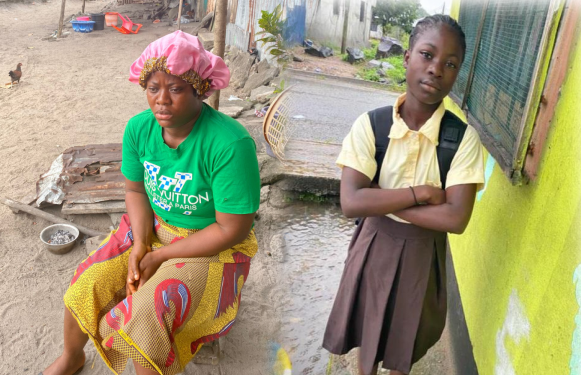
So when the Foundation called to say her daughter had qualified, Precious says she did not feel lucky. She felt vindicated. “I knew it was not luck,” Precious added. “It confirmed what I had always known — that she was capable, but money was the barrier. Poverty was the wall. Now that wall has been removed.”
She paused briefly before adding: “Now she goes to school with her head held high.”
Support Independent Journalism
Your support helps FrontPage Africa continue delivering independent, credible, and impactful journalism. Every contribution strengthens our ability to investigate, inform, and hold power accountable while keeping quality journalism accessible to our readers.
Support our journalism or subscribe to receive the latest FrontPage Africa stories and updates.