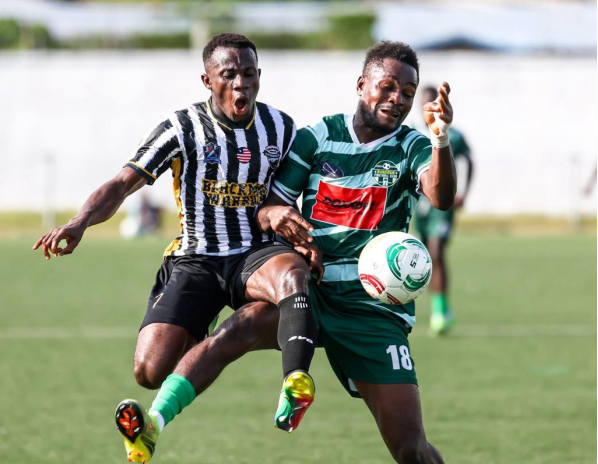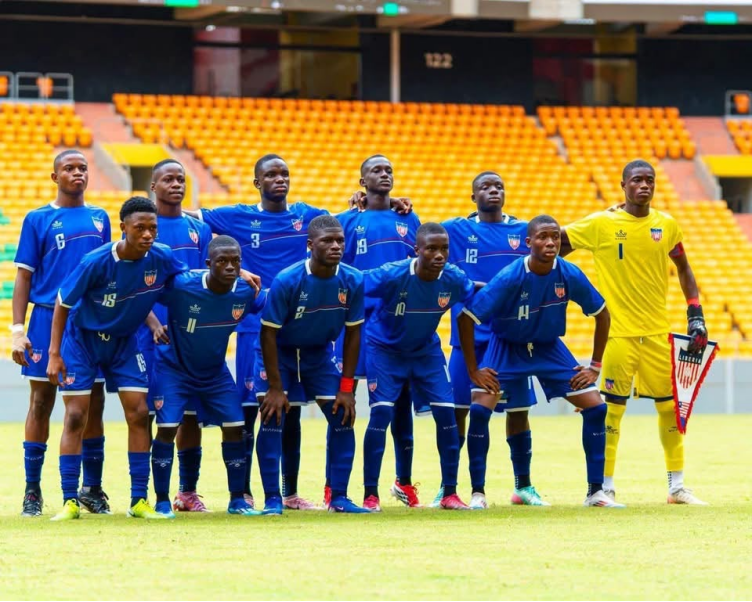
MONROVIA — Liberia’s failure to qualify for the 2027 Africa Cup of Nations (AFCON) U-17 tournament in Senegal has triggered intense debate within the country’s football community, with questions now being raised over both the technical management of the Junior Lone Star and the broader support provided by the Liberia Football Association (LFA).
By Christopher C. Walker [email protected]
Liberia had two opportunities to secure a historic place at the continental tournament but failed to capitalize on either.
The first came in the semi-final against The Gambia, where victory would have sent Liberia into the final and secured qualification. Instead, the Junior Lone Star suffered a 2-1 defeat.
A second opportunity emerged after host Senegal advanced to the final, leaving the third-place playoff as Liberia’s remaining route to qualification.
Facing Guinea—a side Liberia had already defeated 2-1 in the group stage on September 11—the Junior Lone Star conceded twice in the second half through Boubacar Diallo and fell 2-0.
The back-to-back setbacks have intensified scrutiny of the team’s preparation, tactical execution and overall youth football structure.
Questions Over LFA Preparation
While attention has focused heavily on the coaching staff, some stakeholders argue that the technical team should not bear responsibility for problems that begin before players take the field.
At the U-17 level, sustained preparation, tactical cohesion, physical conditioning and exposure to quality international opposition are considered important components of competitive youth football.
Liberia’s campaign showed both promise and shortcomings.
The Junior Lone Star topped their group with four points after a 1-1 draw against Mali and a 2-1 victory over Guinea, demonstrating that the squad possessed the ability to compete against strong regional opposition.
But the subsequent defeats in the semi-final and third-place playoff have raised questions about whether the team had sufficient preparation and support to maintain its performance under pressure.
Critics of the LFA’s broader approach argue that youth national teams require long-term planning rather than short preparation windows assembled around individual competitions.
From that perspective, responsibility extends across the football structure: the LFA is responsible for planning, logistics and institutional support; the technical team is responsible for tactics, substitutions and game management; while players are ultimately responsible for execution on the pitch.
For those calling for structural reform, changing coaches without addressing broader preparation and youth-development issues could leave the same problems unresolved.
Harris Calls for Coaching Staff to Go
Former Liberian international, coach and football pundit Ephraim Harris, however, believes administrative challenges should not shield the technical staff from accountability.
Harris has called on the LFA to dismiss the entire U-17 coaching staff, arguing that the team failed to correct tactical problems during the two decisive matches.
“In total, Liberia failed to fix even one problem within 180 minutes of football,” Harris said.
According to Harris, Liberia struggled to control the semi-final against The Gambia for extended periods.
“Gambia controlled the game for about 70 minutes, and Liberia only responded after Gambia reduced their tempo to manage the match. After scoring once, Liberia struggled to maintain control as the game opened up again in the final 15 minutes,” he said.
The defeat against The Gambia left Liberia with one final opportunity against Guinea.
But Harris said the technical staff failed to make the necessary adjustments, with similar problems in execution and game management appearing in the decisive playoff.
Guinea ultimately capitalized on its opportunities, scoring twice in the second half to eliminate Liberia.
‘Send a Clear Message’
Harris is calling for the LFA to establish what he considers a stronger culture of accountability within the national-team setup.
“Liberia must send a clear message: before accepting the national U-17 job, prove you can deliver,” he said.
“If you fail to qualify for the tournament, you should be fired. If coaches are allowed to stay after major disappointments, the same mistakes will continue under future appointments, especially by those who do not take the national team seriously.”
His position places the coaching staff at the center of the debate over Liberia’s failure to qualify.
But the wider discussion extends beyond the bench.
A Crossroads for Liberian Football
Liberia’s elimination has exposed the gap between the country’s emerging youth talent and its ability to convert that talent into sustained international success.
The Junior Lone Star demonstrated enough quality to top their group and defeat Guinea, but failed to reproduce that form when qualification was at stake.
The contrasting explanations—technical shortcomings on one side and structural deficiencies on the other—now present the LFA with difficult questions about the future of youth football.
Whether the response involves changes to the coaching staff, improvements in preparation, greater investment in youth development, or a combination of measures, the campaign has placed accountability firmly at the center of the conversation.
For Liberia, the immediate disappointment is missing the 2027 AFCON U-17 tournament.
The larger issue is whether the lessons from Dakar will lead to lasting changes before the next generation of young Liberian players takes the field.
Support Independent Journalism
Your support helps FrontPage Africa continue delivering independent, credible, and impactful journalism. Every contribution strengthens our ability to investigate, inform, and hold power accountable while keeping quality journalism accessible to our readers.
Support our journalism or subscribe to receive the latest FrontPage Africa stories and updates.