Monrovia– The Acting Chairman of the Governance Commission (GC), Alaric K. Tokpa, has said Liberia’s history has for too long been told in fragments, shaped by exclusion, silence and selective memory, and now is the time to rebuild it inclusively,
By Jaheim T. [email protected]
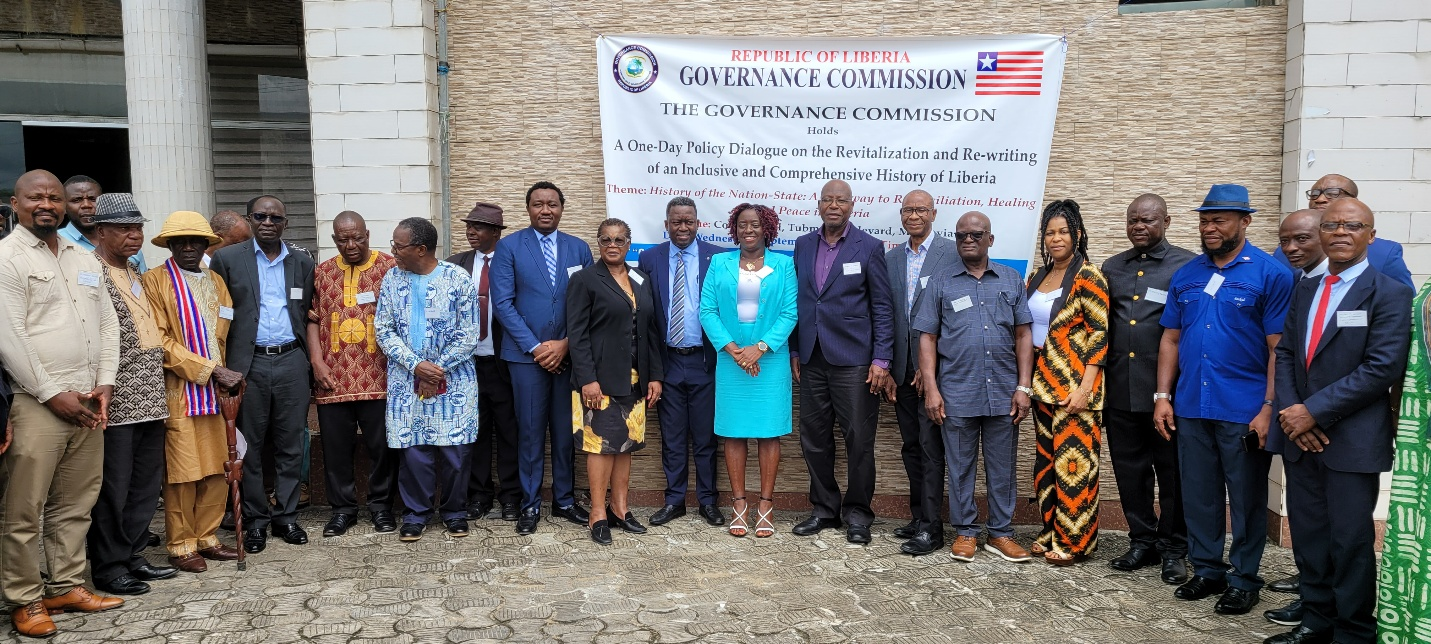
Tokpa made the statement at a one-day Policy Dialogue on the Revitalization and Rewriting of an Inclusive and Comprehensive History of Liberia.
The dialogue, which was held under the theme: “History of the Nation-State: Pathway to Reconciliation, Healing, and Peace,” brought together Liberia’s historians, officials of government, civil society actors, international partners, student leaders and the media.
Delivering remarks, Tokpa said the nation cannot thrive on “partial truths,” there it is a call to historians, educators, policymakers, and citizens alike to embrace the complexity of our past and to write a history that reflects the full range of Liberian identity.
“For far too long, the story of Liberia has been told in fragments, often shaped by exclusion, silence, and selective memory. Yet, to be healthy, a nation cannot thrive on partial truths. Liberia needs reconciliation, healing, and peace; all of which require that we remember our past, promote understanding, and build peace by acknowledging the voices that shape our collective journey,” he stated.
He urged Liberians to write a history that embraces indigenous communities, settlers, and those who endured conflict and displacement.
“This dialogue is a call for writing a history that will record and honor both suffering and triumph; a history that will not shy away from uncomfortable truths, but rather use them as stepping stones toward justice, freedom, popular participation, and unity,” Tokpa pointed out.
Tokpa emphasized inclusivity: “Let us ensure that we write a national history of Liberia that will not be a mere document, but a mirror of ourselves; a reflection of the experiences, dignity, resilience, and diversity of all Liberians.”
He added that students, youth, women, traditional leaders, and religious institutions must be remembered in the reconstruction of Liberia’s story. “Let this dialogue be more than a reflection; it must be about recommitment—telling the story of a country where history becomes an instrument for social justice, peace, and unity.”
Tokpah revealed that the Governance Commission holds a depository of materials from the earlier Liberia National History Project (LNHP), which stalled due to a lack of funding. These materials, he said, would be made available to the team or structures that will continue the history writing project.”
“As we embark on this journey together, may we be guided by humility, courage, and a shared vision: that through truth-telling, we can foster reconciliation; through understanding, we can nurture healing; and through collective memory and love for each other, we can build enduring peace,” Tokpa said.
Giving an overview of the LNHP, Commissioner Cytirus Kerbay reminded participants that one of the key recommendations of the Truth and Reconciliation Commission (TRC) was the rewriting of an inclusive and comprehensive general history of Liberia.
“For too long, our national history has centered mainly on the arrival of settlers in 1822, while giving little attention to the peoples, cultures, and contributions that predated their arrival. This imbalance has left the historical narrative incomplete and, at times, divisive,” Kerbay said.
She explained that the LNHP was created to “develop a history that belongs to all Liberians, settlers and indigenous alike” and to foster reconciliation, unity, and peace.
According to Kerbay, the project seeks to foster reconciliation and healing in the post-war era, strengthen national identity and unity, promote historical consciousness among the people of Liberia, and serve as a foundation for peace and social cohesion.
She explained that in 2013, a national history conference envisioned four volumes of textbooks and a new curriculum. “Unfortunately, due to limited funding, the process slowed and was never fully realized,” Kerbay noted. The new dialogue, she said, is “a renewed call to action, shaping a future where every Liberian can see themselves in the national story.”
Also speaking, former Head of Office of UNESCO Liberia, Stevenson Seidi, lamented that while Liberia has a rich history, it has “been told mostly from a one-sided perspective.”
“We are the first African republic, yet our national story is clouded by divisions between settler and indigenous communities, between inclusion and exclusion, between memory and silence,” he said. “While we respect the settlers who landed here, it is right to indicate that the history they told was unbalanced, deceptive, biased, and discriminatory.”
Seidi warned that an exclusive narrative could “deepen mistrust and prolong wounds of bitterness that could ignite or replay the 1980 coup and 1990 civil crisis.”
He called for memorials, museums, oral history projects, and curricula that reflect all perspectives.
He also questioned Liberia’s system of national honors: “Are these African or truly native Liberia Orders of Distinction? It appears these are European-style Orders. It is my strong opinion that these orders need to be revisited and revised.”
“An inclusive history teaches us that peace is not the absence of war, but the presence of justice, dignity, and belonging for all,” Seidi said.
He urged the government to take ownership of the project, while working with UNESCO and Liberian historians at home and abroad.
“Our task is not to erase the past, but to expand it—to weave together the voices, memories, and dreams of all Liberians into one shared narrative. Only then can history become a true pathway to reconciliation, healing, and peace,” Seidi said.
Support Independent Journalism
Your support helps FrontPage Africa continue delivering independent, credible, and impactful journalism. Every contribution strengthens our ability to investigate, inform, and hold power accountable while keeping quality journalism accessible to our readers.
Support our journalism or subscribe to receive the latest FrontPage Africa stories and updates.