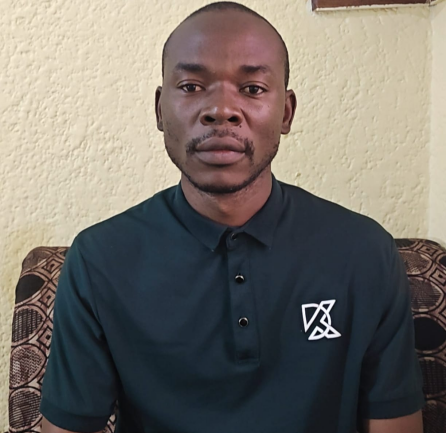
GBARNGA — Tucked in the heart of Bong County, Isaac F. Sulonteh’s dream to revolutionize Liberia’s rice farming industry is beginning to take shape.
By Selma Lomax, [email protected]
As the founder and Executive Director of Zuritala Rice Multiplication, Sulonteh is committed to improving the country’s agricultural landscape, one crop at a time.
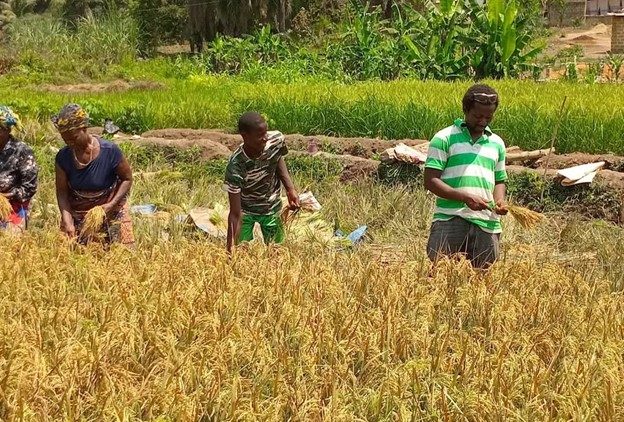
On February 16, 2025, Sulonteh began harvesting three rice varieties at his research site in Gbarnga, after a brief delay from his initial February 10 schedule.
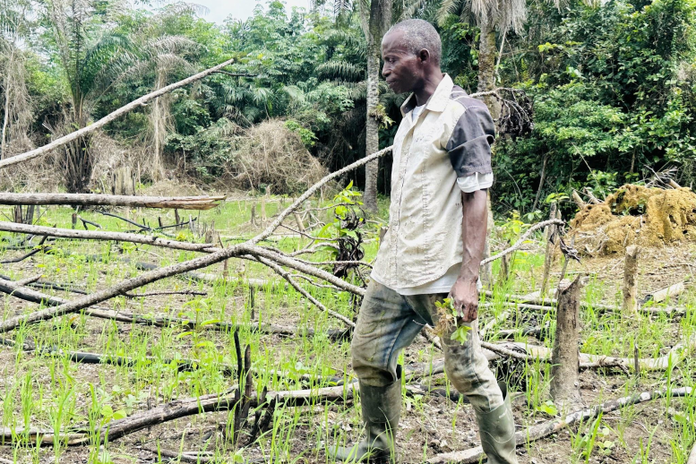
This marks the culmination of months of hard work at the Zuritala Rice Multiplication Site, where Sulonteh is testing a range of rice varieties aimed at meeting the needs of Liberia’s farmers.
The journey started with just three seeds of each rice variety. Today, Sulonteh oversees two inbred rice varieties and one hybrid variety — each with distinct qualities tailored to thrive in Liberia’s unique environment.
One of the key goals of Sulonteh’s research is to provide sustainable rice varieties that can boost local production and offer farmers reliable crops year after year.
The inbred varieties, capable of being replanted continuously, offer long-term benefits for farmers, while the hybrid variety, though yielding impressive results, requires ongoing procurement.
Sulonteh’s results are telling.
Under optimal conditions, X1 yields 9 tons per hectare, X2 produces 11–12 tons, and the hybrid X3 initially yielded a robust 12 tons per hectare. However, the yield from X3 has dropped in its third generation, a common occurrence in hybrid varieties.
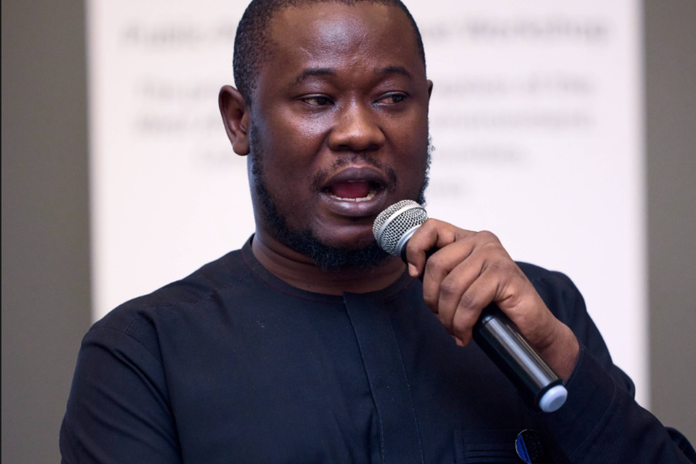
“I’m testing seeds that we believe can work in Liberia’s soil,” Sulonteh explained. “We bring in seeds from other countries, but we also test and improve local varieties to see how they adapt.”
Sulonteh’s work goes beyond his own projects. He encourages other farmers and researchers to collaborate, offering space on his site to test and multiply new rice varieties. “If someone has a variety they want to test but doesn’t know how, I invite them to bring it here. We can multiply it and see how it performs,” he said.
His goal is to foster collaboration and innovation to improve Liberia’s rice industry.
The results of his research are carefully tracked through data, focusing on factors like tillering capacity, grain uniformity, and yield stability.
Sulonteh’s X1 variety, for instance, has shown exceptional performance, with individual hills producing up to 34 tillers, a significant improvement over Liberia’s standard Suakoko 8 variety. “I planted just two seedlings per hill, and in some places, I got between 30 and 34 tillers,” Sulonteh shared. “This is the kind of progress we need for Liberia.”
Despite impressive progress, Sulonteh faces challenges, particularly in securing a consistent water supply for irrigation.
Water volume in his swamp has decreased, and upstream communities sometimes block the flow. Negotiating water access has become a necessary but time-consuming task for Sulonteh.
“I fund this project myself, and despite the challenges, I remain committed to making it work,” Sulonteh said. However, he also stressed the need for more support to scale up his work.
With adequate resources, he hopes to expand the site to 50 hectares, enabling the Ministry of Agriculture to rely on him as a supplier of quality seeds for Liberian farmers.
One of Sulonteh’s most notable commitments is his willingness to assist other farmers. He offers both seeds and training, but only to those who show real dedication to the craft of farming. “I want to help those who are serious,” he said. “If farmers are committed to their work, I will support them. But they must show that they are ready to learn and grow.”
Sulonteh envisions a future where Liberia’s rice industry is self-sufficient.
By optimizing seed management and irrigation techniques, he believes it is possible to harvest rice multiple times a year — potentially up to four harvests annually. This would increase local production significantly and reduce Liberia’s dependence on imported rice, he said.
“Right now, I’m harvesting in February. If I replant immediately, I can harvest again in May, and then in August, and again before the year ends,” Sulonteh explained, detailing the potential for continuous production.
Sulonteh’s message extends beyond the field. He urges the government and private sector to invest in rice seed multiplication and irrigation infrastructure, critical components for supporting local farmers. “Liberians are strong. We have the potential to produce our own food. All we need is support,” he said passionately.
Sulonteh’s story is a testament to the power of one person’s vision to drive systemic change.
As a trained agronomist, lecturer, and advocate for Liberia’s agricultural sector, Sulonteh’s work could play a key role in reshaping the future of rice farming in Liberia.
His methods, research, and tireless determination may one day lead to the country’s long-awaited self-sufficiency in rice production.
Through his hands-on approach to agricultural research, Sulonteh is planting the seeds of change in Liberia —one harvest at a time.
Support Independent Journalism
Your support helps FrontPage Africa continue delivering independent, credible, and impactful journalism. Every contribution strengthens our ability to investigate, inform, and hold power accountable while keeping quality journalism accessible to our readers.
Support our journalism or subscribe to receive the latest FrontPage Africa stories and updates.