PANTA DISTRICT, BONG COUNTY – In Gboawuta, Panta District, Bong County, the hum of a newly installed palm oil processing mill now blends with the steady rhythm of rural life. At the center of this transformation stands Olivia J. Paye, a graduating senior at Cuttington University, whose vision and determination have turned a childhood fascination into a 170-acre oil palm enterprise complete with a modern processing factory.
By Selma Lomax, [email protected]
Unlike many large scale agricultural ventures that begin with major capital investment, Olivia’s journey was rooted in experience, observation, and survival.
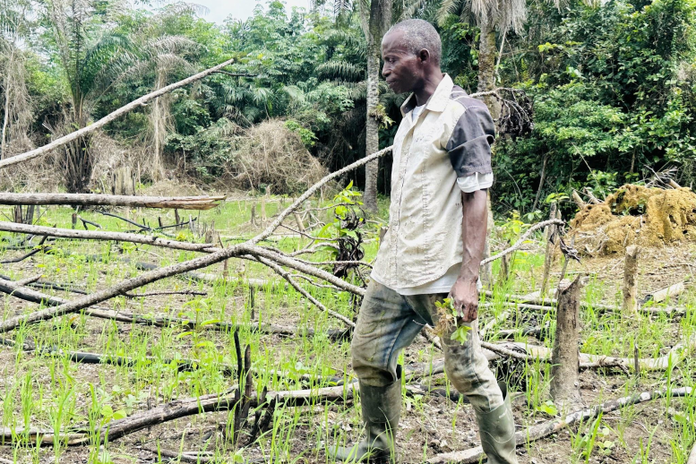
She was raised on a modest family farm where her parents cultivated crops to sustain their household. As a young girl, she often found herself staring at the palm trees her father planted, marvelling at how their slender trunks could support heavy clusters of fresh fruit branches year after year.
That curiosity would eventually mature into purpose.
Her resolve was tested and strengthened during Liberia’s 2014 Ebola outbreak. As businesses closed and economic activities slowed to a halt, her family relied almost entirely on their small two-acre farm for food and stability.
While fear and uncertainty gripped the nation, the land became their safety net. For Olivia, that period was more than a national crisis; it was a defining moment that reshaped her understanding of agriculture.
She recalls that experience as the turning point that pushed her to think beyond subsistence farming. If two acres could sustain one family during a national emergency, she reasoned, then larger acreage could support entire communities.
With limited financial means but unwavering determination, she began gathering palm seeds from established farms, nurturing them in small nurseries, and transplanting them each farming season. What started as a gradual experiment soon evolved into a structured plan.
Even as she pursued her studies at Cuttington University in Suakoko District, Bong County, Olivia refused to abandon her agricultural ambition.
Balancing academic responsibilities with farm supervision required discipline and sacrifice. She travelled between campus and field, managed nursery operations, and steadily expanded her planting efforts.
Her university education sharpened her approach, helping her see agriculture not only as food production but as agribusiness capable of driving rural development.
Over time, the farm grew from two acres to forty. As palm trees matured and production increased, other farmers in the district began sourcing seedlings from her nurseries. A quiet network of growers emerged, linked by shared ambition and local collaboration. Yet growth brought new challenges.
Harvest volumes increased, but the lack of modern processing equipment limited profitability. Farmers were often forced to sell raw palm fruits at low prices, reducing potential income and increasing post-harvest losses.
A significant breakthrough came in 2023 when Olivia represented United Women at a three-day financial management training organized by Educare Liberia in Monrovia. There, she connected with stakeholders who recognized the potential of her expanding farm.
Through these engagements, her project was introduced to the Ministry of Agriculture STAR Project, which later provided critical support. With assistance from the Ministry of Agriculture STAR Project, Olivia’s Farm received the construction of a factory building, the installation of a two metric ton per hour Oil Palm Processing Mill, and the purchase of a six ton JAC truck to facilitate transportation. The support also enabled the expansion of the farm from 40 acres to 170 acres, significantly strengthening its operational capacity.
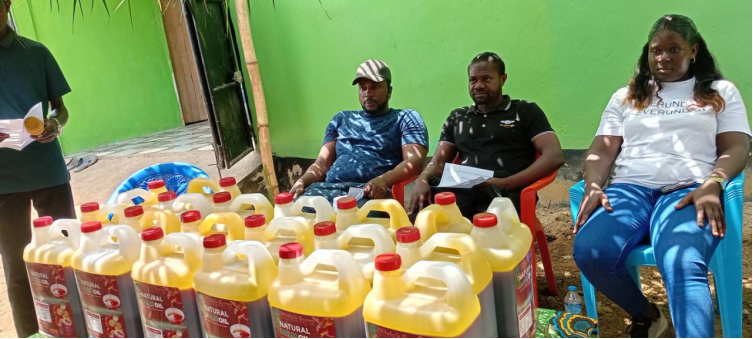
The dedication of the Palm Processing Factory Saturday marked a historic occasion for Panta District. Community members, farmers, local leaders, and development partners gathered to witness what many described as a new chapter in the district’s agricultural story. For the first time, local producers had access to modern processing equipment within their own community.
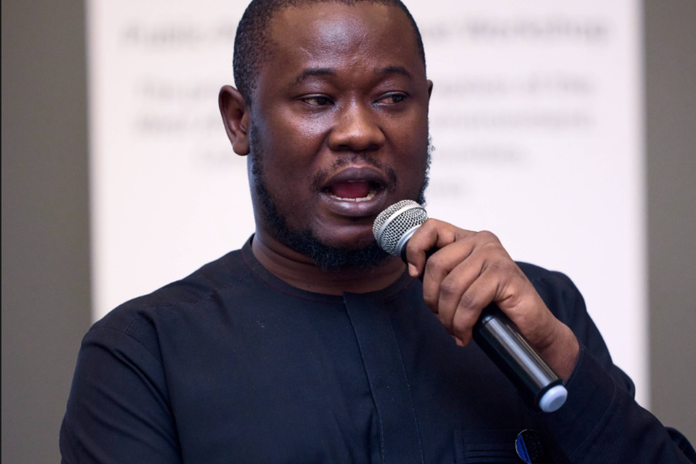
Board Chair Aleyou Keita praised Olivia’s initiative, describing it as both timely and transformative. He noted that the factory would ease the burden on palm farmers who previously struggled with inefficient traditional processing methods.
According to him, the facility is expected to reduce post-harvest losses, improve product quality, and expand income opportunities for growers across the district.
Also in attendance was Board member Cllr. Samwar Fallah, who had the honor of cutting the ribbon to officially commission the facility. In his remarks, Cllr. Fallah described the moment as deeply symbolic, noting that the ribbon cutting represented not only the opening of a building but the unlocking of opportunity for farmers across the district.
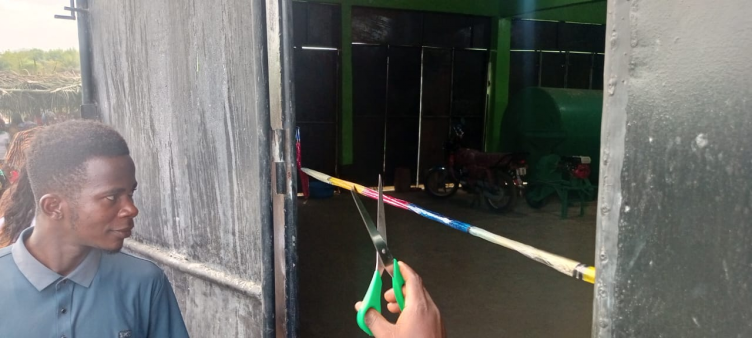
He commended Olivia for her courage, discipline, and forward thinking leadership, emphasizing that her achievement demonstrates what is possible when young people combine education with practical action.
He further highlighted that the factory stands as proof that rural communities can host meaningful investments that generate employment, strengthen local supply chains, and inspire confidence among development partners.
Cllr. Fallah urged residents of Panta District to embrace the project wholeheartedly and to see it as their own collective investment. He encouraged local farmers to supply their palm fruits to the factory, young people to seek training and employment opportunities within the enterprise, and community leaders to protect and support the initiative so that it remains sustainable for years to come.
In expressing his admiration for Olivia’s vision, Cllr. Fallah offered heartfelt praise. “What Olivia has accomplished is not ordinary,” he said. “It is the result of discipline, sacrifice, and a belief that agriculture can transform lives. To see a young woman who is still completing her university education manage 170 acres of palm and establish a modern processing facility gives me confidence that the future of our county is in capable hands. Her dream is not only personal, it is communal, because it opens doors for farmers, traders, and young graduates who are searching for meaningful opportunities.”
He further reflected on the broader significance of her achievement. “I feel proud and inspired by Olivia’s dream because it reflects resilience and hope. At a time when many young people look outside for success, she chose to invest here at home and to build something that uplifts her own community. This factory is more than machinery and walls, it is a statement that Bong County can produce, process, and prosper. If we nurture this dream and stand behind it, we will witness even greater expansion and lasting economic impact.”
Beyond infrastructure, Olivia envisions long term economic empowerment. She aims to move her community away from selling raw agricultural products toward producing finished and semi-finished goods that command higher market value. By adding value locally, she believes wealth can circulate within the district rather than flowing outward.
Her long term plan is measured and strategic. Rather than expanding recklessly, she intends to grow gradually, ensuring environmental responsibility and operational sustainability. She hopes the farm will inspire young people, especially women and university students, to see agriculture as a viable and respected career path.
Today, Olivia’s Farm stands as a symbol of how education, resilience, and community partnership can intersect to produce meaningful change. From a child observing palm trees on her father’s farm to a university senior managing 170 acres and a processing facility, Olivia J. Paye represents a new generation of Liberian agricultural leadership.
Her story underscores the power of vision rooted in experience and the potential of rural enterprise to shape a more secure and prosperous future for Bong County and beyond.
Support Independent Journalism
Your support helps FrontPage Africa continue delivering independent, credible, and impactful journalism. Every contribution strengthens our ability to investigate, inform, and hold power accountable while keeping quality journalism accessible to our readers.
Support our journalism or subscribe to receive the latest FrontPage Africa stories and updates.