Summary
- War Crimes Court Cffice chief Jallah Barbu has urged President Joseph Boakai to recall lawmakers from their annual constituency break for a special session to act on legislation establishing the court.
- Barbu wants action before Boakai attends the U.N. General Assembly starting on September 8, as Liberia prepares for a prominent international role on the Security Council.
- The call comes as survivors and advocates call for urgent action on a national fund to provide reparations for people still living with the consequences of Liberia’s civil wars.
By Anthony Stephens, senior justice correspondent with New Narratives
PAYNESVILLE CITY, Montserrado County—Jallah Barbu, executive director of the Office for the Establishment of the War and Economic Crimes Court, has urged President Joseph Boakai to exercise his constitutional power by recalling lawmakers from their annual constituency break to act on legislation establishing the long-promised court.
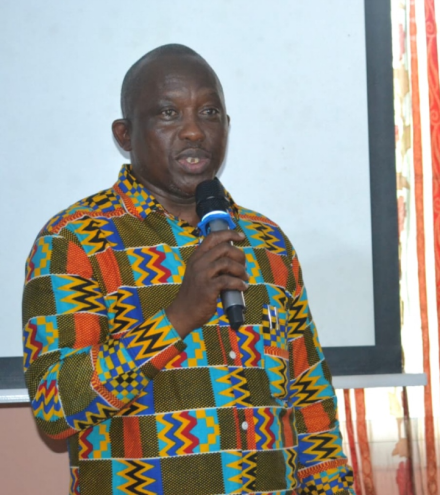
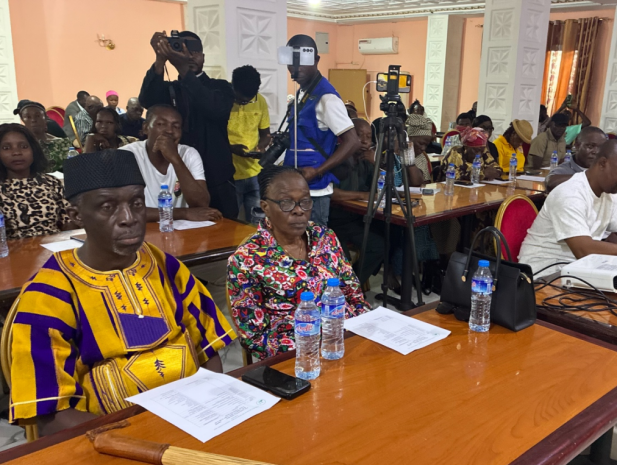
Speaking Saturday at a Paynesville hotel during the 17th anniversary celebration of the Liberia Massacre Survivors Association, the country’s largest group representing victims and survivors of the civil wars, Barbu said lawmakers cannot wait.
“Mr. President, please, we begging you. These people they not coming until October,” said Barbu in Liberian English, drawing applause from an audience that included war victims and survivors. “Call them back right now to pass this law here. Don’t waste time. Call them back let them pass the law before you go to the GA[United Nations General Assembly]. It can happen.”
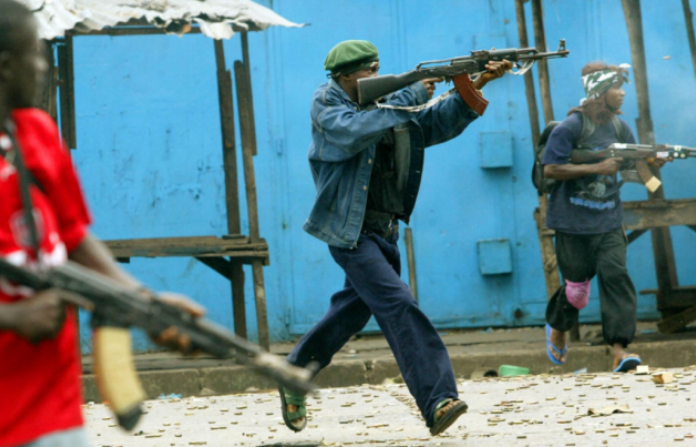
The appeal adds new urgency to Liberia’s long-running effort to establish a court for crimes committed during its civil wars, with competing proposals still before lawmakers more than two decades after the conflicts ended. Advocates see Boakai’s appearance at the U.N. General Assembly as an opportunity to demonstrate progress on accountability as Liberia assumes a more prominent international role, including its two-year term on the U.N. Security Council and its scheduled presidency of the Council in December. Transitional justice was not a stand-alone pillar of Liberia’s campaign for the Council’s seat, but key members of the international community have made it clear that they expect Liberia to have made meaningful progress on wartime justice before it takes is seat as chair on the Security Council. They also flag this as an important opportunity to encourage international support for the court.
The Legislature, which has the constitutional authority to establish courts, is considering six proposals: bills from the Liberian National Bar Association and a civil society coalition led by the Independent National Commission on Human Rights; separate proposals from Senate President Pro Tempore Nyonblee Karnga-Lawrence and Senator Joseph Jallah; and two bills from the government’s court office establishing a War and Economic Crimes Court and a National Anti-Corruption Court.
In May, Boakai renewed efforts to establish the courts. The Office subsequently submitted its bills, but lawmakers went on their annual constituency break in July without passing them.
The Constitution gives the president authority to convene the Legislature in an extraordinary session when the public interest requires it. Since taking office in January 2024, Boakai has recalled lawmakers from legislative breaks three times, although one recall, in August 2024, followed a request from lawmakers themselves. The current break began July 17 and runs until the second Friday in October.
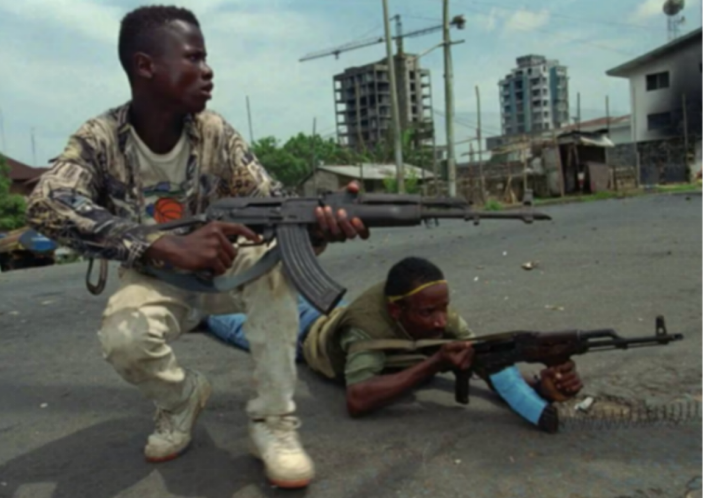
For court advocates, passage would give Boakai tangible progress to point to internationally on an accountability process that has remained unfinished since Liberia’s Truth and Reconciliation Commission recommended a special criminal court in its 2009 final Report.
But for Rebecca Sonyah, 70, the significance is far more personal.
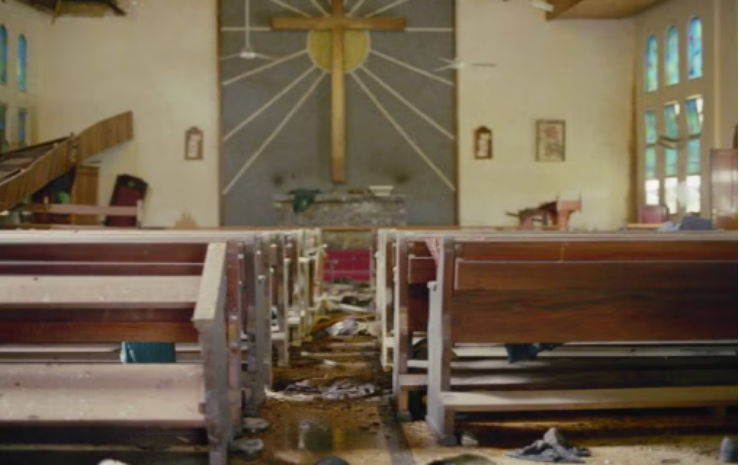
Sonyah, the mother of Peterson Sonyah, executive director of the Liberia Massacre Survivors Association, lost her husband — Peterson’s father — and six other relatives in the St. Peter’s Lutheran Church massacre, in which an estimated 600 men, women and children were killed. Peterson and nine others survived the carnage. Sonyah, who said she was inside the church’s school building when the massacre unfolded, was left to raise Peterson and four of his siblings on her own.
Sonyah said she had previously advised her son against advocating for the court but changed her mind as the campaign became a national issue.
“The war crimes court [is] important because people fini doing the killing they are free,” Sonyah told FrontPage Africa/New Narratives on the sidelines of Saturday’s event. “So many years have gone by. Other people just grieving in their hearts. Some people caused people suffering. Then they sitting down relaxing, enjoying. So, whatever you do, you have to pay the consequence.”
Even among court supporters, there is no consensus over the final legislation. One major disagreement concerns appeals. Karnga-Lawrence and Jallah want appeals from the proposed court ultimately routed through Liberia’s Supreme Court. In a 2025 interview with FrontPage Africa/New Narratives, Jallah also sought to restrict international participation, saying foreign lawyers and judges could serve as “consultants to Liberians” but could not appear before the court unless otherwise agreed by the Supreme Court.
But international and national experts have dismissed the idea that the court could happen without internationals playing key roles. United Nations and other key officials from European governments have warned that they would not recognize the court unless it was a hybrid domestic/international court separate from Liberia’s legal system. Tiawan Gongloe, a veteran human rights lawyer, rejected the argument that the Supreme Court’s constitutional status prevents a special court from having its own appeals chamber.
“All constitutions in the world have a clear provision that the Supreme Court is the highest in the land. Sierra Leone and Rwanda have the same provisions in their constitutions, yet they had war crimes courts that had appeal chambers,” said Gongloe, under whose tenure as national president of the Liberian National Bar Association the organization submitted its hybrid court bill in 2021. “Liberia cannot have that unique,” Gongloe said. “We don’t want this ‘made in Liberia’ that makes us look bad all the time. We are a party to the Geneva Convention. We are a member of the international community.”
The Office’s proposal has also faced criticism. Among the concerns are provisions allowing the prosecution of former child soldiers recruited between the ages of 15 and 18 for atrocities allegedly committed after they turned 18. The bill also includes genocide, terrorism and mercenarism within the proposed court’s jurisdiction.
Another issue raised during discussions over the bill has been the appointment of the proposed court’s registrar, one of its most senior administrative officials.
“There’s no perfect document in the world,” Barbu said. “Our own document is not perfect, but it will address our situation.”
Before lawmakers left for their constituency break, both chambers had begun considering the proposals. Boakai’s bills were referred to House committees, while more than 40 representatives participated in a two-day technical deliberation in Buchanan in June. The Senate Judiciary Committee separately began consultations aimed at harmonizing the competing proposals. Neither chamber passed legislation before the break.
Lawmakers said they needed time to consult constituents. But a soon-to-be-released FrontPage Africa/New Narratives survey found just 4 percent of 1150 respondents in 11 counties said they were aware that their lawmakers had held any consultations with citizens on the proposed court.
The delays have fueled frustration. At Saturday’s gathering, Barbu urged supporters to begin a sit-in at the Capitol Building.
“We beg you. Make it your duty to join us at the Capitol Building,” he said. “When they come, let them see us. When they going, let them see us.”
Victims and advocates are also pressing for reparations and assistance. Gongloe called for a National War Victims Relief Fund, proposing that Liberians at home contribute LD$100 annually and working Liberians abroad contribute US$1, with the government matching the total fivefold. He said the money could support medical care and microloans.
“Taking care of victims of the war is a different agenda,” Gongloe said.
In response, Barbu made a dramatic gesture, giving Gongloe the first LD$100 towards the fund. Patmillia Doe Paivey, a commissioner of the Independent National Commission on Human Rights, quickly took the note and promised a proposal for the fund would be announced in days.
The Liberia Massacre Survivors Association separately called for US$250,000 in annual government funding, beginning in fiscal year 2026/2027, to document survivor testimony and massacre sites, support memorialization and transitional justice education, and provide livelihood assistance.
“To support LIMASA [Liberia Massacre Survivors Association] is to invest in Liberia’s peace and dignity,” the group’s statement said.
The event also honored several people, including advocates and journalists, for their service to humanity and their advocacy and reporting highlighting the plight of victims and survivors of Liberia’s civil wars.
Bowoulu Taylor Kelley, vice president of the Association of Female Lawyers of Liberia, who delivered the keynote address, said justice must be accompanied by practical support for survivors.
“Hope is a widow hearing, at last, that her loss is seen. Hope is a nation saying to its wounded citizens: ‘you are not forgotten, you are not alone, and what happened to you matters,’” Kelley said.
She called for accessible health care, trauma-informed counseling, livelihood and education opportunities, support for widows, orphans, people living with war-related disabilities and elderly survivors, memorials, preservation of testimony and reparations.
“Restoring hope requires practical commitments,” Kelley said.
This story was a collaboration with New Narratives as part of the Investigating Liberia project. Funding was provided by the Swedish International Cooperation Development Agency. The funder had no say in the story’s content.
Support Independent Journalism
Your support helps FrontPage Africa continue delivering independent, credible, and impactful journalism. Every contribution strengthens our ability to investigate, inform, and hold power accountable while keeping quality journalism accessible to our readers.
Support our journalism or subscribe to receive the latest FrontPage Africa stories and updates.