On March 25, 2024, I received the call that changed the course of my public life: I had been appointed Commissioner of the Township of Congo Town. What began with the celebration soon transitioned into a demanding journey of leadership, learning, and rebuilding amid great challenges.
By Edward Horton Lahai, Commissioner, Township of Congo Town, contributing writer
Following my nomination, the path to confirmation was far from smooth. Political tension and delays meant multiple cancelled hearings. It wasn’t until July 11, 2024, that I was finally confirmed by the Liberian Senate and officially appointed by H.E. President Joseph Nyuma Boakai. But the real work began thereafter.
Confronting Reality: The State of Local Governance
Upon assuming office, I was met with a harsh reality, a dilapidated office space, non-functional infrastructure, no electricity, minimal staffing, and a dormant bank account for over six years. These conditions highlighted a systemic neglect of local governance, especially in Montserrado County, the political capital of Liberia.
Most local government structures across Liberia face similar conditions. Often viewed as mere dispute mediators or land brokers, commissioners lack the tools, resources, and authority needed to implement meaningful change. Decentralization remains largely theoretical, with little financial support and no structured revenue collection at the local level.
Rebuilding Trust through Visible Action
Recognizing the urgency, I immediately engaged friends and partners to support renovation efforts. Restoring the Congo Town office signaled the beginning of a new relationship between the local authority and the residents. For many, it was the first time they recognized the local office as a space for public service, not just a building in the community.
We launched strategic outreach, meeting with community leaders, businesses, youth groups, diplomatic missions, and other stakeholders. These engagements fostered citizen participation, strengthened local partnerships, and helped redefine the role of local government as a development partner.
Strategic Interventions in Education and Sanitation
With limited resources, we prioritized impactful initiatives. In education, we collaborated with public and private school administrators to assess needs. Through partnerships, we distributed school supplies to students and donated instructional materials, including whiteboards and markers provided by the Chinese Embassy. Minor renovations were also undertaken at the Barchue Community Public School.
In sanitation, we mobilized waste management companies and community volunteers to execute a large-scale cleanup across Congo Town in July 2024. This was the first of several efforts that improved environmental health and reinforced our commitment to keeping the township clean.
Promoting Awareness and Youth Engagement
We introduced awareness programs on drug prevention, WASSCE preparation, and career development for high school students. These initiatives aim to reduce risky behaviors and empower the next generation through knowledge and guidance.
Persistent Challenges in Local Administration
Despite progress, major challenges remain: Lack of Budgetary Support: No functioning institution can thrive without funding. Local government offices remain under-resourced, relying largely on personal sacrifices and ad hoc donations.
Absence of Revenue Collection Authority: Without the legal framework and enforcement mechanisms to collect local fees, townships are unable to generate their own income to sustain operations or implement development initiatives.
Liberia’s decentralization agenda must be matched with real investment. Local government can not function on goodwill alone. Montserrado County alone has 5 cities, 21 townships, 1 borough, and 5 chiefdoms, each requiring tailored support to serve as the link between citizens and the central government.
A Call for National Commitment
Our experience in Congo Town proves that local transformation is possible, but only through action, not words. National development must begin from the bottom up. With the right investment, decentralized planning, and empowered local structures, we can finally make local governance a catalyst for Liberia’s growth.
Despite Montserrado County having 33 local subdivisions, 5 cities, 21 townships, 1 borough, and 5 chiefdoms, fewer than five receive consistent budgetary support from the national government. Most others, particularly in rural Montserrado, are underfunded and marginalized, often left without basic services, infrastructure, or visibility.
Many commissioners and chiefs operate from their porches or under palaver huts due to the absence of functional office spaces. Consequently, local offices are often abandoned, citizens disengaged, and government policies are poorly implemented at the grassroots level.
Limited Awareness and Revenue Gaps
Local fees, intended to finance municipal activities, are underutilized. Community members are largely unaware of their obligations, and those who do pay often express frustration over the lack of visible improvements. This disconnect stifles citizen engagement and limits the realization of decentralization.
Low Pay and Lack of Benefits
When I assumed office, I was informed that my predecessor earned only $100 USD monthly. I accepted the role regardless, out of commitment to public service. It wasn’t until five months later that I received my first salary, approximately $200 USD, which later dropped to just $91.99 USD and $7,794 LRD in May 2025. Many commissioners have worked for nearly a year without receiving pay.
Local staff members fare no better. Most earn below the national minimum wage while being tasked with responsibilities far beyond their compensation, including coordination with multiple ministries and agencies, resolving disputes, and implementing national programs.
Human Resource and Capacity Constraints
At the Township of Congo Town, I inherited only four staff, only one of whom was on government payroll. To improve service delivery, we recruited 74 volunteers, including university students and graduates. We created new departments (sanitation, parking, inspectorate, dispute resolution, and more) to increase visibility and structure.
Despite progress, we could only sustain 50 volunteers due to a lack of funds. Yet, we continue to provide small stipends, ranging from 3,000 LRD to 16,000 LRD, and school supplies for their children to maintain morale and commitment.
Logistics and Transportation: A Critical Void
From ordinance enforcement to sanitation and conflict resolution, local governance requires mobility and materials. At the time of takeover, Congo Town had no brooms, shovels, or wheelbarrows. Our first donation came from the Monrovia City Corporation, which enabled regular clean-up exercises.
Transportation remains a major bottleneck. Commissioners, especially in rural Montserrado, are often forced to walk or use commercial means to get to assignments, severely undermining efficiency and safety.
Decentralization: Still Theoretical
Although decentralization is enshrined in policy, it remains largely symbolic. Ministries, agencies, and commissions (MACs) often operate in local areas without coordination with local authorities. Commissioners, mayors, and chiefs are sometimes undermined or ignored altogether, an outcome of poorly harmonized governance laws and limited decentralization awareness within the MACs themselves.
True decentralization requires devolving not only power but also resources and functions. If Liberia intends to, for example, boost rice production, then local structures should be empowered with resources and plans through the Ministry of Agriculture to actualize this vision locally.
The “Lesser Honorables” and the Need for National Recognition
Commissioners are often referred to as “Honorable,” but in reality, we serve without any of the accompanying benefits. No transportation allowance, no medical coverage, no communication stipends, just commitment and hope. Many are sacrificing personal comfort and family needs to serve communities with limited tools.
It’s time we recognize local officials for what they are: Public Servants ProMax, those working under the harshest conditions with unmatched devotion.
Partnerships and Support: A Way Forward
Despite the odds, progress is possible through partnership. We acknowledge and appreciate support from individuals like Hon. Prescilla Abram Cooper, whose collaboration has helped us secure a Fire Service Station for Congo Town. We also thank private citizens like Richard Dorbor and Cytarus Grace Dahn, whose contributions have sustained vital projects such as the Township Parking Service, now a key revenue generator.
We encourage lawmakers to support the Townships in their districts and appeal to the public: if your family or friends serve in local government, support them, they are serving Liberia against great odds.
Conclusion: A National Call for Decentralization in Action
The work of local government is pivotal to national development. But it must be resourced, structured, and respected. We can not continue to centralize functions while expecting localized impact. The success of decentralization requires a national awareness campaign, a review of institutional laws, and a reinvestment in grassroots governance.
Let us build a Liberia where governance is not just top-down, but from the people, with the people, and for the people, in every city, township, borough, and chiefdom.
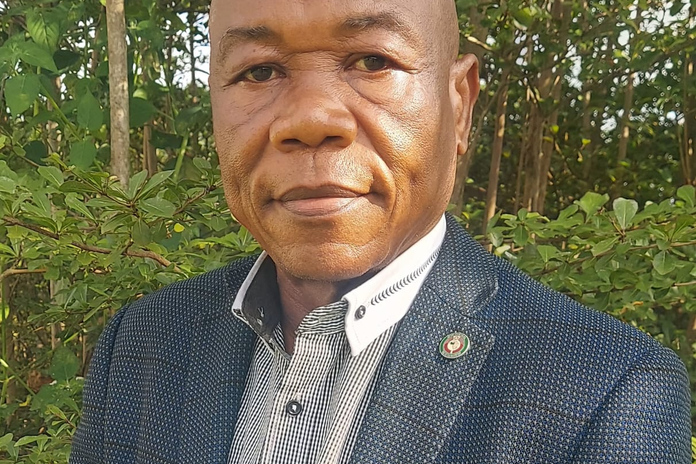
Hon. Edward Horton Lahai is the Commissioner of the Township of Congo Town and Chairman of the Commissioners Council of Montserrado County.
Support Independent Journalism
Your support helps FrontPage Africa continue delivering independent, credible, and impactful journalism. Every contribution strengthens our ability to investigate, inform, and hold power accountable while keeping quality journalism accessible to our readers.
Support our journalism or subscribe to receive the latest FrontPage Africa stories and updates.