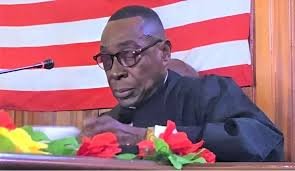
Monrovia, Liberia-The Supreme Court of Liberia, has ordered the recusal of Judge Blamo Dixon from the corruption case against former Finance Minister Samuel Tweah and others, raising serious questions about the government’s motives and the integrity of its judicial processes.
By Victoria Wesseh
Justice Yamie Quiqui Gbeisay’s decision comes in the wake of allegations that Judge Dixon displayed bias against the defendants, suggesting a disturbing contour of government overreach in its pursuit of what is termed a politically motivated charges.
The Supreme Court condemned the judge’s prejudicial comments, which appeared to favor the defendants and undermined the prosecution’ right to a fair trial.
This ruling serves as a reminder of the judiciary’s crucial role in safeguarding individual rights against the state’s potential abuses.
“The law mandates that judges must not only be impartial but must also appear to be so,” Justice Gbeisay stated.
He emphasized the need for an unbiased judiciary in cases that capture public attention.
The government’s contentious stance against Tweah and his co-defendants raises concerns about the use of judicial power as a tool for political retribution.
Critics argue that the prosecution’s tactics reflect a broader strategy to intimidate political figures.
But the Supreme Court’s ruling further underscored the necessity for transparency and accountability within the government’s actions.
However, Defense attorneys welcomed the Supreme Court’s decision.
The case is expected to transition to a new judge.
At the same time, the ruling could reshape the landscape of legal accountability in Liberia.
Support Independent Journalism
Your support helps FrontPage Africa continue delivering independent, credible, and impactful journalism. Every contribution strengthens our ability to investigate, inform, and hold power accountable while keeping quality journalism accessible to our readers.
Support our journalism or subscribe to receive the latest FrontPage Africa stories and updates.