Lower Margibi County – The Sustainable Development Institute (SDI) and the Nitrain Community Forestry Management Body (NCFMB) have accused Liberia’s Environmental Protection Agency (EPA) of failing to fulfill its legal mandate by ignoring a formal complaint against Golden Veroleum Liberia (GVL), while warning that they will seek legal redress if the government continues to remain silent.
By Emmanuel Weedee-Conway
The organizations say the EPA has failed to formally respond to a complaint filed on April 30, 2026, alleging that GVL illegally cleared approximately 1,000 hectares of Upper Guinea Forest in Sinoe County, including habitat for the critically endangered chimpanzee, while violating the land rights of local communities.
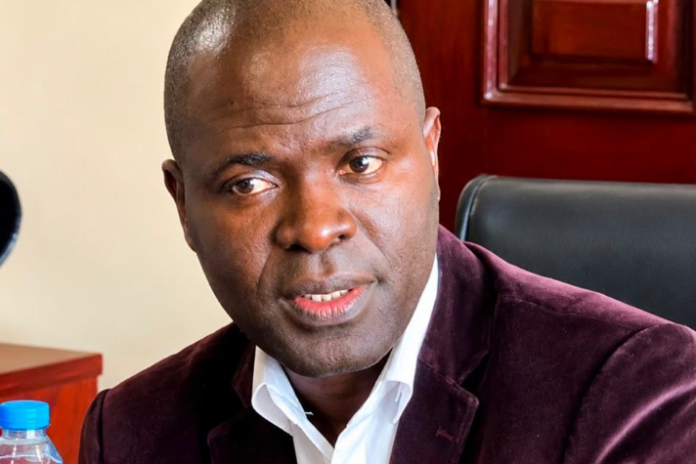
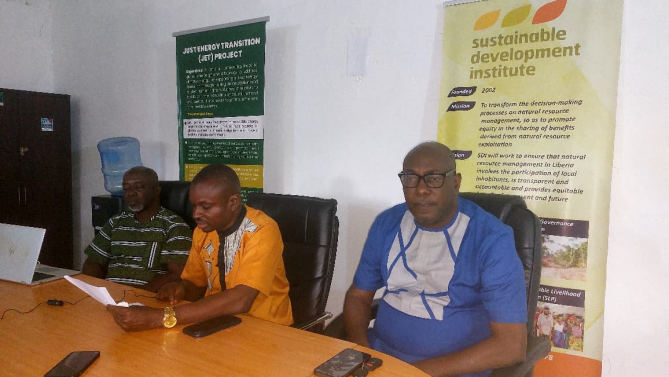
Speaking during a press conference in Monrovia, SDI Executive Director Wilfred Gray-Johnson expressed frustration over what he described as the EPA’s refusal to acknowledge receipt of the complaint despite legal provisions requiring government agencies to respond within stipulated timeframes.
“There are laws, and when complaints are brought to you, there are stipulated timeframes to respond. Even if you are going to investigate, simply acknowledge that you have received the complaint and indicate the next steps,” said the SDI Executive Director.
He disclosed that although SDI had exchanged informal text messages and emails with EPA officials, the agency has not issued any formal written response.
According to Mr. Gray-Johnson, the prolonged silence has left impoverished rural communities without the protection they deserve.
“These are people living on their own land with vast natural resources, yet they are being neglected by those entrusted to protect their rights,” he said.
Mr. Gray-Johnson noted that SDI had repeatedly attempted to engage the EPA, including reaching out directly to the agency’s leadership, but those efforts failed to produce meaningful dialogue.
He contrasted the government’s response with that of Golden Veroleum Liberia, saying the company publicly acknowledged the complaint and dispatched representatives to meet affected communities after the matter became public.
“When we formally presented the complaint to the EPA and it became public in the media, Golden Veroleum Liberia responded publicly and even visited the communities. Yet the government, to whom the complaint was officially submitted, has remained silent,” Mr. Gray-Johnson furthered.
SDI Community Rights and Corporate Governance Program Coordinator James G. Otto described the EPA’s inaction as a “willful neglect” of its statutory responsibility to enforce Liberia’s environmental laws.
“Ample evidence has been provided to the EPA detailing how GVL razed 1,000 hectares of Liberia’s Upper Guinea Forest, grabbed land from communities, and violated national laws,” Mr. Otto indicated.
“The EPA exists to uphold Liberian environmental laws. Two months have passed since we filed our complaint, but all we have received is silence.”
According to SDI, the complaint alleges that GVL’s operations may violate several Liberian laws, including the Environmental Protection and Management Act, the National Forestry Reform Law, the Community Rights Law, and the Land Rights Act. Copies of the complaint were also submitted to the Forestry Development Authority (FDA) and the National Bureau of Concessions (NBC).
The allegations are supported by findings from the High Carbon Stock Approach (HCSA), an international multi-stakeholder initiative that promotes forest conservation. In 2021, the HCSA concluded that GVL had cleared approximately 1,000 hectares of High Carbon Stock and High Conservation Value forests within its concession area and instructed the company to restore the affected forests and develop appropriate conservation plans.
SDI says those restoration measures have yet to be implemented.
The organizations also referenced findings by the Roundtable on Sustainable Palm Oil (RSPO), which in 2018 concluded that GVL destroyed sacred sites, coerced communities into signing agreements, and failed to obtain the Free, Prior and Informed Consent (FPIC) of several communities before commencing operations.
Representing affected residents, Jackson Tweh of the Nitrain Community Forestry Management Body said local communities have endured years of environmental destruction and land disputes.
“For over a decade, we have suffered from GVL’s destructive operations. Our forests have been cleared. Our land has been taken from us. To now be ignored by our own government indicates negligence, impotence or both.”
Beyond the immediate complaint against GVL, SDI Program Assistant, Sampson M. Williams opines that government’s action reflects institutional weaknesses in managing Liberia’s natural resources.
One SDI official described the situation as “a systemic failure within our government,” saying authorities have consistently failed to protect forests or ensure that local communities are heard in national decision-making.
“This is deeper than a single case,” the representative said. “Our government needs to address the irregularities affecting land and forest resources across the country.”
According to SDI, only two of six community forest estates have received permanent legal recognition, despite communities completing required mapping exercises and engaging institutions such as the Liberia Land Authority, Ministry of Agriculture, National Bureau of Concessions and GVL.
The organization argues that these delays expose deeper governance failures affecting customary land ownership and community forestry across Liberia.
Frustrated by what it calls continued government inaction, SDI announced that it is preparing to take the matter before the courts.
“We are making this public so the government and the public know exactly where this is coming from,” the representative said. “If there is no redress, the next course of action will be legal action. We do not have the power to force the EPA Executive Director to respond or compel the President to react, but we can seek legal redress,” asserted ED Gray-Johnson and Program Assistant Williams.
The group is also calling on President Joseph Nyuma Boakai to intervene and ensure that government agencies fulfill their legal obligations to protect Liberia’s forests, biodiversity, and the rights of communities affected by concession activities.
Mr. Gray-Johnson particularly expressed disappointment that the EPA’s leadership – especially individuals with whom SDI has worked for years on land reform and environmental governance, have remained unresponsive despite longstanding professional relationships.
He added that continued government silence threatens to erode years of progress toward land reform, environmental protection, and social justice.
Support Independent Journalism
Your support helps FrontPage Africa continue delivering independent, credible, and impactful journalism. Every contribution strengthens our ability to investigate, inform, and hold power accountable while keeping quality journalism accessible to our readers.
Support our journalism or subscribe to receive the latest FrontPage Africa stories and updates.