MONROVIA — Samuel Tweah is sticking to his “Not Guilty” verdict, even though, as of Tuesday, it no longer legally exists.
By Rodney D. Sieh, [email protected]
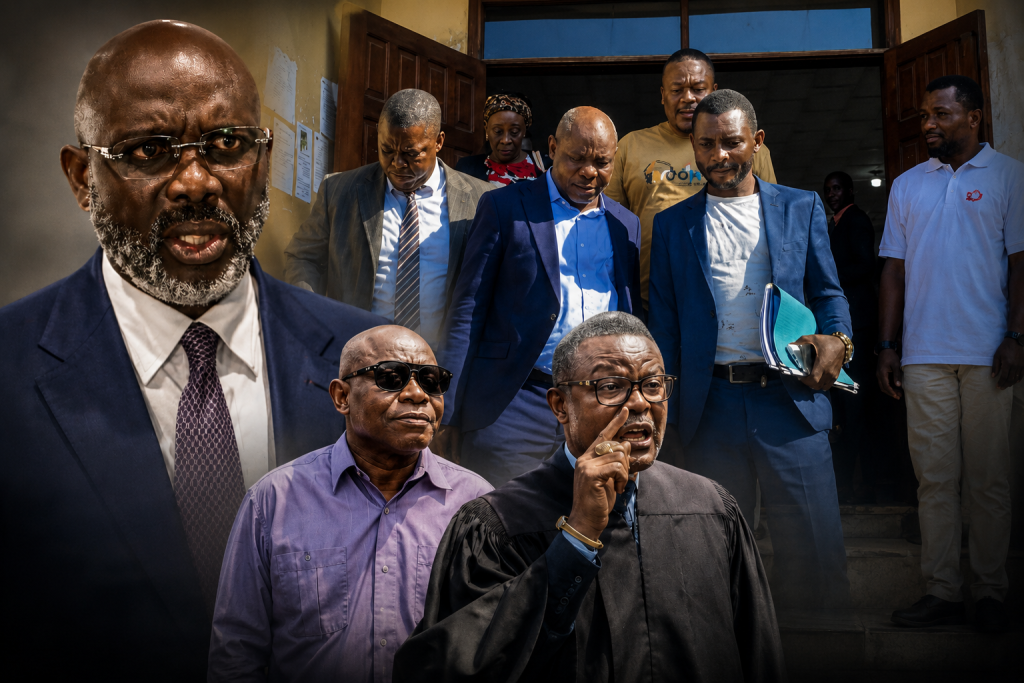
In May, a jury cleared the former Minister of Finance and Development Planning of every charge against him — economic sabotage, theft of property, money laundering, criminal facilitation, conspiracy. Weeks later, that verdict is gone. On Tuesday, Judge Ousman F. Feika of Criminal Court “C” ruled to vacate Tweah’s acquittal and ordered the arrest of all 15 jurors who sat on the case — a decision already being described as one of the most consequential in Liberia’s post-war legal history.
In a nine-page investigative report issued the same day, Feika concluded that the jury’s verdict had been compromised by widespread misconduct: unauthorized mobile phone use during sequestration, communication with people outside the jury’s quarters, and what the ruling describes as a coordinated effort among jurors to conceal their conduct once the court began investigating. “The evidence having established gross jury tampering and misconduct, and the jury’s conduct having contaminated and tainted the verdict returned on May 8, 2026,” Feika wrote, declaring the trial a mistrial, setting the verdict aside, and ordering a new one.
For Tweah, the ruling reads as a return to something darker than a legal setback. “Liberian Justice and democracy took a gigantic step backwards but men are prepared to resist this slide into anarchy,” he wrote in a Facebook post Tuesday. “No judge, no justice and no President can ever change my NOT GUILTY verdict. It is etched in the history of our country! The kangaroo farce handed down today is just that: a kangaroo ruling.”
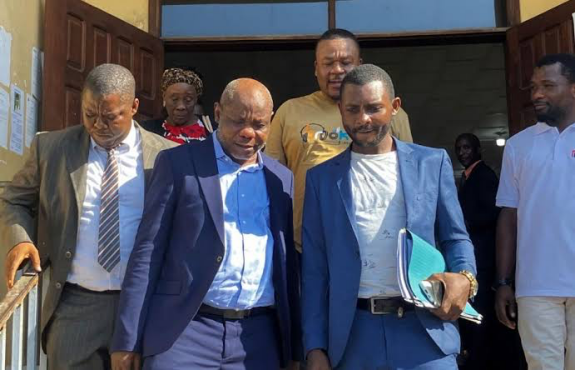
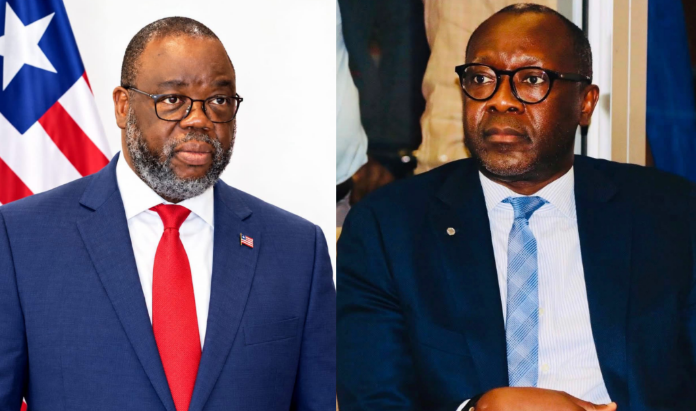
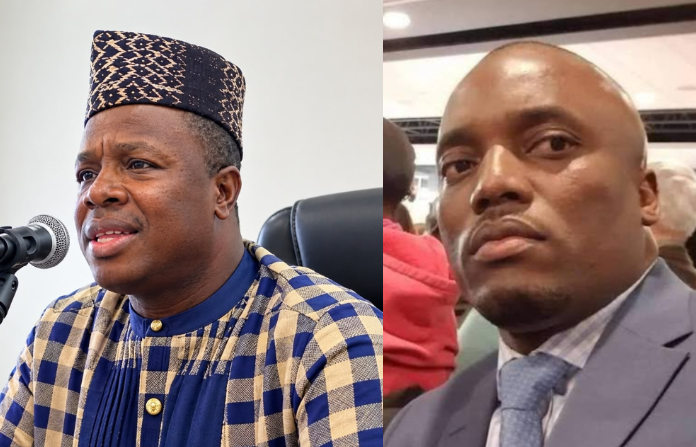
He says his legal fight is already over. “We have left the law and are now in the full realm of politics. I remain a free man,” Tweah said, adding that he’s instructed his legal team to file nothing before the Supreme Court — that his case ended, as far as he’s concerned, the moment the jury said not guilty. His party is already treating it that way. “What is happening is an attempt to use extrajudicial means to bring him back before a kangaroo body,” said Lenn Eugene Nagbe, information minister under former President George Weah and a senior figure in Tweah’s Coalition for Democratic Change. “This is a political fight against one of our very senior founding members. It’s an attack not on Samuel Tweah alone, but an attack on the CDC. If they slap us once, we have to slap them twice.”
It’s a defiance Tweah has voiced before, in almost identical terms, going back to the weeks right after his acquittal — and each time, he’s offered the same explanation for why he thinks any of this is happening at all. “The government’s relentless pursuit of me is not simply about Samuel D. Tweah,” he said in one earlier appearance. “I believe they see me as a political bridge to former President George Weah and think that by imprisoning me, they can send a message to the former President and weaken the political force and support that still surrounds him. They believe that if they can use the courts to silence me, intimidate me, or label me a criminal, they would indirectly be striking at President Weah and those who served with him.” It’s a theory that only makes sense with 2029 already on the calendar — and it’s the same logic underneath his refusal to bend now. “I will not allow myself to be used as a political trophy or a tool in anyone’s political calculations,” he’s said. “I have faced their accusations, stood before the court, and placed my fate in the hands of ordinary Liberians who listened to the evidence and returned their verdict.” Tuesday’s ruling is the first real test of whether that was a promise he can keep or a line he was hoping he’d never have to.
Tweah’s own lawyers appear less willing to walk away than he is. Lead counsel Cllr. Arthur Tamba Johnson formally took exception to Feika’s ruling in court Tuesday and signaled an appeal to the Supreme Court — the exact venue his client says he’ll refuse to recognize. That gap between what Tweah is saying in public and what his legal team is doing on the record is worth sitting with. A defendant declaring the courts illegitimate while his lawyers quietly preserve every available legal remedy isn’t necessarily a contradiction — it’s what a competent legal strategy looks like when your client is also running a political campaign. But it does mean “I remain a free man” is a political statement first and a legal prediction second.
What the Judge Actually Found — and What the Defense Says That Ignores
It matters that this ruling isn’t a bare assertion. Feika’s nine-page report lays out specific, factual claims — phones inside a sequestered jury room, contact with outsiders, an alleged cover-up once investigators started looking. If those findings hold up, they describe exactly the kind of jury misconduct that should void a verdict in any functioning court system, regardless of who the defendant is or what office he once held.
But Tweah’s defense has a constitutional argument that doesn’t disappear just because the misconduct findings sound serious: Liberia’s 1986 Constitution bars double jeopardy under Article 20(a), and his lawyers argue that vacating a jury’s acquittal and ordering a new trial runs straight into that protection. Whether jury-tampering findings can lawfully override a constitutional double-jeopardy bar is precisely the kind of question the Supreme Court exists to answer — which is what makes Tweah’s declared refusal to go there so consequential. He may be forfeiting the one venue built to resolve, on the merits, whether Tuesday’s ruling was lawful at all.
The Bigger Move Is What the CDC Just Did, Not Just What It Said
The CDC’s own statement on the case goes further than defending Tweah’s record. It accuses Vice President Jeremiah Kpan Koung and National Security Advisor Samuel Kofi Woods of personally driving an effort to pressure the judiciary, and attributes to Koung a line — that “winning the 2029 election for the government is more important than protecting the law” — without saying who heard him say it or how the party came to have it. It also claims Judge Feika himself is facing intimidation and death threats over the case, sourced only to “credible information” and “information in our domain.” Those are serious accusations against named officials, and they may yet prove true. Right now, they’re allegations without a visible paper trail — the kind of claim a newsroom reports as a claim, not as fact.
What the CDC did next matters as much as what it alleged. The party didn’t just condemn the ruling — it effectively backed Tweah’s own posture, treating the process as illegitimate and warning that named officials would be held “politically and personally accountable” if things go badly, while invoking Article 1 of the Constitution (“all power is inherent in the people”) as grounds for what it calls “democratic resistance.” That’s a party telling its own man not to recognize a court ruling while accusing the government of disrespecting legal process — both things can be true at once, but the statement doesn’t sit with that tension so much as lean into it.
Where This Fits
None of this is happening in isolation, and both sides know it. The ruling lands in the middle of an already-loud national argument about whether the Boakai-Koung government treats the powerful and the ordinary differently — a musician dragged off his floor on livestream, a suspect in a $19 million cocaine case who simply flew home and walked in, a protest organizer whose house got surrounded by police within a day. The CDC’s own language — “cocaine regime” — is a direct reach into that same well of public frustration, whether or not the cases are legally connected at all. That’s effective positioning for an opposition party three years from an election. It’s also a reason to read the CDC’s statement as advocacy first and evidence second, even where its underlying grievance is real.
A Question Bigger Than One Man
Strip away the Facebook posts and the political messaging, and what’s left is a genuinely hard question with no clean answer yet: can a court that finds real evidence of jury tampering ever undo a verdict without that power being available, someday, to undo a verdict the state simply doesn’t like?
Liberia has now answered that question once, in Samuel Tweah’s case, and the answer was yes. Whether that turns out to be the moment the courts proved they can police their own juries, or the moment they showed a losing side just needs to wait for the right judge, won’t be settled by anything either side posts this week.
It will be settled by whether Tweah’s lawyers get a real hearing at the Supreme Court he says he’s finished with, whether the new trial actually happens in open court on the evidence Feika described, and whether 15 jurors end up prosecuted on proof or simply detained because a former minister’s acquittal became inconvenient. Three years out from 2029, Liberia is finding out in real time whether its verdicts are final, or just provisional until someone with enough power decides otherwise.
Support Independent Journalism
Your support helps FrontPage Africa continue delivering independent, credible, and impactful journalism. Every contribution strengthens our ability to investigate, inform, and hold power accountable while keeping quality journalism accessible to our readers.
Support our journalism or subscribe to receive the latest FrontPage Africa stories and updates.