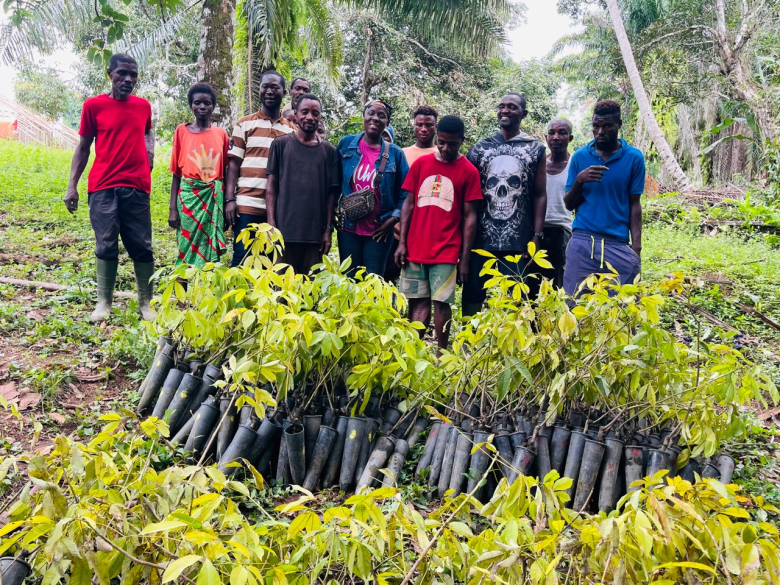
Grand Gedeh County — The Rubber Planters Association of Liberia (RPAL), with funding from the Government of Liberia through the Rubber Development Fund Incorporated (RDFI), has begun distributing root-trainers for the establishment of 28 budwood nurseries in seven underserved counties across southeast and northern Liberia.
By: Yawah Y. Jaivey
The nurseries are being established through farmer cooperatives in Grand Gedeh, Grand Kru, Maryland, River Gee, Rivercess, Sinoe, and Lofa counties.
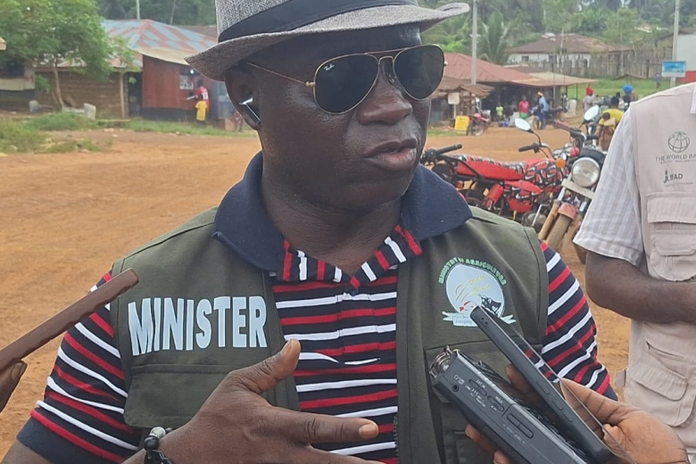
Galima G. Taylor, Executive Director of the Rubber planters Association of Liberia (RPAL), speaking recently during the distribution of thousands of root-trainers in the seven counties, disclosed that the beneficiary farmer cooperatives are expected to produce between 275,000 and 340,000 budded rubber stumps annually from the nurseries.
“This process will enable the rapid expansion of clonal rubber farming. This decentralized approach will reduce transportation costs, improve quality control, and accelerate the replanting of aging rubber farms,” Taylor said.
Taylor said RPAL and the Government of Liberia, in an effort to achieve the national agenda for rubber sector development outlined in the 2010–2040 Liberia Rubber Industry Master Plan, are also supplying farming materials to rubber planters.
Taylor explained that under component one of the project, 1,000 smallholder farmers across 10 counties are being supported with standardized rubber tapping materials, including cups, spouts, wires, knives, formic acid, and yield stimulants.
“By supplying materials at subsidized prices rather than as free handouts, farmers gain ownership while RPAL establishes a revolving input fund. The result will be reduced latex losses, improved quality, and increased daily farmer incomes,” the RPAL Executive Director said.
The 10 counties benefiting from this component are Bomi, Bong, Gbarpolu, Grand Bassa, Grand Cape Mount, Margibi, Maryland, Montserrado, Nimba, and Rivercess.
Continuing, Taylor stated, “Under component two, which focuses on cooperative budwood nurseries, RPAL is establishing 28 nurseries in seven underserved counties through farmer cooperatives.
Taylor further explained that, under component Three of the nationwide rubber sector development project, budded rubber stumps are being distributed to rubber planters across 10 counties.
He disclosed that approximately 1,000 qualified farmers are receiving 1,000 improved rubber stumps each, in addition to 100 replacement stumps in poly bags.
“This will establish more than 4,100 acres of new, high-yield rubber plantations using certified planting material, dramatically increasing national output and farmer income,” Taylor added.
He disclosed that rubber planters in Bong, Nimba, Grand Bassa, Rivercess, Margibi, Montserrado, Bomi, Grand Cape Mount, and Gbarpolu counties are currently benefiting from this component of the project.
Taylor also revealed that under component four, RPAL is registering rubber farmers and issuing 3,000 free identification cards across eight counties. He said the provision of identification cards is intended to create a verified national database of rubber farmers, eliminate illegal fee collection, improve subscription compliance, and enable RDFI and its partners to accurately target legitimate farmers.
The counties benefiting from this component include Grand Gedeh, River Gee, Rivercess, Sinoe, Grand Kru, Maryland, Nimba, and Lofa. Taylor explained the as part of component five, RPAL is providing technical extension services to 15 county supervisors and 15 agriculture technicians deployed nationwide.
He added that the extension support includes hands-on training, nursery supervision, planting assistance, intercropping guidance, and rubber farm management.
“This is to ensure that all investments under the project translate into real productivity gains in all of the rubber-producing counties,” Taylor said. For their part, rubber planters expressed gratitude to the Government of Liberia, RPAL, and RDFI for providing the rubber stumps and farm materials.
The farmers said they believe the initiative will significantly improve their livelihoods and help lift them out of poverty in the near future.
Support Independent Journalism
Your support helps FrontPage Africa continue delivering independent, credible, and impactful journalism. Every contribution strengthens our ability to investigate, inform, and hold power accountable while keeping quality journalism accessible to our readers.
Support our journalism or subscribe to receive the latest FrontPage Africa stories and updates.