MONROVIA — Liberian smallholder farmers could face growing difficulties accessing lucrative European markets if the country fails to establish reliable systems for identifying, registering and tracking agricultural production, a challenge AgroWorld is seeking to address through a newly launched digital farm mapping and traceability platform.
By Patience M. Jones,[email protected]
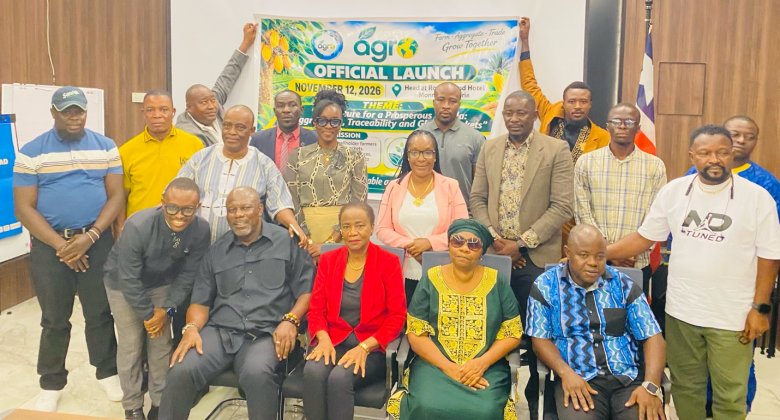
The initiative, introduced at the Royal Grand Hotel in Sinkor, Monrovia, is designed to help farmers comply with the European Union Deforestation Regulation (EUDR), strengthen agricultural supply chains, and position Liberian commodities for greater competitiveness in international markets.
Launched under the theme:, “Bridging the Digital Divide in Liberian Agriculture: EUDR Compliance, Traceability and Smallholder Inclusion,” the platform seeks to close critical gaps in farm registration, geographical mapping, commodity traceability, and market access.
At the center of the initiative is a growing concern that Liberian farmers could lose access to established international buyers if agricultural products cannot be traced to the specific farms and locations where they were produced.
Speaking at the launch, AgroWorld Chief Executive Officer, Dan Torkamawon Saryee, described the initiative as an important opportunity to strengthen agricultural communities and improve the competitiveness of locally produced commodities.
He welcomed farmers, exporters, development partners, and other stakeholders, emphasizing that collaboration among key actors is essential to ensuring that Liberian agricultural products meet international trade and environmental standards.
AgroWorld, a subsidiary of Creative Investment Group Africa LLC (CIGA), operates as an agricultural business-to-business platform offering aggregation, agricultural input distribution, processing, trade, and financial intermediation services.
As part of its expansion strategy, the company plans to establish regional aggregation hubs in Lofa, Bomi, Bong and Grand Gedeh Counties, with Montserrado serving as a support base for operations in Grand Bassa and River Cess counties.
The proposed hubs are expected to improve the collection, processing, and marketing of agricultural commodities while bringing essential services closer to smallholder farming communities.
Farmers Warn of Potential Market Exclusion
Providing a broader picture of the challenges confronting Liberia’s agricultural sector, Farmers Union Network President and AgroWorld Board Chair Josephine George Francis warned that the country remains inadequately prepared to meet key requirements of the European Union Deforestation Regulation.
She identified farm registration, geographical location mapping, and traceability as major areas requiring urgent attention, warning that failure to address these gaps could jeopardize the livelihoods of farmers who depend on cocoa, coffee, and other agricultural commodities sold to exporters serving European markets.
Francis expressed concern that many farmers have limited knowledge of the documentation and traceability standards required to maintain access to international buyers.
She stressed that without nationwide awareness and coordinated interventions, smallholder farmers could find themselves excluded from established agricultural supply chains through no fault of their own.
She also highlighted Liberia’s limited capacity to identify and digitally map smallholder farms, noting that agricultural products without verifiable production locations could face difficulties entering markets with strict environmental and traceability requirements.
According to Francis, Liberia exported more than 37,000 metric tons of agricultural commodities in 2025, underscoring the economic importance of protecting the country’s access to international markets.
She called for urgent investment in farm mapping, farmer registration, laboratory testing, and technical capacity, emphasizing that agriculture remains a critical source of livelihood for thousands of Liberians.
For Francis, the challenge extends beyond adopting technology. It is also about protecting rural livelihoods, sustaining agricultural exports, and ensuring that Liberian farmers are not left behind as international trade requirements become increasingly demanding.
Lawmaker’s Representative Calls for Inclusive Agricultural Technology
Meanwhile, Peleg G. Nickerson, representing the Chair of the House of Representatives Committee on Agriculture, Fisheries and Forestry, described the introduction of digital farm mapping and traceability as an important development in modernizing Liberia’s agricultural sector.
In remarks delivered on behalf of the committee chair, Nickerson said the initiative has the potential to connect farmers to emerging opportunities in domestic and international markets while strengthening transparency and accountability throughout agricultural supply chains.
However, he cautioned that technological advancement must not become another barrier for rural farmers.
Instead, he urged AgroWorld to ensure that the platform empowers smallholder producers, protects their interests, improves productivity, and enables them to receive greater economic value from their agricultural activities.
Nickerson also encouraged the company to strengthen partnerships with government institutions, private-sector actors, development partners, and local communities to ensure the initiative delivers meaningful results.
He called for a transition from subsistence-based agricultural production toward a more competitive, technology-driven, and internationally recognized sector.
How the Digital Farm Mapping System Will Work
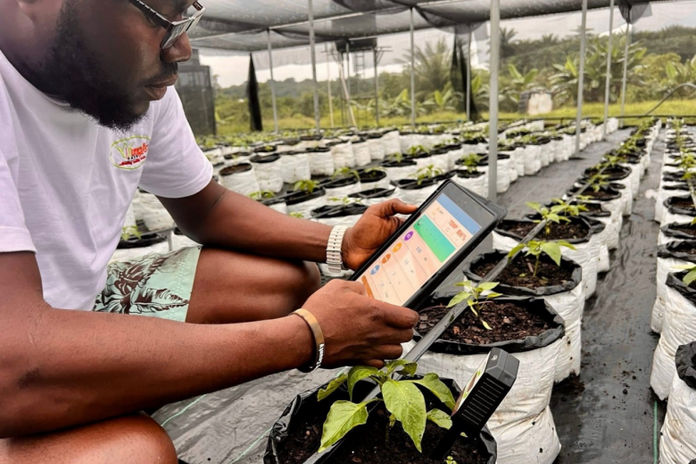
Providing technical details about the initiative, AgroWorld Technical Support Officer Sherman Seequeh explained that the platform is designed to help farmers and agricultural field agents collect, verify, and securely manage farm-level information.
He said the registration process will involve field agents identifying farmers, verifying their identities, obtaining their consent, and digitally documenting the geographical boundaries of their farms through Global Positioning System (GPS) technology.
Farmers will be required to provide identification documents, cooperative membership information, and proof of land ownership or authorization to use the farmland.
Seequeh explained that field agents will communicate the purpose of the registration exercise in local languages to ensure farmers understand the process before their information is collected.
Consent will be obtained through signatures or thumbprints, after which relevant information, including farmers’ identities, counties, districts, communities, crops, and farm locations, will be digitally recorded.
Importantly, the system is designed to function offline, allowing field agents to register farmers and collect geographical information in remote communities where internet connectivity remains limited.
Seequeh further disclosed that the platform will incorporate data protection measures, including encrypted storage, with access to farm and production information restricted to authorized buyers, regulators, and relevant certification institutions for trade verification and compliance purposes.
Beyond traceability, the platform is expected to provide farmers with digital farm identification, facilitate payments through mobile money and bank transfers, and improve access to agricultural inputs and climate-smart farming support.
A Critical Test for Liberia’s Agricultural Future
The launch comes at a time when Liberia faces increasing pressure to strengthen agricultural production systems and demonstrate the origin of commodities entering international supply chains.
For farmers producing cocoa, coffee, oil palm, and rubber, the ability to document where and how their products are grown is becoming increasingly important to maintaining access to international markets.
AgroWorld’s initiative therefore presents an opportunity to address longstanding gaps in agricultural data management while bringing smallholder farmers into a more organized and digitally connected production system.
However, the success of the platform will ultimately depend on its ability to reach rural farming communities, ensure meaningful farmer participation, protect producers’ information, and translate digital registration into tangible economic benefits.
As Liberia seeks to strengthen its position in international agricultural trade, the challenge will be ensuring that the transition toward stricter traceability standards does not shut out the very farmers whose livelihoods depend on the sector.
Support Independent Journalism
Your support helps FrontPage Africa continue delivering independent, credible, and impactful journalism. Every contribution strengthens our ability to investigate, inform, and hold power accountable while keeping quality journalism accessible to our readers.
Support our journalism or subscribe to receive the latest FrontPage Africa stories and updates.