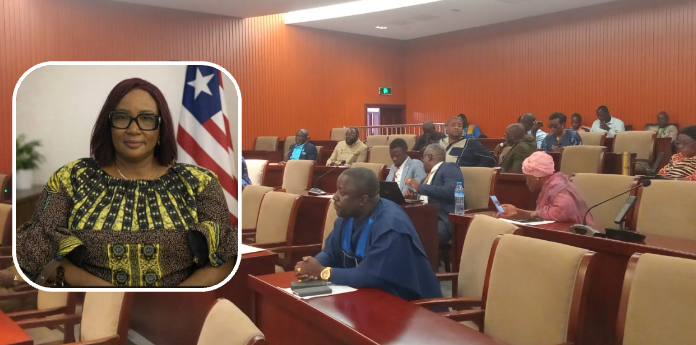
FISH TOWN, River Gee – Health authorities in River Gee County on Tuesday convened a stakeholder meeting aimed at enhancing preparedness and response strategies against potential outbreaks of the Monkeypox (Mpox) virus.
By: Peter P. Toe, Jr., Contributing Writer
The meeting, held in Fish Town, brought together local government officials, healthcare workers, civil society actors, community leaders, and the media to review current readiness levels and coordinate preventive measures.
Eric Chea, Community Health Development Director for River Gee County, presented national Mpox statistics, noting that Liberia has confirmed 102 cases, with 77 recoveries and 25 patients still receiving treatment.
“We must be proactive despite the current status,” Chea said. “Preparedness is key to protecting our communities.”
Ben Boah, the county’s Surveillance Officer, reported that a recent suspected Mpox case in River Gee tested negative and all contacts linked to the case had been cleared.
Participants also received training on identifying Mpox symptoms, implementing isolation and treatment protocols, and disseminating accurate public information to curb misinformation and fear.
The meeting ended with a joint pledge by health officials and stakeholders to maintain surveillance, improve community outreach, and ensure a coordinated response in the event of an outbreak.
While River Gee currently has no confirmed Mpox cases, health officials urged continued vigilance across all sectors of the county.
Support Independent Journalism
Your support helps FrontPage Africa continue delivering independent, credible, and impactful journalism. Every contribution strengthens our ability to investigate, inform, and hold power accountable while keeping quality journalism accessible to our readers.
Support our journalism or subscribe to receive the latest FrontPage Africa stories and updates.