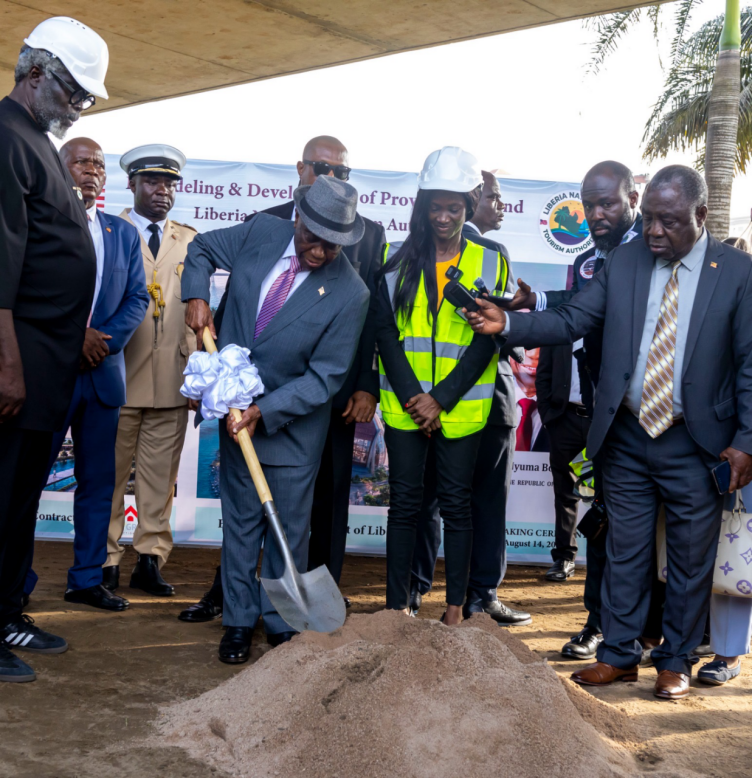
Monrovia — President Joseph Nyuma Boakai on Monday broke ground for the redevelopment of Providence Island, launching one of his administration’s flagship tourism and heritage projects amid questions over the protection of the site’s archaeological and cultural heritage and the transparency of the procurement process.
By Gerald C. Koinyeneh, [email protected]
The project, being implemented by the Liberia National Tourism Authority (LNTA), is expected to enter its next phase in September 2026. Officials say it is funded by the Government of Liberia through the Public Sector Investment Program and is being executed under a design-and-build arrangement that the LNTA says will allow the final design to respond to site conditions, technical assessments and heritage-preservation requirements identified during the project’s initial phase.
But even as the government moves to transform the historic site into a major tourism destination, concerns have emerged over whether previous archaeological, heritage, environmental and technical studies have been adequately incorporated into the project and whether sufficient information has been made available to the public.
Providence Island, located in the heart of Monrovia, occupies a central place in Liberia’s history. It was the landing point for freed Black Americans in 1822 and became associated with the establishment of the settlement that eventually grew into Monrovia.
Twenty-five years later, Liberia declared independence, further cementing the island’s place in the country’s founding narrative.
Formerly known as Dozoa, the island lies between the Mesurado River and Stockton Creek, roughly 500 to 600 meters from the Atlantic Ocean’s bar mouth. Covering approximately 11.22 acres, the island has a distinctive guitar-like shape when viewed from above.
Over the years, the Liberian government has worked with international partners to document and preserve Providence Island’s historical significance. Those efforts have included archaeological investigations, heritage studies and preservation initiatives.
As the government embarks on a new redevelopment effort, however, questions are being raised about how those earlier findings will influence the project.
Calls for Greater Disclosure
FrontPage Africa contacted the LNTA following concerns raised by Liberian professionals and researchers, including architect and infrastructure systems consultant B. Garmondyu Zogar, who called for greater public disclosure of documents connected to the project.
Among the documents he said should be made available are the project feasibility study, master plan, Environmental and Social Impact Assessment, Heritage Impact Assessment, archaeological investigations, geotechnical and hydrological studies, environmental permits and procurement records.
The concerns are particularly significant because Providence Island has already been the subject of preservation and archaeological initiatives involving Liberian and international institutions.
U.S.-Liberia Preservation Initiative
FrontPage Africa established that Liberia and the United States signed a 2021 Memorandum of Understanding for a U.S.-Liberian Collaborative Initiative for the Preservation of Providence Island.
The initiative followed a nearly US$100,000 grant from the U.S. Department of State to the World Monuments Fund (WMF) through the Ambassador Fund for Cultural Preservation, under the oversight of the U.S. Embassy in Monrovia.
The grant supported research into the preservation and potential reuse of Providence Island. University of Virginia Professor Allison James was selected to lead the study and consulted Liberian stakeholders, including historian Dr. William B. Allen of the University of Liberia.
FrontPage Africa asked the LNTA whether it was aware of that research and whether its findings had been incorporated into the current redevelopment plans.
The Authority said it recognizes the body of work previously undertaken on the island.
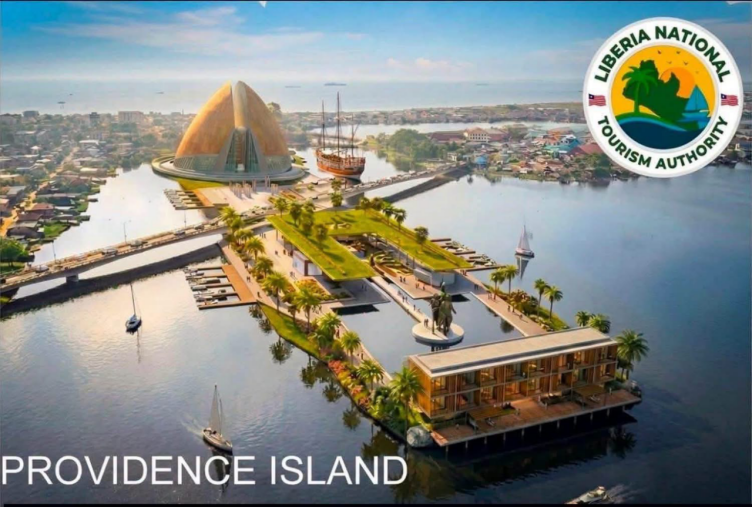
“The Authority is aware that Providence Island has benefited from the involvement of a range of national and international institutions, historians, archaeologists, preservation specialists, development partners, and community stakeholders,” the LNTA said.
It added that the current project “is not intended to erase or disregard the history, archaeological record, or previous work undertaken on the Island.”
Raymond W. Stephens, Public Affairs Officer at the U.S. Embassy in Monrovia, responding to an FPA query, said the Ambassador’s Fund for Cultural Preservation in Washington provided the funding, while the U.S. Embassy managed the funding process but was not directly involved in implementing the project.
He said the project was “entirely between WMF and MICAT” and that the World Monuments Fund would have therefore submitted any final report to the Ministry.
Thousands of Artifacts Recovered
The archaeological record of Providence Island has added another layer to the debate over its redevelopment.
Following the collapse of the island’s sacred cotton tree in 2019, members of the Back-to-Africa Heritage and Archaeology (BAHA) Project were invited to assist with salvage efforts.
That intervention developed into systematic archaeological research conducted over two seasons in 2022 and another season in 2023, in collaboration with the National Museum of Liberia.
The work resulted in the recovery of thousands of artifacts now in the custody of the National Museum.
Some of the artifacts reportedly predate the arrival of the settlers in 1822, suggesting that human activity on Providence Island extends beyond the conventional narrative surrounding Liberia’s founding.
The archaeological surveys also identified the island’s original extent, areas with high concentrations of artifacts and sections considered particularly vulnerable to coastal erosion.
BAHA has said its work was conducted in consultation with the team associated with the World Monuments Fund, including landscape architects at Studio Zewde.
Researchers, community elders and other stakeholders subsequently developed what BAHA described as a long-term plan for the island.
The plan sought to protect the island’s archaeological heritage while maintaining public access and recognizing both the 1822 settlement and Indigenous use of Providence Island before and after the settlement.
FrontPage Africa asked the LNTA whether it is engaging with BAHA, whether it is aware of the archaeological findings, and whether BAHA, the National Museum, World Monuments Fund, Studio Zewde, or other heritage experts were consulted in preparing the current redevelopment plan.
The LNTA did not provide specific responses to each question but said the redevelopment would build on existing research and involve relevant institutions and stakeholders.
“The relevant studies will build upon existing research, historical records, technical studies, and other available information, supplemented by additional investigations where required,” the Authority said.
It also acknowledged the importance of the archaeological discoveries.
“The LNTA acknowledges the significance of archaeological findings reportedly recovered from Providence Island and the importance of ensuring that archaeological resources are appropriately protected throughout project implementation,” it said.
LNTA: Physical Construction Will Follow Studies, Approvals
The LNTA said the Providence Island Development Project is being implemented as a Design & Build project procured under IF No. LNTA/SP/NCB/001/2026.
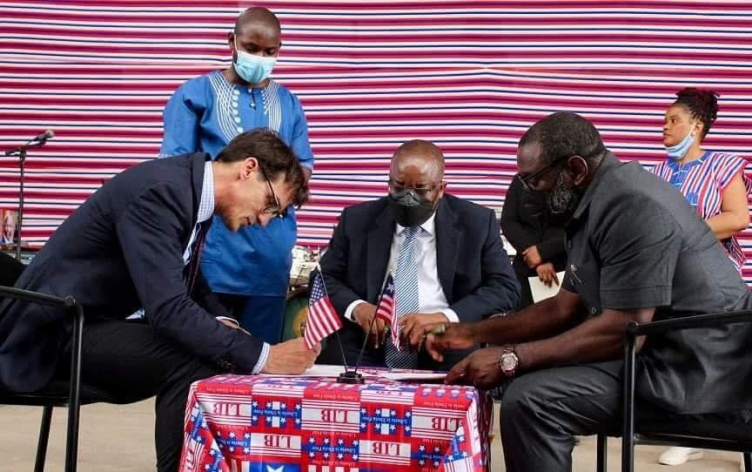
According to the Authority, Phase I of the contract will focus on the technical studies, investigations and detailed designs necessary to establish the engineering and regulatory foundation for the project.
The studies are expected to include topographical and site surveys, geotechnical investigations, hydrological and drainage assessments, structural and civil engineering studies, environmental and social assessments, heritage and archaeological investigations, as well as other pre-construction assessments.
The LNTA stressed that the anticipated September 2026 commencement does not mean physical construction will begin before the required studies and approvals are completed.
“Consequently, the anticipated September 2026 commencement should be understood within the phased sequencing of the Design-Build contract and should not be interpreted to mean that physical construction will proceed without the requisite detailed studies, designs, statutory approvals, licenses, and permits,” the Authority said.
It said approvals and permits will be obtained from the Ministry of Public Works, Environmental Protection Agency and other competent government institutions before physical construction begins.
The Design-Build team, the LNTA added, will work with government institutions, technical agencies, environmental authorities, heritage institutions and other stakeholders to identify and incorporate environmental, social, heritage and archaeological safeguards into the final designs and construction methodology.
Public Review Promised
The LNTA said it intends to organize public engagements after Phase I is completed and the necessary approvals obtained.
Those engagements, according to the Authority, will present the findings of the technical studies and detailed engineering designs and provide an opportunity for public and professional review before construction begins.
The Authority said the ultimate goal is to transform Providence Island into a major national heritage and tourism destination without compromising its historical and cultural value.
LNTA Defends Procurement
Beyond heritage concerns, questions have also been raised about how the project was procured.
The LNTA said the project went through a competitive public procurement process in accordance with Liberia’s procurement laws and under the oversight framework of the Public Procurement and Concessions Commission.
The Invitation for Bids, the Authority said, was advertised in four local daily newspapers and online.
Seven companies purchased the bidding documents, which the LNTA cited as evidence of competitive market interest.
The Authority said the Design-Build contract was processed in accordance with required procurement procedures and received the requisite “no-objections.”
However, in its response to FrontPage Africa, the LNTA did not provide copies of the feasibility study, master plan, environmental assessment, heritage assessment or other procurement records requested by the newspaper.
Instead, it maintained that several of the technical studies in question will form part of Phase I of the Design-Build contract.
Balancing Development and Preservation
The planned redevelopment places the government at the intersection of two competing demands: transforming Providence Island into a more accessible and economically productive tourism destination while preserving the historical and archaeological evidence embedded beneath and around the site.
For heritage advocates and researchers, the concern is that development could permanently alter a site whose significance extends beyond the arrival of settlers in 1822.
For the LNTA, however, the redevelopment represents an opportunity to provide Providence Island with the infrastructure and management needed to establish it as a major national heritage and tourism destination.
The Authority maintains that development and preservation can proceed together.
“Constructive dialogue is important, particularly where the protection of Liberia’s national heritage is concerned,” the LNTA said, extending an invitation to researchers, historians, archaeologists, heritage professionals, institutions and other interested parties to engage with the Authority.
Still, with the project expected to move into its next phase in September, questions remain over which previous studies will ultimately influence the final design, how archaeological discoveries will be protected and whether the public and heritage experts will have meaningful input before irreversible changes are made to one of Liberia’s most important historical sites.
For a country whose modern political history is inseparable from Providence Island, the success of the redevelopment may ultimately be measured not only by what is built there, but by what is preserved.
Support Independent Journalism
Your support helps FrontPage Africa continue delivering independent, credible, and impactful journalism. Every contribution strengthens our ability to investigate, inform, and hold power accountable while keeping quality journalism accessible to our readers.
Support our journalism or subscribe to receive the latest FrontPage Africa stories and updates.