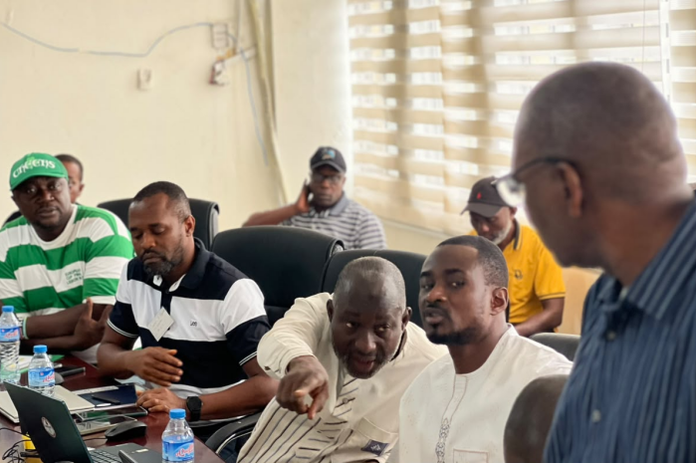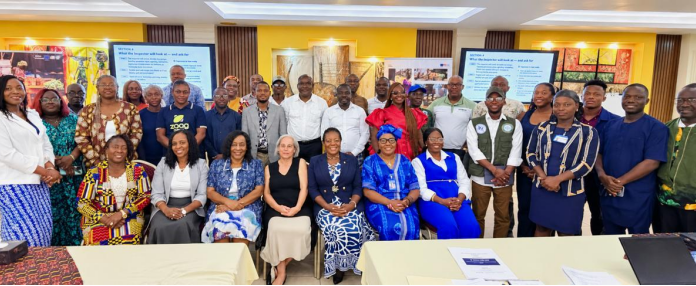
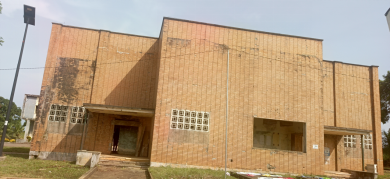
HARPER, Maryland County – A technical team from the Ministry of Public Works arrived in Harper over the weekend to begin a full assessment of the long-abandoned Harper City Hall theater, marking a renewed government effort to restore one of the county’s most damaged post-war public structures.
By Peter P. Toe, Jr. | [email protected]
The team, led by Chief Architect Henry Kokulo Demawu, is evaluating the extent of destruction and determining whether the facility requires full reconstruction or partial rehabilitation.
According to Demawu, the project has already secured sponsorship from President Joseph Nyuma Boakai, as part of a national initiative to restore critical infrastructure destroyed during Liberia’s civil conflict. He noted that both cost and implementation timeline will be finalized only after the technical report is completed and submitted to the Ministry, which will forward it to the President for final decision.
“We are here to conduct a detailed assessment to determine the full scope of work,” Demawu said.
The Harper City Hall theater has remained abandoned since 1994, when it was destroyed during Liberia’s civil war. Once a vibrant venue for public events, it now stands in complete decay—its roof gone, walls burnt, and structural components severely damaged.
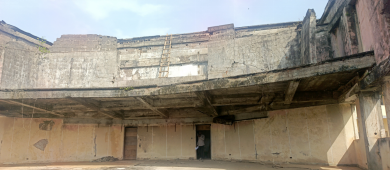
City authorities say the building is now completely beyond use. For Harper City Mayor Abraham Jackson, the theater represents one of the city’s most enduring infrastructural failures.
“The front of this City Hall should not take you away—the back part is totally damaged,” Jackson said, pointing to the extent of deterioration that is not visible from the exterior.
He added that the theater section has been unusable for decades, depriving the city of a key public gathering space that once hosted major civic and cultural programs.
The announcement has stirred cautious optimism among residents who have waited years for restoration efforts to materialize. “This is something good if it can really come to pass,” said Jonah George, an 80-year-old resident who once organized events at the theater before the war. “We are hopeful that it can be restored.”
However, others remain skeptical, citing a history of unfulfilled promises. “Even past governments said the same thing, but nothing changed,” said Steven Chea, a youth in Harper. “So, these promises are not new to us.”
The Ministry of Public Works is expected to complete its assessment in the coming days and submit a detailed engineering report outlining cost estimates, structural findings, and recommended interventions.
That report will determine whether the decades-old ruins can be restored or must undergo complete reconstruction.
Support Independent Journalism
Your support helps FrontPage Africa continue delivering independent, credible, and impactful journalism. Every contribution strengthens our ability to investigate, inform, and hold power accountable while keeping quality journalism accessible to our readers.
Support our journalism or subscribe to receive the latest FrontPage Africa stories and updates.