MONROVIA – Liberia, with a rocky history of two bloody civil wars fueled by political and tribal divides, is now enjoying the dividends of peace. However, one major agenda its post war leaders have tried to accomplished but failed is reconciliation.
By Gerald C. Koinyeneh, [email protected]
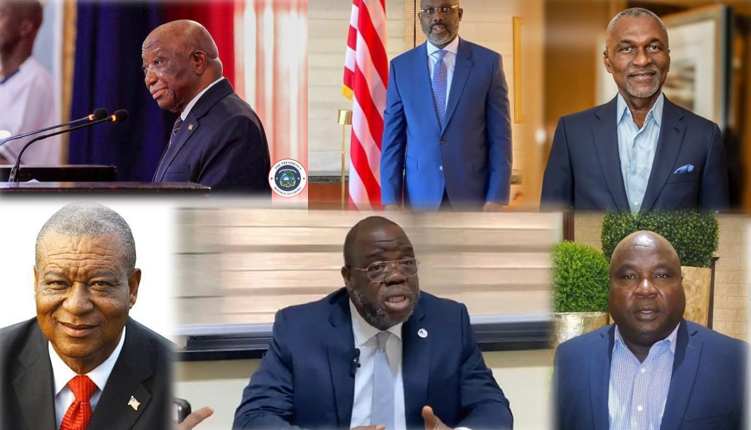
President Ellen Johnson Sirleaf, with Joseph Boakai serving as her Vice President trumpeted reconciliation as one of her major domestic programs when she inherited a country reeling from the brutal civil wars. Her appointment of her fiercest political rival, opposition leader George Weah as Liberia’s peace ambassador was not enough to help her achieve her goal. Sirleaf would later admit that in her last annual message in 2017.
“Let me say, straight out, two areas have continued to pose major challenges for our administration: corruption and reconciliation,” she said. “Our country’s long struggle for national reconciliation has its genesis in history. A coup d’état and years of civil conflict exacerbated longstanding divides that have left deep wounds. The methods and motivations of the Truth and Reconciliation Commission have not helped us to find a way forward to achieve the desired results for reconciliation. Nevertheless, we must continue implementation of the 207 recommendations in the Report, the majority of which have already been implemented.”
President George Weah, who succeeded her, opted not to support the TRC’s recommendation to establish a tribunal to try those responsible for the worst atrocities committed during the war, in the name of reconciliation. His decision drew criticism, with many accusing him of shielding alleged war criminals for political gain.
President Boakai has made reconciliation, a major domestic policy. Already he has collaborated with families of the late Samuel Kanyon Doe and William R. Tolbert to give them symbolic reburial in Grand Gedeh and Montserrado, respectively.
He has also convened a national reconciliation program. Other notable national events include the official celebration of Liberia’s 178th Independence anniversary and a national prayer service at the Effort Baptist Church after he declared Wednesday, July 30, a National Prayer Day.
However, the absence of key opposition figures at these major national events has sparked public concern and renewed scrutiny of President Joseph Nyuma Boakai’s reconciliation drive, with critics questioning the sincerity and inclusivity of his government’s efforts to unite the country.
On President Boakai’s declared National Prayer Day, Senator Edwin Melvin Snowe of Bomi County delivered a stirring prayer that doubled as a pointed appeal to the President.
“Father, we lift up our President, H.E. Joseph Nyuma Boakai, Sr., into Your Arms. May You strengthen him daily, lead him in wisdom, and give him a heart of a true Father to this Nation. We ask especially that You give him the grace to forgive, and to act on that forgiveness—not just in words, but in deeds,” Snowe prayed.
The senator’s remarks struck a nerve with observers, particularly as he emphasized the need for President Boakai to reach across the political divide and foster genuine unity.

“We pray that he will take the bold step to work with the former Presidents, Madam Ellen Johnson-Sirleaf and George Manneh Weah, Madam Jewel Howard-Taylor, Speaker Fonati Koffa, as well as political leaders like Mr. Alexander B. Cummings, Mr. Benoni Urey, and others who have served and continue to care deeply about the destiny of Liberia.”
Joining the chorus of concern, the National Patriotic Party’s Chairman, Atty. George Sylvester Mulbah, criticized the Boakai administration for what he termed a “lack of a holistic reconciliation process.” He pointed out that major opposition figures continue to be excluded from national gatherings.
Atty. Mulbah said such exclusion undermines Liberia’s democratic and reconciliation processes.
He called for a deliberate effort to include opposition leaders such as former President George Weah, Alexander Cummings, and Benoni Urey in the national dialogue, citing their continued relevance to peacebuilding and national development.
While top Boakai officials say invitations were accorded to these political leaders, their absence has fueled speculation that national reconciliation is not proceeding in earnest. Some argue that the Boakai administration has yet to move beyond symbolic gestures and take meaningful steps toward bridging the deep political and social divisions that have long plagued Liberia.
Critics contend that reconciliation must involve inclusion, recognition, and respect for all former leaders and political actors, regardless of past affiliations or disagreements. They warn that failure to do so risks undermining public confidence in the President’s stated commitment to unity and peace.
As Liberia continues to recover from its political and economic struggles, the call for President Boakai to “act not just in words, but in deeds” echoes as both a spiritual appeal and a political imperative.
Support Independent Journalism
Your support helps FrontPage Africa continue delivering independent, credible, and impactful journalism. Every contribution strengthens our ability to investigate, inform, and hold power accountable while keeping quality journalism accessible to our readers.
Support our journalism or subscribe to receive the latest FrontPage Africa stories and updates.