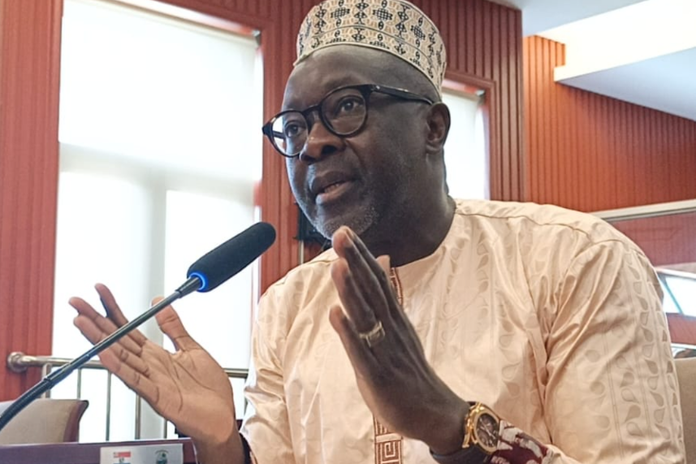
Monrovia – Resident Judge Roosevelt Z. Willie of Criminal Court “A” has come under growing scrutiny following his decision to impose stringent bail conditions on the sureties of multiple defendants accused in the Capitol arson and conspiracy case that has gripped national attention.
By Willie N. Tokpah
The case involves more than a dozen defendants, including Thomas Etheridge, Christian Nyanti, Christian Koffa, and others, who are alleged to have participated in a violent plot to disrupt legislative functions through arson, the use of chemical agents, and coordinated vandalism of public property.
Prosecutors claim that the group conspired to launch an attack in December 2024, citing audio recordings and a letter reportedly authored by co-defendant Kivi Bah. According to the prosecution, the letter details a meeting held on December 17 near Jallah Town Road, where the group allegedly finalised plans for the attack, including targeting lawmakers and clashing with security personnel.
In response to these serious allegations, Judge Willie has enforced heightened bail requirements.
Initially, on Monday, July 28, the court mandated two human sureties per defendant, each required to present valid National Identification Registry (NIR) cards.
However, in a dramatic shift the following day, Judge Willie raised the bar, now requiring four sureties per defendant, in addition to proof of property ownership.
The new conditions apply to the defendants for whom a $6 million bond had already been filed by defence lawyers, covering co-defendants such as Kofa, Amos Kofa, Thomas Etheridge, Kivi Bah alias Kaba, Jerry Pokah alias Tyrese, Stephen M. Broh, John Nyanti, Patience Bestman, Harrilyn Grace Johnson, Eric Susay, and others.
Defence attorneys have reacted sharply to the revised bail requirements, describing them as “excessively harsh” and potentially unconstitutional.
“This reflects not only judicial overreach but raises serious questions about political interference in what is already a highly charged case,” said one member of the defence team, speaking on condition of anonymity.
Court observers say the shift in conditions caused delays in Tuesday’s proceedings, with several defendants and sureties left in limbo due to the sudden changes.
However, judicial sources close to the matter defended the court’s decision, citing the serious nature of the alleged offences and the potential flight risk posed by the defendants.
“Given the planning, coordination, and use of dangerous materials involved, the court is well within its rights to ensure strict accountability,” a source familiar with the case said.
The case is scheduled to appear on the docket for the August Term of the Criminal Courts, where the defence is expected to formally challenge the bail conditions before higher judicial authorities.
As the legal battle intensifies, the case is being closely watched for its broader implications on legal standards for bail, due process, and the handling of politically sensitive criminal charges in Liberia’s justice system.
Support Independent Journalism
Your support helps FrontPage Africa continue delivering independent, credible, and impactful journalism. Every contribution strengthens our ability to investigate, inform, and hold power accountable while keeping quality journalism accessible to our readers.
Support our journalism or subscribe to receive the latest FrontPage Africa stories and updates.