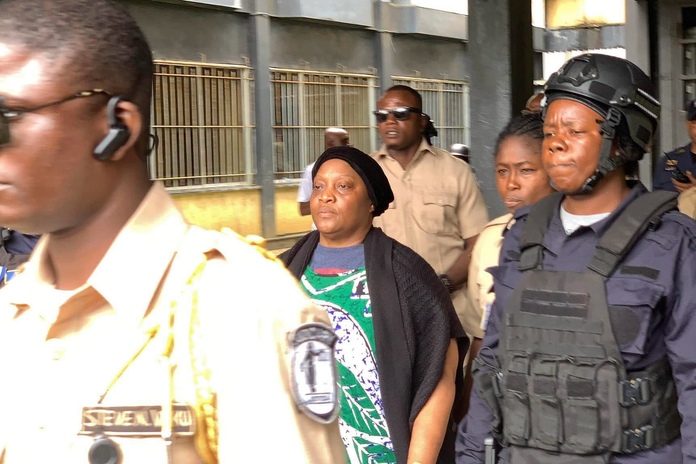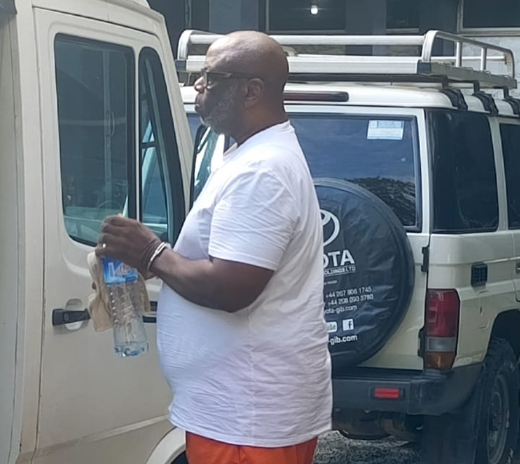
Defense attorney Gbawou Kowou says witnesses who testified for the accused were summoned to AREPT’s headquarters and pressured, while the taskforce says the incident was a misunderstanding and denies attempting to influence the witnesses.
By Jaheim T. Tumu
[email protected]
PAYNESVILLE CITY — A confrontation at the headquarters of the Asset Recovery and Property Retrieval Taskforce (AREPT) has triggered fresh tensions in the ongoing Saudi rice criminal trial, after defense lawyer Gbawou Kowou accused the agency of attempting to intimidate or tamper with witnesses who recently testified for the defense.
AREPT has denied the allegation, saying the individuals at the center of the controversy were not invited for questioning and that its lawyers immediately asked them to leave after discovering that they had recently testified as defense witnesses.
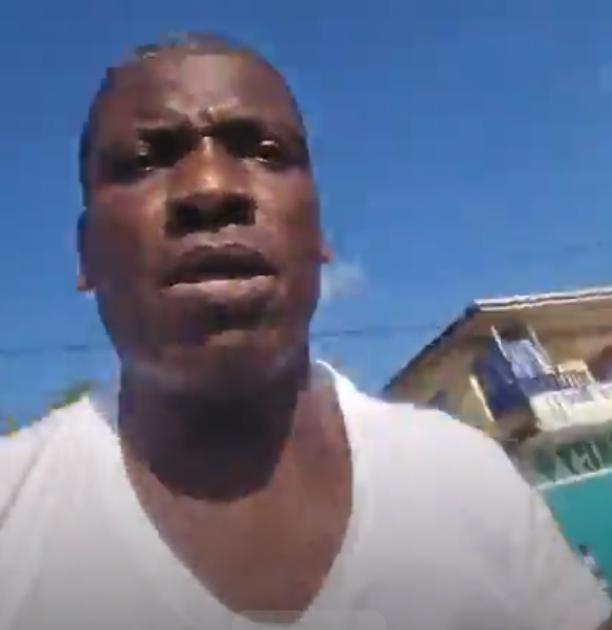
The dispute unfolded Sunday after Kowou went to the AREPT compound and began a livestream in which he alleged that several witnesses who had testified before Criminal Court “C” had been summoned to the agency and were being pressured about their testimony.
Standing outside the facility, Kowou repeatedly demanded access to the compound, claiming that his witnesses were being held inside.
“I’m live at AREPT. Witnesses who testified on our behalf yesterday were brought here and threatened,” Kowou said during the broadcast, describing the alleged conduct as witness tampering.
He later alleged that AREPT officials had locked the facility’s gate to prevent him from entering.
“They have locked the gate. The witnesses are in there,” he said. “If the witnesses are not there, open the gate.”
Kowou specifically accused AREPT Chairman Cllr. Edwin Kla Martin of directing the witnesses to report to the agency after their appearance in court.
The lawyer argued that the witnesses had already completed their testimony and should not have been subjected to further engagement by officials connected to the prosecution.
Kowou Allowed Into Compound
Kowou was later allowed into the AREPT compound, where he confronted officials over the presence of the witnesses.
Speaking to FrontPage Africa afterward, Kowou said the witnesses were members of the Group of 77 and the community of persons living with disabilities who had testified for the defense.
According to Kowou, the witnesses told him they had been threatened or pressured to report to the AREPT office in Paynesville after appearing in court.
He said he subsequently went to the facility to establish why witnesses who had already testified were being summoned by an agency involved in the prosecution.
Kowou was later taken to a police station following the confrontation.
According to the defense lawyer, AREPT subsequently told him that the situation was a misunderstanding.
But Kowou rejected the explanation, maintaining that the circumstances surrounding the witnesses’ presence at AREPT were troubling.
He characterized the move as sinister and argued that attempts to engage or influence witnesses after they had testified could amount to improper interference with the judicial process.
Kowou described the alleged conduct as tantamount to witness tampering, and said the matter should be taken seriously given the ongoing trial.
Heated Exchange at AREPT
Video footage from the scene showed a heated exchange between Kowou, AREPT employees and other individuals gathered outside the facility.
At one point, persons inside the compound instructed Kowou to stop filming and lower his camera. He refused.
“No, I can’t put the camera down so the world will know this kind of criminal act carried on by the prosecution,” Kowou said during the livestream.
As tensions escalated, officers of the Liberia National Police arrived at the scene.
Kowou repeated his allegations to the officers, insisting that a crime was being committed because defense witnesses had allegedly been brought to AREPT after testifying in court.
“A crime is being committed. My witnesses testified before the court yesterday, and they were brought here,” he told the officers.
The livestream ended as Kowou indicated that he would accompany the police inside the compound to further address the matter.
AREPT Rejects Allegation
In a statement issued after the incident, AREPT denied that its officials had threatened, intimidated or attempted to influence any defense witness.
According to AREPT Public Relations Officer Joseph F. Daniels, the controversy arose after a potential witness who had previously provided a statement during the agency’s investigation was asked to appear at AREPT with other individuals familiar with the Saudi rice matter.
AREPT said the potential witness arrived with two people whom he identified as being familiar with the case.
The agency said its lawyers did not initially know that the two individuals had recently appeared before Criminal Court “C” as subpoenaed defense witnesses.
“Upon recognizing them, AREPT lawyers immediately asked the two individuals to leave the premises,” the statement said.
AREPT said the two witnesses were not invited by the agency, were not interviewed and did not provide any additional statements.
The taskforce said it therefore rejects the allegation that its lawyers attempted to influence or intimidate the witnesses.
“If defense counsel has evidence of witness tampering or intimidation, that evidence should be presented to the court, where such allegations can be properly addressed,” AREPT said.
Dispute Comes as Prosecution Prepares Rebuttal
The controversy comes as AREPT prosecutors prepare to present rebuttal witnesses in the high-profile Saudi rice case involving 13 former government officials.
The defendants are facing corruption-related charges stemming from the handling and distribution of Saudi-donated rice during the transition to the Boakai administration.
The trial has attracted public and political attention, with defense lawyers repeatedly challenging aspects of the prosecution’s case and government witnesses providing competing accounts of how the rice was handled.
The latest dispute places the conduct of both the prosecution and defense under renewed scrutiny.
For the defense, the central question is whether witnesses who have already testified were subsequently approached in a manner that could influence their testimony.
For AREPT, the agency maintains that no such engagement occurred and that its lawyers acted to remove the two former defense witnesses from the premises once their status became known.
Support Independent Journalism
Your support helps FrontPage Africa continue delivering independent, credible, and impactful journalism. Every contribution strengthens our ability to investigate, inform, and hold power accountable while keeping quality journalism accessible to our readers.
Support our journalism or subscribe to receive the latest FrontPage Africa stories and updates.