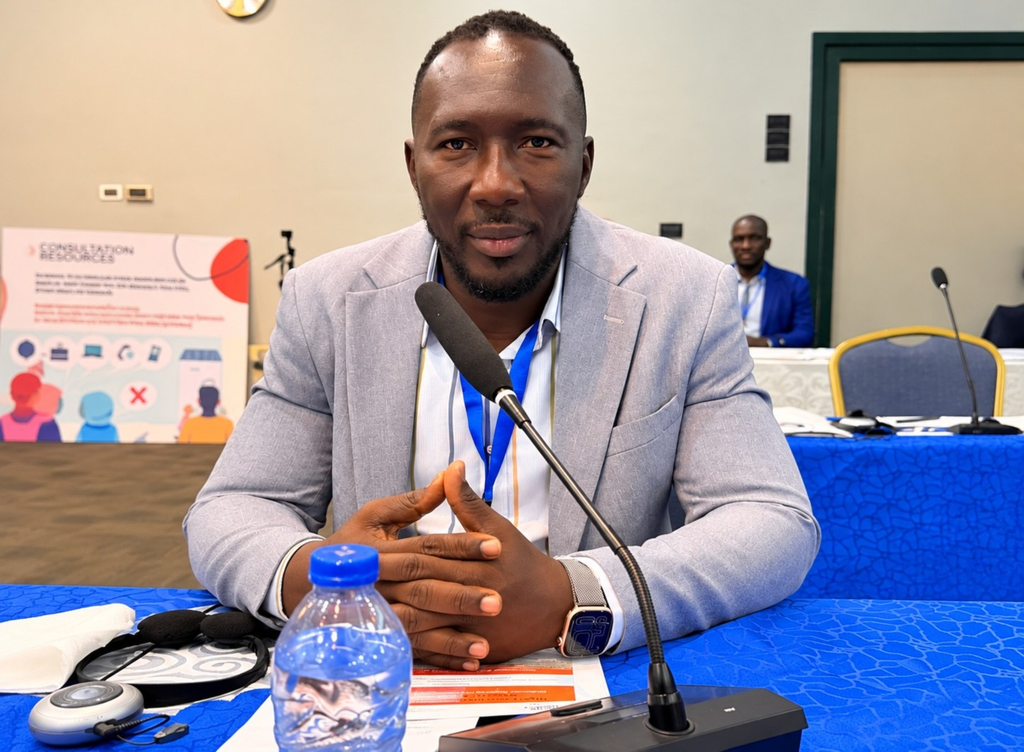
Monrovia – Integrity Watch Liberia Executive Director Harold Marvin Aidoo is calling on the government to move cautiously in developing Liberia’s emerging critical-mineral sector, warning that the country could repeat its long history of exporting valuable resources while mining communities remain poor and little wealth is retained domestically.
In a detailed policy commentary released Thursday titled “Liberia Must Not Miss the Critical Minerals Moment,” Aidoo said growing global demand for minerals used in batteries, electric vehicles and renewable-energy technologies presents Liberia with another opportunity to turn its natural resources into long-term economic gains.
But he cautioned that the opportunity could become another resource curse if the government fails to establish the country’s actual mineral potential, strengthen oversight and negotiate investment agreements with enforceable benefits for Liberians.
Aidoo recommended that the government publish the non-confidential findings of a China-supported mineral survey and commission an independent geological verification before making major commitments to potential investors.
The survey has reportedly identified indications of lithium, cobalt, nickel, manganese, rare-earth elements and other strategically important minerals.
Aidoo, however, cautioned against treating mineral indications as proof of commercially viable reserves.
“Liberia has another chance to turn mineral wealth into lasting prosperity,” he said, arguing that the first step must be establishing exactly what minerals Liberia possesses, where they are located, their commercial value and whether they can be extracted responsibly.
Learning From Iron Ore
Aidoo pointed to Liberia’s experience with iron ore as a cautionary lesson.
He traced commercial iron-ore production to Bomi Hills in 1951, noting that the industry has generated exports and government revenue but has historically had limited connections to the wider Liberian economy.
“Railways and ports moved ore abroad, while the knowledge and industrial capacity needed to transform the wider economy remained insufficient,” he said.
He warned that the global transition toward cleaner energy could reproduce that pattern if Liberia becomes primarily a supplier of raw materials for green technologies manufactured elsewhere.
“The energy transition could reproduce that pattern,” Aidoo said. “Liberia might supply minerals for cleaner technologies overseas while absorbing environmental damage and receiving only a modest share of the value.”
He added: “A green product does not guarantee a fair supply chain.”
Global Competition Creates Leverage
Aidoo said growing competition among major economies for critical minerals could give Liberia greater bargaining power, provided the country approaches potential investors from a position of knowledge and strategic planning.
He cited China’s strong position in mineral processing and efforts by the United States and its partners to diversify their supply chains.
Liberia, he said, should engage China, the United States, Europe and other potential partners, but any agreements should be transparent and aligned with the country’s development priorities.
“The question for every partnership should be practical: what will Liberia gain beyond the export of ore?” he asked.
He recommended that future mining agreements contain measurable commitments covering Liberian employment, skills development, local procurement, shared infrastructure and environmental protection.
“Political friendship cannot substitute for a sound commercial bargain,” Aidoo said.
Verify Mineral Wealth, Strengthen Institutions
Aidoo identified geological knowledge and institutional capacity as immediate priorities.
He called for publication of the non-confidential findings of the mineral survey and independent verification of the country’s mineral potential.
He also urged the government to build institutions capable of interpreting geological data and independently assessing proposals from mining companies.
“Negotiating without that capacity places the country at a disadvantage before discussions even begin,” he said.
Aidoo further recommended a national critical-minerals strategy linking the sector to Liberia’s electricity, education, industrial and trade policies.
He argued that Liberia’s existing legal and policy framework—including the 2000 Minerals and Mining Law and 2010 Mineral Policy—predates the current global competition over minerals critical to the energy transition.
Any reforms, he said, should translate policy objectives into enforceable obligations.
Transparency in Mining Deals
Aidoo called for mineral licensing to be conducted transparently and competitively, with the beneficial ownership of companies seeking mining rights disclosed.
He also urged the government to make mining contracts publicly accessible and provide lawmakers responsible for ratifying agreements with independent technical advice.
Commitments on local procurement, training and mineral processing, he said, should include clear deadlines, measurable targets and consequences for non-compliance.
“Local procurement, training and processing commitments need deadlines, measurable targets and consequences for non-performance,” Aidoo said.
He also called for stronger safeguards to protect government revenue, including the capacity to independently verify mineral quality, production volumes and export values.
Such capacity, he said, would help the government detect under-invoicing and abusive pricing arrangements involving related companies.
“Without these safeguards, apparently attractive agreements can still leave the country collecting far less than it should,” he warned.
Value Addition Without Unrealistic Promises
While advocating greater domestic value addition, Aidoo cautioned against assuming that every mineral discovery should automatically lead to a refinery or processing plant.
“Liberia cannot demand a refinery for every deposit without considering electricity costs, water availability, environmental risks and markets,” he said.
Instead, he recommended that Liberia initially focus on retaining more geological, engineering, maintenance and logistics work associated with mining while gradually developing capacity for commercially viable processing.
Reliable and affordable electricity, he said, will be critical to that effort.
Major mining investments, Aidoo argued, should also contribute to electricity and transportation infrastructure that can benefit surrounding communities and other businesses.
“Shared railways, ports and transmission infrastructure can create economic opportunities well beyond the mine,” he said.
Skills, Jobs and Communities
Aidoo placed particular emphasis on developing Liberian technical expertise.
He called for greater investment in universities and vocational institutions to train geologists, engineers, laboratory technicians and environmental specialists.
Mining agreements, he said, should finance apprenticeships and recognized qualifications while creating opportunities for women and young people from mining-affected communities.
“Counting Liberians on payrolls is insufficient if technical knowledge and managerial authority remain elsewhere,” Aidoo said.
He said mining development should therefore be measured not only by the number of Liberians employed but also by whether Liberians acquire the technical knowledge and decision-making experience necessary to assume senior positions in the sector.
Aidoo also urged the government to ensure that communities affected by mining have a meaningful voice in decisions that could affect their livelihoods and environment.
Water protection, community consultation, accessible grievance mechanisms and adequately funded mine-closure plans, he said, should be enforceable requirements.
“Development cannot be measured only by export earnings when families lose farmland, fisheries or safe drinking water,” he said.
‘What Remains After the Minerals Are Gone?’
Aidoo further encouraged Liberia to work with neighboring countries to develop regional markets and industrial capacity around critical minerals.
While Liberia may not be able to manufacture every finished product domestically, he said the country can participate in African processing and manufacturing chains instead of remaining dependent on raw-material exports.
For Aidoo, the most consequential decisions will be made before mining licenses and long-term sales agreements are signed.
He urged the government to use the current period to establish the scale and commercial viability of Liberia’s mineral potential, strengthen regulatory institutions and define the benefits investors will be required to deliver.
“The decisions taken before licences and long-term sales agreements are signed will shape what Liberia retains for decades,” Aidoo said. “We should use this period to verify our mineral potential, strengthen institutions and define the benefits investors must deliver.”
He said Liberia’s success should ultimately be measured not simply by the volume of minerals exported or government revenue generated during individual projects, but by what remains after the resources are exhausted.
“Minerals are finite. Skills, productive infrastructure and capable institutions can outlast them,” Aidoo said.
“Liberia’s goal should be to turn the resources beneath our soil into the capacity to build prosperity long after the mines close.”
Support Independent Journalism
Your support helps FrontPage Africa continue delivering independent, credible, and impactful journalism. Every contribution strengthens our ability to investigate, inform, and hold power accountable while keeping quality journalism accessible to our readers.
Support our journalism or subscribe to receive the latest FrontPage Africa stories and updates.