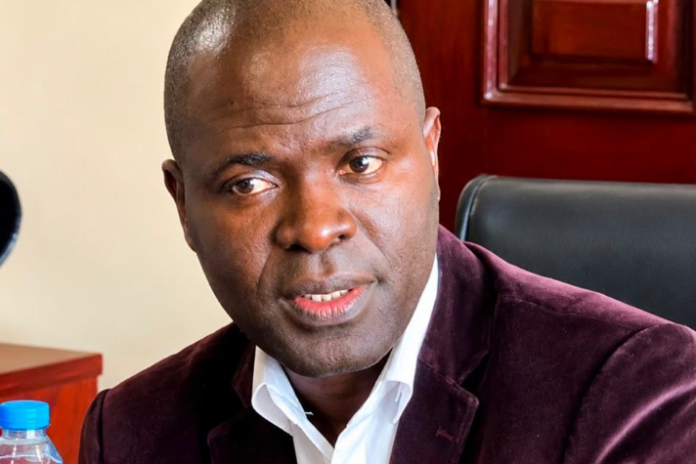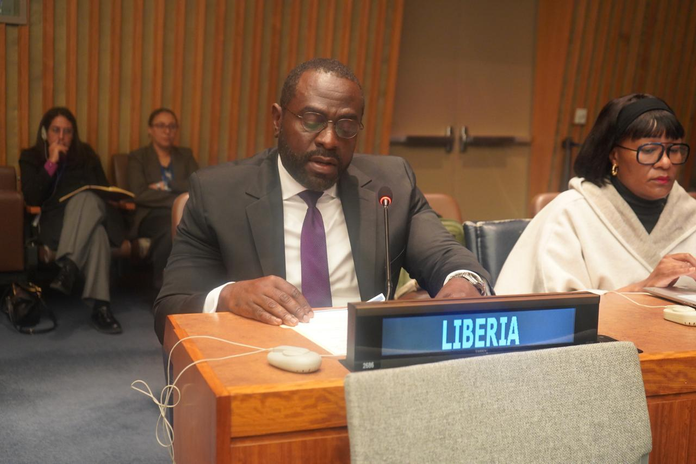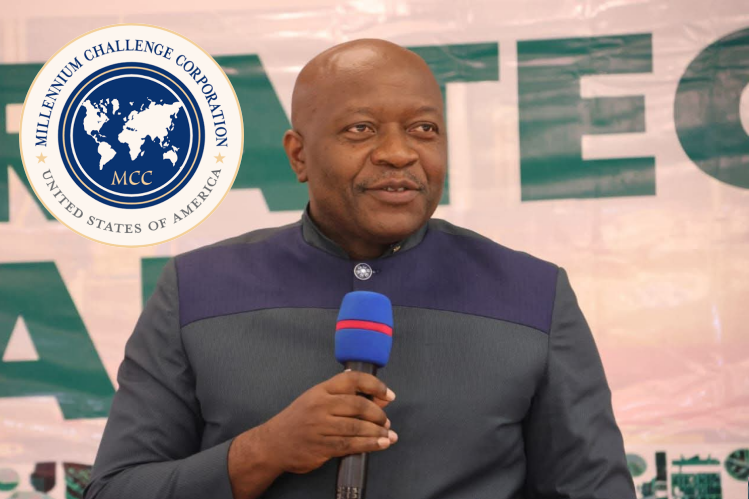
MONROVIA — Liberia’s Finance and Development Planning Minister Augustine Ngafuan has expressed satisfaction over the country’s latest performance in the Millennium Challenge Corporation (MCC) 2026 scorecard, describing it as a major step forward in restoring Liberia’s eligibility for a new compact under the United States Government’s development initiative.
By Selma Lomax [email protected]
The new MCC scorecard shows that Liberia successfully passed 12 out of 22 key indicators that measure good governance, economic freedom, and investment in people, an improvement that reflects the government’s continued efforts to strengthen transparency and accountability across sectors.
Speaking in reaction to the report, Minister Ngafuan lauded President Joseph Boakai, the Government, and the people of Liberia for what he described as a collective national victory. He said the country’s progress demonstrates the positive impact of sustained reforms and shows that Liberia is moving in the right direction toward regaining compact eligibility.
According to him, the latest achievement did not happen by accident but is the result of hard work, discipline, and a national commitment to better governance.
“Congratulations to President Joseph Boakai and the government and people of Liberia,” Minister Ngafuan said with joy. “We are inching closer, and our collective reform efforts are paying off. This progress is a clear indication that Liberia is on the right path toward regaining compact eligibility under the MCC initiative.”
The MCC Fiscal Year 2026 scorecard reveals that Liberia performed impressively in several categories, especially under the pillars of Ruling Justly, Economic Freedom, and Investing in People.
Key indicators in which the country showed strong performance include Freedom of Information with 98 percent, Personal Freedom with 91 percent, Control of Corruption with 56 percent, Government Accountability with 73 percent, Property and Land Rights with 67 percent, Women in the Economy with 68 percent, Market Competitiveness with 60 percent, Health Expenditures with 57 percent, and Inflation Control at 8.2 percent which places Liberia at a 38 percent ranking.
These positive results, according to the minister, are evidence that Liberia is steadily improving its governance systems and creating a more conducive environment for business and investment. Under the Ruling Justly pillar, Liberia scored high in Personal Freedom, Government Accountability, and Control of Corruption, all of which surpassed the MCC median thresholds.
In the Economic Freedom category, the country achieved strong marks in Property and Land Rights, Market Competitiveness, and Women’s Participation in the Economy. Under the Investing in People pillar, the report highlights improvements in Health Expenditures and Chronic Disease Control, though it also points to continuing challenges in Child Health and Girls’ Primary Education Completion.
The MCC, a United States Government agency, releases this scorecard annually to evaluate the performance of low-income and lower-middle-income countries in key areas such as democratic governance, economic management, and human capital development.
To qualify for compact eligibility, a country must pass at least half of the indicators and must also pass the mandatory tests in Control of Corruption and Democratic Rights. Liberia’s success in passing 12 out of 22 indicators therefore represents an important milestone in its journey toward regaining compact eligibility.
Minister Ngafuan noted that the country’s improved performance in the 2026 scorecard demonstrates steady progress from previous years and highlights the effectiveness of the Boakai administration’s reform agenda. He said the government remains fully committed to pursuing deeper institutional reforms that promote fiscal discipline, accountability, and inclusive growth.

“Our goal is not just to pass the scorecard,” Minister Ngafuan stated. “It is to build a Liberia that thrives on integrity, economic opportunity, and inclusive growth. We are determined to continue reforms that strengthen our governance systems, promote private sector competitiveness, and invest in the welfare of our people.”
The finance minister also credited the improvement to the collective work of various government agencies and reform-oriented policymakers who have remained consistent in implementing policies aimed at improving the country’s performance in international benchmarks.
He emphasized that with continued efforts, Liberia will soon be in a stronger position to negotiate and secure a second MCC Compact, which could bring significant investments in infrastructure, energy, and economic development.
“The progress we celebrate today is the fruit of hard work, consistency, and reform,” Minister Ngafuan emphasized. “Liberia is indeed inching closer.”
He reaffirmed the Boakai administration’s unwavering dedication to accountability, good governance, and economic growth, stressing that Liberia’s continued progress will depend on maintaining discipline and unity of purpose. According to him, the nation’s current trajectory provides hope that Liberia is steadily moving toward becoming a model of reform and stability in the subregion, and that the dream of securing another MCC Compact is within reach.
The MCC 2026 report has been widely welcomed across the country as a positive development for Liberia’s economy and international standing. According to officials of that ruling Unity Party, this signals to development partners that the nation is serious about improving governance, managing its economy responsibly, and creating better opportunities for its citizens.
Support Independent Journalism
Your support helps FrontPage Africa continue delivering independent, credible, and impactful journalism. Every contribution strengthens our ability to investigate, inform, and hold power accountable while keeping quality journalism accessible to our readers.
Support our journalism or subscribe to receive the latest FrontPage Africa stories and updates.