MONROVIA — The Liberia Agriculture Commodity Regulatory Authority (LACRA) has reaffirmed Liberia’s commitment to strengthening the country’s cocoa sector through the adoption and localization of a regional standard designed to promote sustainable production, traceability and compliance with international market requirements.
By Selma Lomax, [email protected]
LACRA Director General Christopher D. Sankolo and Deputy Director General for Operations and Technical Services Alpha K. Gongolee represented Liberia at a high-level regional workshop on the African Regional Standard for Sustainable and Traceable Cocoa, known as ARS-1000, held September 29–30, 2026, in Tema, Ghana.
The two-day meeting brought together representatives of cocoa-producing countries across West and Central Africa as stakeholders sought to establish a common approach to sustainable, responsible and traceable cocoa production across the continent.
The workshop was organized under the leadership of the Côte d’Ivoire–Ghana Cocoa Initiative (CIGCI), with discussions centered on the need for cocoa-producing countries to strengthen their production systems and ensure that cocoa entering international markets can be traced to its origin.
Participants examined measures aimed at establishing a unified roadmap for origin-level traceability, sustainable cocoa production, compliance with international market requirements and the protection of smallholder farmers whose livelihoods depend heavily on the cocoa value chain.
Among the major issues discussed was the need for cocoa-producing countries to prepare their farmers, regulatory institutions and supply chains for increasingly stringent requirements in international markets, including the European Union Deforestation Regulation (EUDR).
The participating countries agreed on a shared minimum core covering producer registration, farm-plot geolocation, traceability, verification and auditing, among other requirements considered critical to building credible and transparent cocoa supply chains.
For Liberia, the discussions provided an opportunity to outline the country’s intention to adapt the regional framework to its own agricultural and institutional realities while maintaining conformity with broader African and international standards.
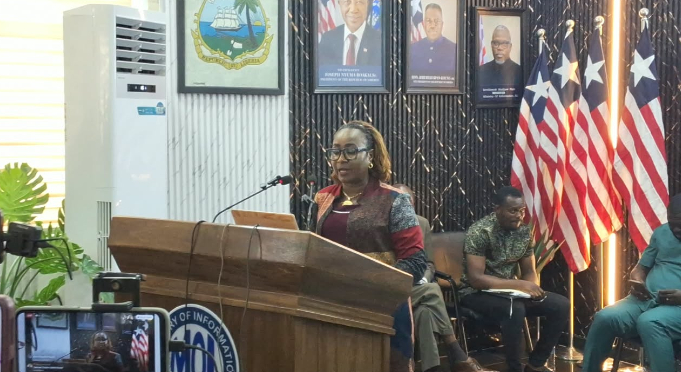
Speaking during a panel discussion, LACRA Director General Christopher D. Sankolo said Liberia intends to move beyond simply adopting the regional standard and instead develop a practical national framework capable of addressing the realities confronting the country’s cocoa producers.
“For Liberia and LACRA, the implementation of the ARS-1000 series provides an actionable blueprint to modernize our national cocoa value chain, strengthen field-level quality control, establish digital, origin-level traceability, and protect the livelihoods of our smallholder farmers,” Sankolo said.
He said the localization of ARS-1000-2 would allow Liberia to build a cocoa regulatory system that responds to the country’s specific circumstances while ensuring that Liberian cocoa remains aligned with standards increasingly demanded by international buyers.
Sankolo further stressed that traceability should not be viewed merely as a compliance requirement, but as an opportunity to improve the way Liberia collects information about farmers, farms and cocoa production and uses that information to make better decisions across the sector.
“Traceability gives us the opportunity to know where our cocoa is produced, who produces it and under what conditions it is produced. That information is essential if we are going to build a cocoa sector that is transparent, competitive and capable of meeting the expectations of international markets,” he said.
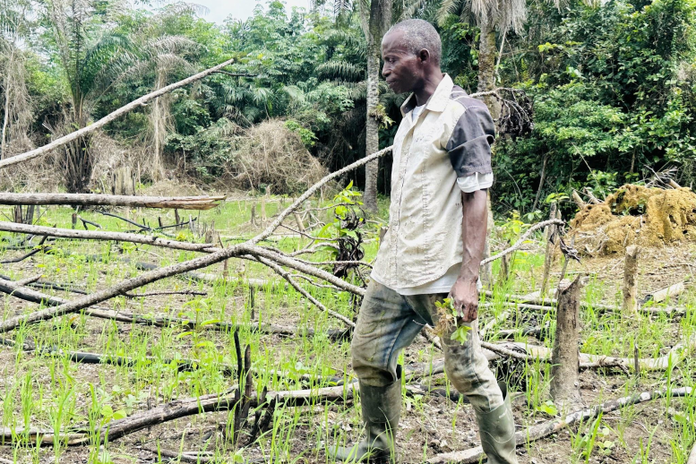
According to Sankolo, LACRA will work closely with relevant government institutions and private-sector stakeholders to ensure that implementation of the standard does not create unnecessary burdens for smallholder farmers, many of whom operate on a small scale and have limited access to technology and formal market systems.
He said the authority’s approach would therefore have to balance regulatory compliance with the need to protect farmers’ livelihoods and increase their ability to benefit from the growing demand for sustainably and responsibly produced cocoa.
“We must make sure that the transition to a more traceable and standards-based cocoa industry works for the farmer. Our objective is not simply to introduce another regulatory requirement, but to create a system that improves the value of the farmer’s product, strengthens market access and ultimately contributes to better livelihoods,” Sankolo said.
The LACRA Director General said the authority would also prioritize collaboration with the Liberia Land Authority (LLA) as Liberia moves toward establishing reliable farm and land information needed to support origin-level traceability.
The partnership with the LLA is expected to be important in the collection, verification and management of land and farm-plot information, particularly as geolocation and farm-level data become increasingly important to international cocoa trade.
Sankolo said LACRA would work to drive national technical adoption of the ARS-1000 framework while strengthening institutional partnerships required to make the standard operational across Liberia’s cocoa-producing communities.
He also said Liberia would maintain active regional engagement with CIGCI and other stakeholders to ensure that the country remains part of ongoing discussions surrounding the development and implementation of sustainable cocoa standards across Africa.
The move comes at a time when international cocoa markets are placing greater emphasis on the ability of producing countries and exporters to demonstrate where cocoa originates and whether it has been produced in accordance with environmental and social standards.
The European Union Deforestation Regulation has further increased the importance of traceability within agricultural commodity supply chains, requiring producing countries and market participants to strengthen systems capable of demonstrating the origin and compliance of commodities entering the European market.
Cocoa remains an important agricultural commodity for Liberian farmers, particularly smallholder producers who depend on the crop for household income and economic activity in rural communities.
LACRA’s participation in the regional discussions is expected to contribute to ongoing efforts to formalize and modernize Liberia’s commodity regulatory systems and improve the country’s capacity to compete in international agricultural markets.
The authority is expected to work with government institutions, farmers, traders, exporters and development partners as the country moves toward nationalizing the requirements contained in the ARS-1000 framework.
The localization of ARS-1000-2 is also expected to provide a framework for improving quality control from the farm level while establishing stronger mechanisms for verification and auditing throughout the cocoa supply chain.
Officials believe that a more transparent system could help reduce uncertainty surrounding the origin and quality of Liberian cocoa while strengthening confidence among international buyers.
Support Independent Journalism
Your support helps FrontPage Africa continue delivering independent, credible, and impactful journalism. Every contribution strengthens our ability to investigate, inform, and hold power accountable while keeping quality journalism accessible to our readers.
Support our journalism or subscribe to receive the latest FrontPage Africa stories and updates.