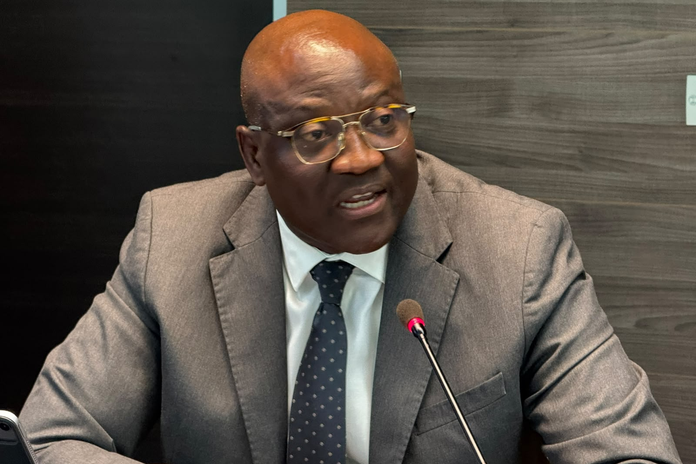
Monrovia – Senator Amara Konneh of Gbarpolu County, Chairman of the Senate Public Accounts Committee, has raised serious concerns about Liberia’s $1.2 billion draft budget, urging the Senate to resist passing the budget at the aggregate level without detailed scrutiny.
By Selma Lomax [email protected]
In a statement following the House of Representatives’ approval of the budget, Senator Konneh emphasized that a rushed process could compromise transparency, weaken institutional safeguards, and undermine the delivery of essential development projects.
“If no other body will, we must lead a deliberate review of the sectoral allocations, investment commitments, and institutional safeguards before the budget is passed, not after. In doing so, we will safeguard the interests of the Liberian people and strengthen the President’s hand in successfully implementing his government’s development agenda,” Senator Konneh wrote.
In his post, the senator first congratulated President Joseph Boakai and Finance Minister Augustine Ngafuan for securing a second Compact for Liberia, noting that at a time when Official Development Assistance is declining, the achievement is significant. “First, I want to congratulate President Joseph Boakai and his team led by Finance Minister Augustine Ngafuan for getting a second Compact for Liberia. At a time when Official Development Assistance is declining, a second Compact is significant,” he said, highlighting the importance of international support for Liberia’s development priorities.
Turning to the budget itself, Senator Konneh said that the FY26 draft budget, submitted on November 7, 2025, reflects progress in Liberia’s public financial management system but also requires careful oversight.
He stressed that patterns from the previous fiscal year illustrate serious risks, noting that funds allocated for key projects under the Public Sector Investment Plan were frequently diverted to unrelated recurrent expenses, undermining both statutory compliance and sectoral priorities.
He cited cases including major infrastructure, education, and agricultural projects that either received no funding or exceeded their approved ceilings, raising concerns about fiscal discipline and the effectiveness of budget execution.
“The House of Representatives’ decision to approve the budget at the aggregate level without examining the details undermines legislative oversight and risks misallocation of public funds,” Konneh wrote. He further noted that state-owned enterprises failed to provide financial data in the draft budget and expressed concern over the establishment of a new spending category amounting to $256 million, or over 21 percent of the total budget, with unclear mechanisms for oversight. “We cannot allow a repeat of previous fiscal indiscipline. The Senate must exercise its oversight authority responsibly and ensure that allocations reach their intended beneficiaries,” the senator added, emphasizing the need for accountability and careful review.
Senator Konneh, however, maintained that without detailed scrutiny, significant risks remain for the FY26 budget. He pointed to the historical diversion of funds, underfunding of priority projects, and unexplained increases in salaries as examples of systemic weaknesses.
“Equally concerning is that State-Owned Enterprises provided no financial data in the draft budget. Meanwhile, salaries increased by $13 million with no increase in full-time staff or information about pay raises,” he wrote. He urged the Senate to fulfill its constitutional oversight role, emphasizing the historic nature of the FY26 budget and the potential for it to deliver meaningful benefits to Liberians if carefully reviewed. “This is a historic budget. We must work with the Executive to make it transformative for the Liberians,” he said.
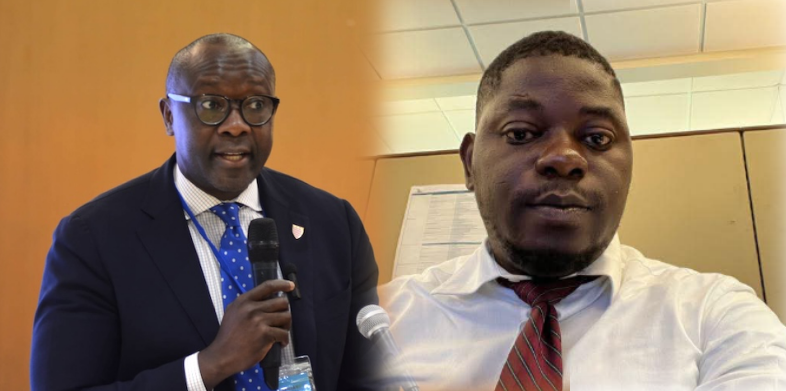
In response to Senator Konneh’s post, S. Emmanuel Lloyd Sr., budget consultant at the Ministry of Finance and Development Planning, pushed back on the senator’s characterization of budget reallocations. Lloyd cautioned that while Liberia faces real fiscal challenges, oversight must be grounded in law, evidence, and institutional responsibility rather than alarmist rhetoric.
“The debate over budgetary transfers should be grounded in law, evidence, and institutional responsibility, not in hyperbole. Liberia’s fiscal challenges are real, and they require sober analysis and constructive oversight. As a senior senator and former steward of the nation’s finances, Senator Konneh’s voice carries weight. With that weight comes an obligation to clarify rather than confuse, to educate rather than alarm,” Lloyd said.
Lloyd emphasized that budgetary transfers are routine instruments of fiscal management under the Public Financial Management Act, explaining that reallocations often respond to emergencies, donor funding adjustments, or unanticipated government obligations.
He cited previous fiscal years to contextualize the FY25 transfers, noting that while some transfers received significant public attention, the actual level of reallocations in FY25 was modest and within statutory thresholds.
“When evaluating sectoral funding, it is critical to consider both domestic and donor financing and how resources are programmed for execution. Selective interpretations of funding gaps can mislead rather than inform,” Lloyd said. He stressed that reallocations often fund critical priorities such as by-elections, reburials of former leaders, debt payments, and urgent health interventions, and that these shifts do not constitute financial mismanagement.
Lloyd also addressed the senator’s concerns about the new budget category for General Government Expenditure, noting that the classification is intended to enhance transparency. “Showing General Claims separately from the operational expenses of spending entities is a transparent way of presenting the budget numbers.
Lloyd cautioned that misrepresenting such standard accounting practices risks undermining informed public discussion and distorting perceptions of fiscal discipline.
With the Senate now positioned to review the budget, the outcome will determine whether deliberate scrutiny or aggregate-level approval prevails in shaping Liberia’s fiscal future.
Support Independent Journalism
Your support helps FrontPage Africa continue delivering independent, credible, and impactful journalism. Every contribution strengthens our ability to investigate, inform, and hold power accountable while keeping quality journalism accessible to our readers.
Support our journalism or subscribe to receive the latest FrontPage Africa stories and updates.