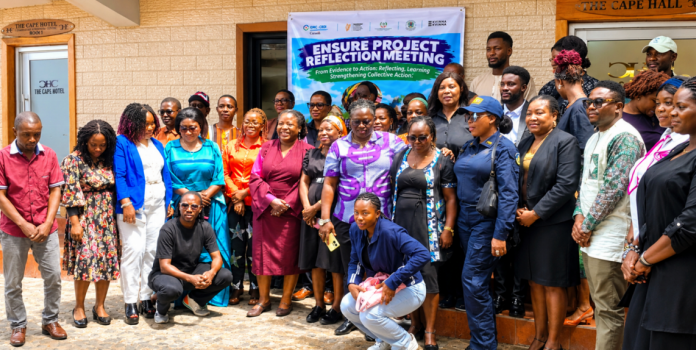
Monrovia – InfoQuest Liberia has officially launched its Third Quarter Report on the Gender-Sensitive Legislative Monitoring Project, highlighting major findings and recommendations aimed at advancing inclusive governance and legislative accountability in Liberia.
By: Julius Konton
The comprehensive report covers activities within the House of Representatives from January to March 2025, with a particular focus on gender representation and the inclusivity of legislative processes.
Speaking during the launch, Matthias Yeanay, Executive Director of InfoQuest Liberia, said the report marks a significant milestone in the organization’s continued efforts to promote a more inclusive, accountable, and equitable legislative environment.
Among the report’s key findings, InfoQuest emphasized the continued underrepresentation of women in the Legislature—not only in numbers but also in terms of voice and influence. Despite these challenges, Yeanay noted that women-led civil society organizations have shown strong and visible advocacy, especially during public hearings related to environmental justice and public accountability.
Gender Analysis of Legislative Proposals
As part of its monitoring efforts, InfoQuest conducted a gender analysis of six key legislative proposals currently under consideration. While some bills reflected growing awareness of inclusion, others revealed critical gaps and, in some cases, posed direct threats to the rights of marginalized groups, particularly women and persons with disabilities (PWDs).
One such proposal was the Act to Establish the Liberia Institute of Sign Language, aimed at creating a dedicated institution for sign language education to meet the needs of individuals with hearing impairments. However, the report flagged the bill’s lack of integration with the existing education system and failure to account for the intersection of gender and disability.
To address this, InfoQuest recommended that the proposed institute be integrated within an existing tertiary institution such as the University of Liberia, to enhance inclusivity, recognition, and access, particularly for girls and women with hearing impairments.
Other Key Legislative Developments
The report also analyzed the proposed establishment of a Ministry of Local Government, intended to operationalize decentralization efforts under the 2018 Local Government Act. While the bill includes some gender mainstreaming elements, InfoQuest noted the absence of a clear implementation or accountability framework for gender equity.
The organization recommended several gender-responsive measures, including:
- Inclusion of gender equity in university charters
- Promotion of scholarships for female students
- Provision of safe housing
- Adoption of gender-sensitive hiring and governance structures
- Enforcement of maternity leave policies
- Conduct of gender equity audits
- Implementation of non-discriminatory hiring and promotion practices
Additionally, InfoQuest called on lawmakers to prioritize meaningful reforms such as the establishment of a salary cap for elected and appointed officials to promote equity and accountability in the use of public resources.
The organization also urged that all legislative proposals include gender-responsive measures to ensure no demographic group is left behind.
Challenges and Achievements
Despite facing ongoing challenges, including restricted access to committee sessions and political tensions within the Legislature, InfoQuest said it has remained resilient. Yeanay noted that through adaptive strategies and collaborative engagement, the organization continues to promote inclusive, evidence-based legislative monitoring.
He expressed appreciation to the Embassy of Ireland in Liberia for its unwavering support and commitment to gender equity and democratic governance.
“Your partnership has been instrumental in advancing this critical work,” Yeanay stated.
Reaffirming InfoQuest’s commitment to inclusive governance, he added:
“Inclusive governance is not a distant goal—it is a necessary foundation for Liberia’s democratic growth and sustainable peace. We call on government institutions, civil society, development partners, and citizens to stand with us in building a more just, equal, and inclusive Liberia.”
Monitoring Process and Future Plans
During the reporting period, InfoQuest formalized partnerships with key actors in the National Legislature, including the Office of the Speaker and relevant committee chairpersons. Monitoring was conducted by a trained, gender-balanced team, who gained access to plenary sessions to track participation, representation, and gender dynamics in real time.
Yeanay also announced the upcoming launch of a digital platform in June 2025, which will provide real-time tracking of legislative processes, bill analysis, and gender-disaggregated data for use by civil society, policymakers, and the public.
“While our findings highlight persistent challenges, this platform represents a major step forward in our efforts to build transparency and accountability in Liberia’s legislative process,” Yeanay concluded.
Support Independent Journalism
Your support helps FrontPage Africa continue delivering independent, credible, and impactful journalism. Every contribution strengthens our ability to investigate, inform, and hold power accountable while keeping quality journalism accessible to our readers.
Support our journalism or subscribe to receive the latest FrontPage Africa stories and updates.