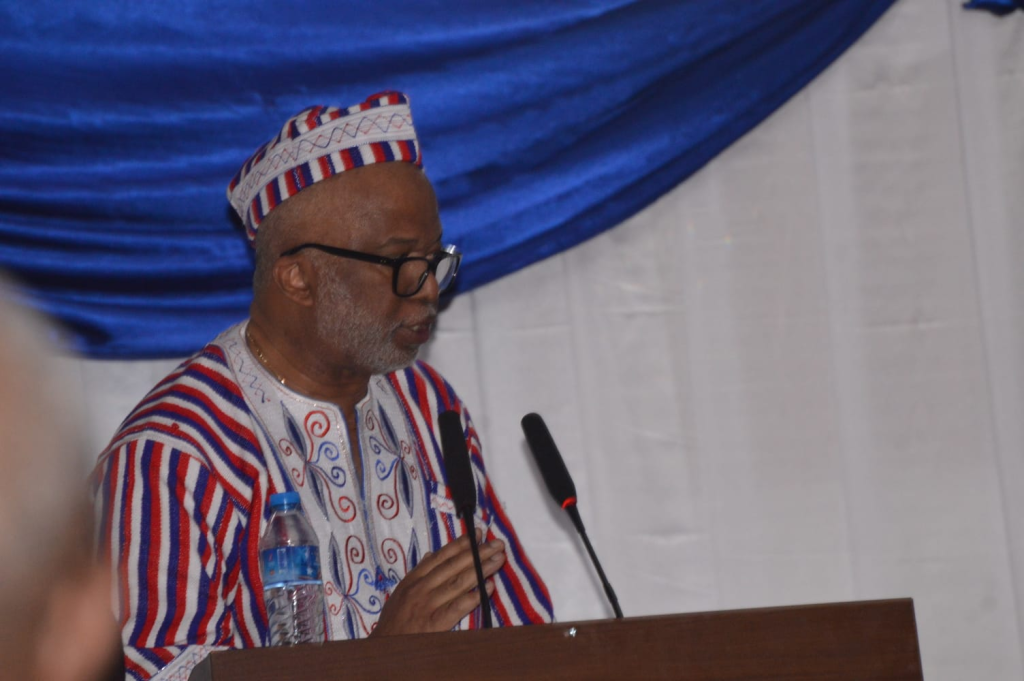
BUCHANAN, Grand Bassa County – Liberia on Monday officially celebrated its 179th Independence Anniversary with a stirring call for national unity, historical reflection, and responsible citizenship as Independence Day Orator Dr. Herbert C. Brewer urged Liberians to embrace their history as the foundation for building a stronger future.
Although Liberia’s Independence Day falls on July 26, this year’s official celebration was held on Monday because the anniversary fell on a Sunday. The national ceremony took place in the port city of Buchanan, Grand Bassa County, and was attended by President Joseph Nyuma Boakai, Vice President Jeremiah Kpan Koung, senior government officials, lawmakers, members of the diplomatic corps, traditional leaders, and hundreds of citizens.
Dr. Brewer, a renowned Liberian historian and Director of the Benjamin Banneker Humanities and Social Sciences Institute at Morgan State University in the United States, delivered a wide-ranging address that challenged Liberians to reject negative narratives about their country and instead appreciate the richness and complexity of the nation’s history.
Opening his address, Brewer described his appointment as National Orator as “the honor of a lifetime” before dedicating part of his remarks to the memory of his late mother, Elizabeth Woods Brewer, a daughter of Grand Bassa County.
“History Is Our Greatest National Asset”
Centering his speech on the theme of national identity, Brewer argued that Liberia’s history should be viewed as one of its greatest strengths rather than a burden.
“History is not merely a record of yesterday’s events,” he declared. “History is the source of our identity, our memory, our wisdom, and our sense of national purpose.”
He said one of Liberia’s greatest challenges is not simply that many citizens know too little about the country’s past, but that many have come to believe it has little value.
“A people who lose confidence in their history eventually lose confidence in themselves,” he warned.
Liberia’s Story Began Long Before 1847
Rejecting the notion that Liberia’s history began with the declaration of independence in 1847 or the arrival of settlers in 1822, Brewer traced the country’s roots back centuries before European contact.
He highlighted the contributions of indigenous communities, describing Liberia as the product of generations of migration, trade, diplomacy, cultural exchange, and evolving ethnic identities.
“Our ethnic identities are not fixed by nature,” Brewer said. “They were shaped by history—by migration, trade, marriage, conflict, and cooperation.”
He emphasized that long before the Republic was founded, African societies within present-day Liberia maintained functioning systems of governance, commerce, justice, and diplomacy.
“The desire for self-government did not begin in 1847,” he noted. “Independence simply gave that older aspiration a modern constitutional form.”
A Shared National Heritage
Brewer also sought to reshape traditional accounts of Liberia’s founding by emphasizing the contributions of both returning descendants of enslaved Africans and indigenous Liberians.
He argued that Liberia emerged through cooperation between African Americans returning from the diaspora and local African leaders who helped facilitate diplomacy and nation-building.
“The founding of the Liberian Republic was made possible not only by the vision of returning descendants of Africa but also by the African people already on the ground whose wisdom and statesmanship helped prepare the way,” he said.
Brewer specifically recognized indigenous figures such as William Campbell, David Noah, and William Davis for their pivotal roles in building trust between local communities and early settlers.
Why July 26 Matters
Explaining the significance of Independence Day, Brewer said July 26 should be understood not as the beginning of Liberian history but as the birth of the Liberian Republic.
He described the 1847 Declaration of Independence as a landmark event in global Black history because it demonstrated that people of African descent could successfully establish and govern a sovereign constitutional state.
“July 26 matters because a free Black people declared to the world that they possessed the right and the capacity to govern themselves,” he said.
According to Brewer, Liberia’s independence inspired people of African descent far beyond its borders and remains an important milestone in the broader struggle for Black self-determination.
Lessons from the Past
Brewer also reflected on key moments in Liberia’s history, including resistance to European colonization, the country’s survival during the “Scramble for Africa,” the 1926 Firestone concession agreement, political centralization, military rule, civil war, and post-war reconstruction.
He acknowledged that Liberia’s past includes painful chapters but cautioned against allowing conflict and national tragedy to define the country’s entire history.
“No nation should be judged solely by its darkest hours,” he said. “The true measure of a people is not whether they experience hardship; it is whether they find the courage to rebuild.”
Message to Young Liberians
In his closing remarks, Brewer directed a passionate appeal to Liberia’s younger generation, urging them to inherit not only the country’s territory and institutions but also the sacrifices and values that shaped the nation.
“Do not inherit only the flag,” he said. “Inherit the sacrifices that gave the flag meaning.”
He also encouraged Liberians to confront their history honestly rather than ignore it.
“No nation becomes stronger by forgetting its history, nor does it become wiser by denying its history,” Brewer declared. “The question is not whether we inherited a perfect republic—we did not. The question is whether we will leave our children a republic stronger than the one we received.”
He concluded by describing that responsibility as the true meaning of patriotism and citizenship.
“As we celebrate 179 years of independence,” Brewer said, “let us preserve our history, enlarge it, honor it, and pass it on stronger, richer, and wiser than we received it.”
Support Independent Journalism
Your support helps FrontPage Africa continue delivering independent, credible, and impactful journalism. Every contribution strengthens our ability to investigate, inform, and hold power accountable while keeping quality journalism accessible to our readers.
Support our journalism or subscribe to receive the latest FrontPage Africa stories and updates.