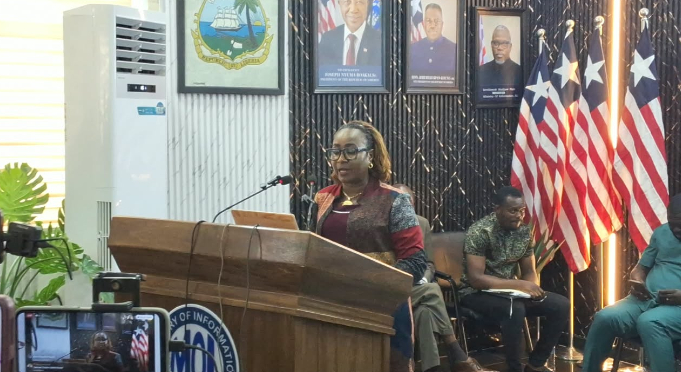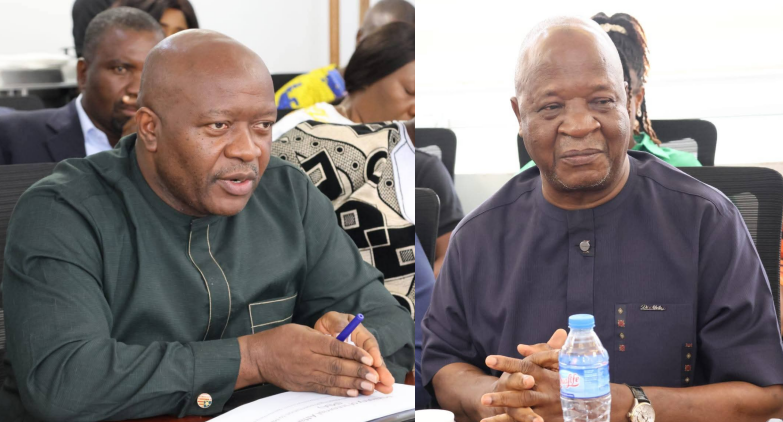
Monrovia – At Friday’s Executive Budget Hearing, Finance and Development Planning Minister Augustine Kpehe Ngafuan and Internal Affairs Minister Francis Nyumalin emphasized the need for fiscal discipline, strategic spending, and local empowerment as the government moves toward finalizing the 2026 National Budget.
Minister Ngafuan commended the Ministry of Internal Affairs and local government officials for managing scarce resources effectively, noting that the budget is being crafted to align with the ARREST Agenda for Inclusive Development (AAID), the administration’s flagship development framework.
“You’re the closest link to our citizens,” Ngafuan told local officials. “When we see you, we see Liberia. This budget must empower you to meet your objectives in line with the ARREST Agenda.”
He highlighted the steady increase in the national budget—from US$788 million in 2024 to US$880 million in 2025, a jump of more than US$140 million. Despite this, Ngafuan stressed that the figure remains far below the more than US$2 billion in funding requests submitted by government entities.
“We’re facing a situation where demands far outpace available resources,” he said. “So the challenge is clear: we must prioritize our priorities. It’s not just about spending more, it’s about spending wisely.”
The Finance Minister noted disparities in agency performance, pointing out that some institutions achieve strong results with modest allocations, while others underperform despite larger budgets.
“Those who deliver results with less make a strong case for more,” he remarked. “Your ministry is delivering. There are challenges, of course, but the progress is evident.”
Ngafuan urged earlier coordination in the budget cycle to minimize delays, reaffirming the administration’s goal of submitting the 2026 budget to the Legislature before October 31 to ensure timely passage.
For his part, Internal Affairs Minister Nyumalin welcomed the Finance Ministry’s collaborative approach, contrasting it with what he described as the limited engagement of previous administrations.
“In my seven years in the Legislature, I can’t recall this level of open and transparent engagement with spending entities,” Nyumalin said. “It’s a step in the right direction, and I applaud the Ministry of Finance.”
While acknowledging that the Ministry of Internal Affairs operated under a constrained budget, Nyumalin noted that internal reallocations allowed them to support critical initiatives such as the Land Governance Support Program, which initially had no funding.
“Through internal adjustments, we managed to support important programs,” he explained. “Minister Ngafuan and his team have shown a willingness to listen and respond within the limits of available resources.”
Still, Nyumalin warned that funding gaps remain, particularly in salaries and support for traditional and local leaders. He stressed the need to adequately finance more than 200,000 local chiefs, including around 500 statutory district chiefs and 1,000 to 1,500 general town chiefs.
“These leaders are essential to local governance,” he stated. “We can’t afford to pretend they’re working while we pretend to pay them.”
He also underscored the importance of timely disbursement of county development funds, arguing that direct empowerment of local authorities is critical to reducing overreliance on central government and achieving genuine decentralization.
Both ministers closed their remarks by reaffirming their commitment to stronger budget performance and improved public service delivery.
“We haven’t solved every issue,” Ngafuan said. “But compared to where we began, the progress is real. Let’s make next year better—through your plans, your honesty, and your cooperation.”
The Executive Budget Hearings continue as the Ministry of Finance works to complete and submit the draft 2026 National Budget to the Legislature for consideration.
Support Independent Journalism
Your support helps FrontPage Africa continue delivering independent, credible, and impactful journalism. Every contribution strengthens our ability to investigate, inform, and hold power accountable while keeping quality journalism accessible to our readers.
Support our journalism or subscribe to receive the latest FrontPage Africa stories and updates.