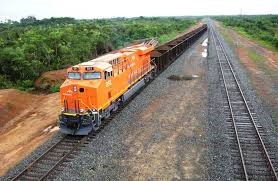
Monrovia – Economic experts are raising serious concerns over the government’s plan to replace ArcelorMittal (AML) as the operator of the Buchanan-Yekepa railway, arguing that the move could lead to wasteful spending and further strain the country’s already fragile financial position.
By Selma Lomax [email protected]
Industry professionals have warned that removing AML, which has managed the railway at no cost to the government for years, would result in substantial financial repercussions for Liberia.
Since 2005, AML has invested over $800 million in railway rehabilitation and maintenance, and its current agreement allows other companies, including High-Power Exploration (HPX), to use the railway infrastructure at no additional cost to Liberia.
However, government officials are reportedly pushing to replace AML with a new operator who would require substantial payment from the Liberian government.
Experts estimate that managing the 250-kilometer Buchanan-Yekepa railway could cost between $50 million to $75 million annually, covering maintenance, staffing, security, and regulatory compliance.
Given the country’s financial constraints, particularly with the reduction of foreign aid and ongoing economic difficulties, economists argue that this would impose a significant burden on taxpayers and divert funds from essential services like healthcare, education, and infrastructure development.
The move to replace AML is seen by experts as driven by political interests rather than sound economic logic. Some government officials are reportedly prioritizing the interests of HPX, a Guinean mining company, over the long-term financial stability of Liberia.
Under the current proposal, HPX would pay Liberia only $5 million to $10 million annually in transit fees, significantly less than the $200 million that AML is set to contribute under a new agreement once its Mineral Development Agreement (MDA) is approved.
Moreover, experts note that HPX has no plans to invest in Liberia or create jobs locally, while AML’s expansion could create an additional 2,000 jobs for Liberians.
Given the economic instability, experts have stressed that the government should focus on maximizing its revenue streams, particularly by maintaining AML’s management of the railway.
Continuing this partnership, one economist added, would allow Liberia to secure long-term revenue without incurring unnecessary costs.
The experts argue that replacing AML with a new operator would be a step backward for Liberia’s economic growth, with significant risks for the country’s financial stability.
As Liberia faces increasing economic challenges, including the loss of USAID programs, experts are urging the government to make fiscally responsible decisions that prioritize the welfare of the Liberian people over political maneuvering.
The final decision on the Buchanan-Yekepa railway will be a key test for Liberia’s leadership.
Support Independent Journalism
Your support helps FrontPage Africa continue delivering independent, credible, and impactful journalism. Every contribution strengthens our ability to investigate, inform, and hold power accountable while keeping quality journalism accessible to our readers.
Support our journalism or subscribe to receive the latest FrontPage Africa stories and updates.