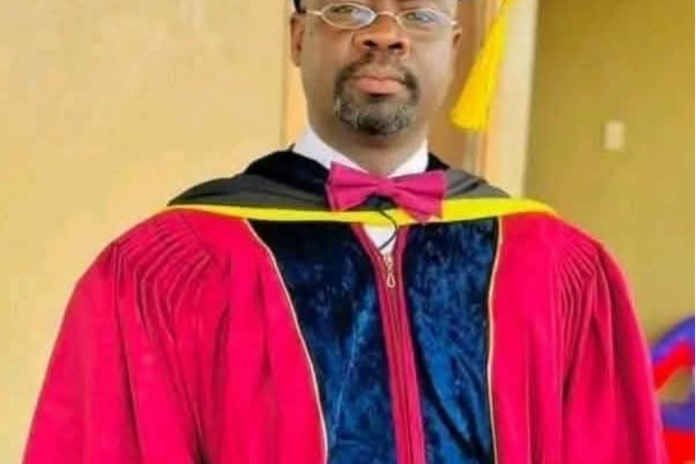
VOINJAMA, Lofa County — Since taking office in late 2024, Professor Dr. Isaac P. Podah has ushered in sweeping changes at Lofa County University (LCU), lifting the institution from years of stagnation into a new era of growth and innovation. From revamping outdated systems to initiating major development projects, Dr. Podah’s administration is redefining the university’s place in Liberia’s academic landscape.
Appointed through a presidentially sanctioned and competitive process, Dr. Podah inherited a university burdened by infrastructural decay, erratic electricity, uneven salaries, low morale, and dwindling student numbers.
“When we assumed leadership, staff morale was extremely low,” he noted. “You had people with the same qualifications earning different salaries. That couldn’t continue.”
While acknowledging some groundwork laid by the previous administration, Dr. Podah emphasized that his focus has been systemic reform and long-term sustainability.
Under his leadership, LCU has seen remarkable upgrades. Classrooms now feature fans and whiteboards; labs are stocked with modern equipment; the library is enhanced; and air conditioning has been installed in administrative offices and faculty lounges. For the first time, running water flows throughout the campus.
The Engineering Department, with approval from the Public Procurement and Concessions Commission (PPCC), is spearheading infrastructure improvements—including electrification, internal roads, and a new cafeteria—offering students practical experience while reducing costs.
Students are actively contributing, constructing drainage pathways and engaging in technical projects. A new borehole now supplies water to restrooms and offices, ending years of manual water-fetching. The installation of glass doors, DSTV service, and strengthened maintenance has created a more dignified learning environment.
One of the key achievements of Dr. Podah’s administration has been ending salary disparities among lecturers.
“Equal pay for equal qualification is now the standard,” he said. “That reform ended protests and gave faculty members back their professional pride.”
He also modernized faculty offices with new furnishings and supplies, while the lounge was upgraded with tiles, air conditioning, cable TV, and contemporary seating.
In the face of limited government funding, Dr. Podah has launched a “dollar rally” campaign tied to a textbook he authored. The initiative will generate income for the university, students, and the author. A second phase will focus on mobilizing support from alumni and citizens of Lofa County, both at home and abroad.
Additionally, the university farm is becoming both a learning hub and an income generator. It currently produces carrots, cassava, snails, and other crops, with plans underway to expand into cocoa and coffee production. Equipment rental and grain marketing services are also expected to boost revenues.
“When government funding doesn’t come on time due to broader obligations, it’s our duty to find innovative solutions,” he emphasized.
The student population has more than doubled, jumping from around 600–700 to over 1,300. Students now benefit from practical science labs and active involvement in agricultural production—resources that were previously lacking.
“Our Agriculture Department is the first in the country to produce carrots,” said Dr. Podah. “We’re also growing snails, cassava, and planning to branch out into cocoa and coffee farming.”
Despite this impressive turnaround, the university still grapples with old and storm-damaged buildings. During severe weather, roofs have been blown off. To address this, students are planting trees across campus to serve as natural windbreaks.
Electricity is another pressing issue. LCU depends on an 88 KVA generator that consumes large amounts of fuel. A transition to solar energy is included in the university’s long-term sustainability plan.
Dr. Podah unveiled a plan to build a state-of-the-art, three-storey academic complex, outfitted with digital learning tools and modern amenities. The project has been submitted to the General Services Agency and the Office of the President for consideration.
Plans are also in place to ensure that only master’s degree holders lecture at the institution. Meanwhile, negotiations are ongoing to secure high-speed Skylink internet, a promise made by former acting LTA Chair Abdulai Kamara, who also donated 25 computers. The current acting chairman, Clarence Massaquoi, has pledged to fulfill that commitment.
Senior university officials have described Dr. Podah’s leadership as transformative.
“He’s approachable, open, and result-oriented,” said Augustine Ngafuan, Acting Vice President for Academic Affairs. “His only flaw is wanting to accomplish so much with very little.”
Danwolo Catakaw, Sr. VP for Administration, emphasized the need for increased funding. “Given the rapid growth, we need more faculty. The president’s momentum is inspiring, but we need budgetary support to sustain it.”
Paul Nabieu, Dean of the Agriculture Department, added, “This is the only administration that’s allowed us to make meaningful contributions. We aim to launch a master’s program in agriculture within the next five years.”
Students have expressed satisfaction with the numerous improvements, especially the refund of fees, renovated restrooms, and better classroom conditions.
“Dr. Podah took over what was basically a ghost campus. Today, it ranks among Liberia’s top five universities,” said senior student Emmanuel Akoi.
Stephen V.P. Siaziay, Student Council President, reflected on years of student advocacy. “We long demanded better cafeteria and restroom facilities. Those appeals went unanswered—until now.”
Khalifa Kamara, a senior in public administration, applauded the hiring of qualified lecturers. “This gives us confidence in the value of our degrees,” he said.
Peter Harris, Acting Head of Biology, recommended hiring additional science lecturers. “We have the tools now, but we need more trained instructors to meet growing demand.”
Daniel Kpan, Acting IT Director, pointed out that rapid enrollment growth is straining the computer lab. “We’re expanding, but we need more capacity.”
Several faculty members called on the national government—especially President Joseph Boakai, a native of Lofa—to prioritize the university in the national budget.
“This is his home county’s university,” said Momo Taylor, Associate VP. “We’re appealing for greater financial support.”
Dr. Podah concluded with a plea to Lofa citizens to rally around their university—regardless of their capacity to give.
“We’re not just asking for money. People can donate palm oil, rice, or even chickens—we’ll turn those into support for the university’s mission,” he said.
In just a short span of leadership, Dr. Podah has left an undeniable mark on Lofa County University—one that faculty, students, and administrators hope will continue to grow with broader national and community backing
Support Independent Journalism
Your support helps FrontPage Africa continue delivering independent, credible, and impactful journalism. Every contribution strengthens our ability to investigate, inform, and hold power accountable while keeping quality journalism accessible to our readers.
Support our journalism or subscribe to receive the latest FrontPage Africa stories and updates.