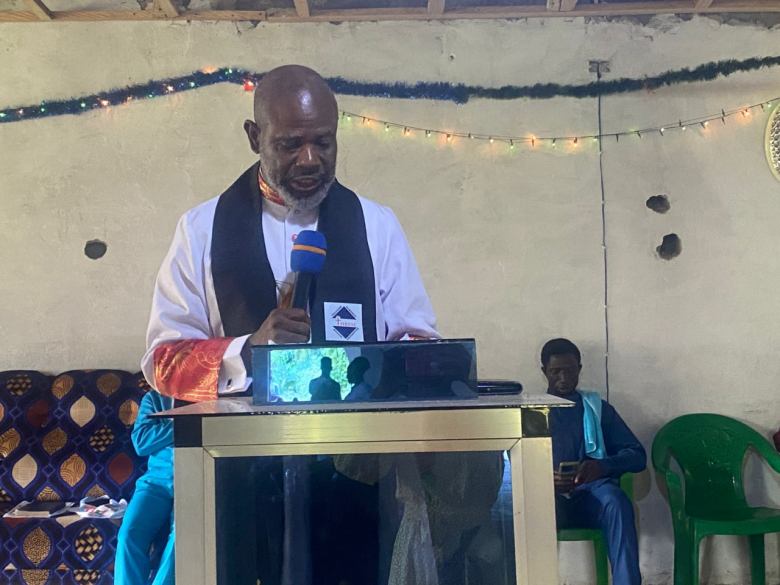
Paynesville — In a powerful keynote address at the official launch of the Transformative Youth of Liberia (TYOL) Scholarship Fundraising Program, Bishop Theo Barbi Roberts sounded an urgent alarm on the state of youth education in Liberia, calling for immediate national intervention to remove the barriers preventing young people from realizing their dreams.
By Patience M. Jones
The event, held on Saturday under the theme: “Empowering Dreams Through Education,” brought together students from various institutions, parents, teachers, youth leaders, and other stakeholders committed to advancing youth development in Liberia.
Bishop Roberts described the TYOL scholarship initiative as “farsighted, timely, and critical,” praising the organization for taking bold steps to support young people at a time when educational opportunities remain out of reach for many.
He condemned the persistent negative stereotypes often used to define young Liberians—labels such as disrespectful, violent, and unserious calling them unfair and harmful. He reminded attendees that young people make up 63 percent of Liberia’s population and represent an untapped force capable of driving national transformation.
“Young people have tremendous potential. They are agents of change and nation builders,” Bishop Roberts said. “But too often, we turn deaf ears to their struggles and label them unfairly.”
He pointed to poverty as the greatest obstacle hindering the dreams of Liberia’s youth. With 51 percent of the population living in poverty and 30 percent in extreme poverty, he said many young people simply cannot afford school fees or daily necessities.
“If a young person hustles all day just to buy a one-dollar bowl of food, how can they save for school fees?” he asked. “Poverty is killing dreams.”
Bishop Roberts stressed that education remains the surest path to breaking the cycle of poverty, advancing the nation, and empowering the next generation. He criticized the reliance on handouts and called for sustained investments in skills-building and educational opportunities that allow young people to stand on their own feet.

He warned that Liberia would continue to see the rise of social challenges—including drug abuse and vulnerability among “Zogos” and “Zogees”—if leaders fail to prioritize youth empowerment. He highlighted the southeast Liberian term Nukasayne, meaning “no way out,” as a stark description of the hopelessness many young people feel—especially girls who face exploitation and high risks of early pregnancy while trying to pursue an education.
Despite these grim realities, Bishop Roberts expressed strong hope that change is possible. He urged the Government of Liberia, particularly the Ministry of Youth and Sports and the Ministry of Gender, Children and Social Protection, to align their programs with youth-led initiatives like TYOL.
He also appealed to donor organizations, humanitarian groups, and women’s empowerment networks to increase support for initiatives that help young people build skills, complete school, and achieve their goals.
In a passionate message to Liberia’s youth, Bishop Roberts encouraged them to be bold, peaceful, and persistent in advocating for the issues that affect them.
“Do not sit idle, because if you sit, you waste,” he said. “Make noise about what matters to you. Be respectful, be civil, and stay determined. Help is on the way—in Jesus’ name.”
Bishop Roberts concluded by emphasizing that the future of Liberia depends on today’s youth—and that education remains the strongest foundation for building their dreams and shaping the nation’s future.
Support Independent Journalism
Your support helps FrontPage Africa continue delivering independent, credible, and impactful journalism. Every contribution strengthens our ability to investigate, inform, and hold power accountable while keeping quality journalism accessible to our readers.
Support our journalism or subscribe to receive the latest FrontPage Africa stories and updates.