Monrovia —Bishop Kortu K. Brown, a respected clergyman and former president of the Inter-religious Council of Liberia, has warned that Liberia is dangerously close to failing the governance test under President Joseph Boakai’s leadership.
By: Willie N. Tokpah, [email protected]
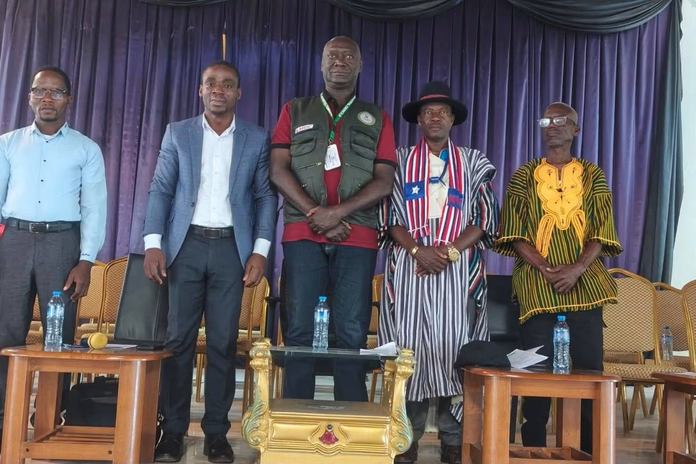
Speaking to a group of young people at the New Water in the Desert Assembly Apostolic Pentecostal Church in Monrovia, Brown expressed grave concern over the country’s political and governance challenges.
He highlighted that nearly 14 months into the Boakai administration, ordinary Liberians are increasingly feeling disillusioned by the lack of substantial progress.
“The signs are clear,” Brown said. “For many, nothing substantial seems to be working in Liberia right now. The country’s leadership needs to step up and meet the urgent needs of its people, or we risk repeating the failures of the past.”
Bishop Brown’s comments come as the country grapples with multiple issues, including widespread drug addiction, human suffering, and insufficient social services. He pointed out that nearly 60% of Liberia’s population is youth, and 20% are at risk of falling victim to illicit drugs, leaving citizens questioning whether the current administration is addressing these critical problems effectively.
Brown also referred to the ongoing crisis in the House of Representatives, which has been mired in internal conflicts, leading to a paralysis of governance. He questioned why the leadership crisis in the House is taking so long to resolve, calling it a failure of governance and a reflection of Liberia’s struggles with leadership.
“We are the oldest independent republic in Africa, and yet, we continue to rely on ECOWAS to mediate our internal conflicts. This should not be the case,” he said. “It is happening because we are failing the governance test. As a nation, we must ask ourselves: ‘Are we meeting the expectations that come with our history, our independence, and our potential?’”
The former Inter-religious Council president called for a shift in priorities, urging the government to focus more on the ordinary Liberian citizen rather than the elite. He emphasized that the people facing the harshest realities—drug addiction, poverty, and lack of access to basic services—should be the government’s top concern.
“The people who matter the most are the ordinary Liberians. It’s time for the government to prioritize their concerns over the interests of the powerful few,” Brown said. “To whom much is given, much is required.”
Brown further stressed that the government must embody the principles of rule of law, conciliation, and patriotism to address the challenges facing Liberia. He emphasized that the time for talk is over and that it is now time for action to deliver tangible results for the people.
“The future of Liberia depends on the current governance system,” Brown declared. “We cannot afford to fail the governance test once again.”
Brown added that Liberia’s success will depend not just on the leadership of President Boakai but on the collective efforts of all sectors of society —including government, civil society, and the people themselves —to ensure that Liberia fulfills its potential and works for all its citizens.
Support Independent Journalism
Your support helps FrontPage Africa continue delivering independent, credible, and impactful journalism. Every contribution strengthens our ability to investigate, inform, and hold power accountable while keeping quality journalism accessible to our readers.
Support our journalism or subscribe to receive the latest FrontPage Africa stories and updates.