MONROVIA – The Government of Liberia says it has made significant progress in addressing longstanding challenges in the country’s public service retirement system, with 2,718 civil servants expected to retire at the end of December 2026 under a nationwide exercise intended to improve pension administration and ensure timely payment of retirement benefits.
By Selma Lomax, [email protected]
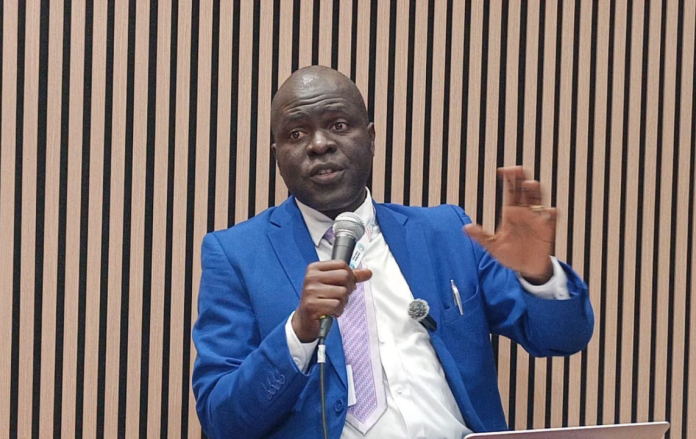
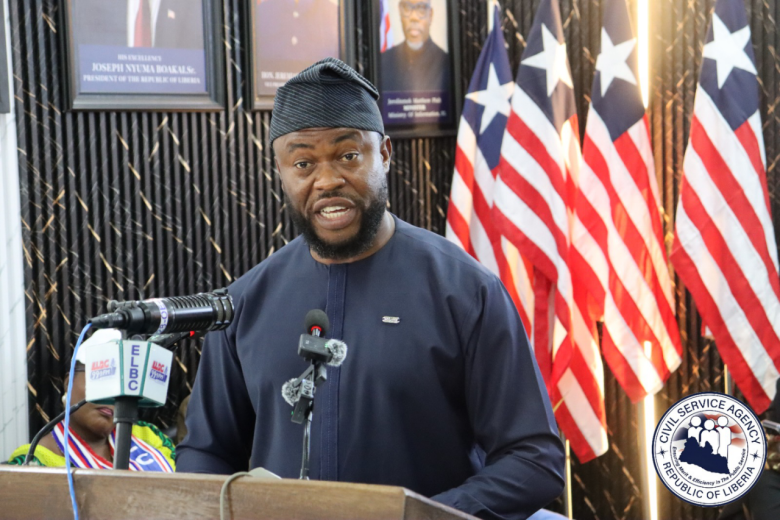
Director General of the Civil Service Agency (CSA), Dr. Josiah F. Joekai Jr., disclosed that the employees were identified through a nationwide pre-retirement counseling and data collection exercise conducted in collaboration with the National Social Security and Welfare Corporation (NASSCORP).
According to Dr. Joekai, the exercise, which covered all 15 counties and 67 Government spending entities, was successfully concluded on October 17, 2026, marking what he described as an important step toward establishing a more organized, transparent and predictable retirement administration system.
The exercise captured a total of 2,835 employees, including 2,718 individuals scheduled to retire effective December 31, 2026, while the remaining 117 represent outstanding retirement cases involving public servants who left active Government service between 2020 and 2024 but have yet to commence receiving their pension benefits.
Speaking during an official press briefing in Monrovia in November, Dr. Joekai said the latest results demonstrate the Government’s determination to correct administrative weaknesses that for years left retiring public servants uncertain about their financial future. He said the retirement process had historically been characterized by inadequate personnel documentation, delays in processing retirement records, weak institutional coordination and prolonged waiting periods before eligible retirees could access their pension benefits.
According to him, some civil servants remained in active Government service beyond the statutory retirement age because their records had not been properly processed, while others completed their years of service only to encounter difficulties accessing benefits to which they were entitled.
Dr. Joekai said those challenges created unnecessary hardship for former public servants and their families, particularly individuals who depended on their monthly retirement income to meet basic household responsibilities. However, he maintained that the administration of President Joseph Nyuma Boakai Sr. had begun addressing the situation through improved coordination between the CSA and NASSCORP, with particular emphasis on identifying employees approaching retirement age before their departure from Government service.
He explained that the new approach involves identifying retirement-eligible employees, reviewing their employment records, providing pre-retirement counseling and facilitating the documentation required for pension enrollment ahead of their effective retirement dates.
The CSA Director General said the intention is to move away from a system in which employees begin pursuing retirement documentation only after leaving their positions to one in which the process is initiated and completed in advance.
Under the arrangement, employees scheduled to retire on December 31, 2026, are expected to begin receiving their monthly pension benefits in January 2027, provided they successfully complete NASSCORP’s verification and enrollment requirements.
In addition to their monthly pensions, eligible retirees are expected to receive a one-time Government Retirement Handshake Package, with the amount determined by their qualifying years of public service. Dr. Joekai said the package is intended to recognize the contributions of employees who have dedicated years of their productive lives to serving the country and provide additional financial support as they transition out of active employment.
He emphasized that the Government considers retirement security an important component of public sector employee welfare, arguing that individuals who have served the Republic should not be subjected to unnecessary administrative obstacles when accessing benefits earned through years of service.
The 2026 exercise also revealed significant differences in the number of employees approaching retirement across Government institutions, with the Ministry of Education accounting for more than half of the entire retirement batch.
According to the CSA’s figures, the Ministry of Education has 1,493 employees scheduled to retire, representing approximately 54.9 percent of the 2,718 individuals expected to leave active Government service at the end of December.
The Ministry of Health follows with 300 employees, representing 11 percent, while the Ministry of Local Government accounts for 297 employees, or approximately 10.9 percent. The remaining 628 employees, representing 23.1 percent, are distributed across other Government spending entities.
Combined, the Ministries of Education, Health and Local Government account for approximately 76.9 percent of the employees scheduled to retire during the period.
The figures have raised the importance of succession planning within these institutions, particularly because of their central responsibilities in delivering education, healthcare and local administrative services throughout the country.
The CSA said it intends to work with human resource directors and other relevant authorities to ensure that the departure of experienced employees does not unnecessarily disrupt institutional operations. The agency believes that early retirement identification should allow Government institutions sufficient time to prepare for personnel changes, transfer institutional knowledge and make appropriate arrangements for replacing employees whose departure could affect service delivery.
Of the 2,718 employees scheduled to retire in December, 2,125 are males, representing 78.2 percent, while 593 are females, accounting for 21.8 percent. Beyond preparing the current retirement batch, the Government says it is also prioritizing the resolution of pension cases inherited from previous years.
Dr. Joekai disclosed that the nationwide exercise identified 117 former public servants who retired between 2020 and 2024 but have not yet started receiving their monthly pension payments. The cases involve 92 males and 25 females spread across 13 Government spending entities.
The Ministry of Education accounts for the largest number of outstanding cases, with 42 individuals, followed by the Ministry of Local Government with 33 and the Ministry of Health with 19.
The remaining cases are distributed among other Government institutions. Dr. Joekai said the CSA has begun reviewing, compiling and transmitting the relevant documentation to NASSCORP for verification and further processing. He said the Government recognizes the difficulties confronting individuals who have already completed their years of service but remain unable to access their retirement benefits.
The CSA Director General assured that the outstanding cases would receive attention through continued collaboration between the two institutions, although the processing and commencement of payments remain subject to the required verification and enrollment procedures.
He pointed to the 2024 nationwide retirement exercise as evidence that coordinated administrative intervention could produce measurable results in addressing long-standing pension delays.
During that exercise, the CSA and NASSCORP identified 294 individuals who had retired between 2018 and 2023 without receiving their pension benefits.
Dr. Joekai said all 294 cases were subsequently processed through institutional collaboration, and the beneficiaries are now receiving their monthly pension payments.
He described the development as an important demonstration of the Government’s capacity to address inherited administrative problems when relevant institutions work together and maintain consistent follow-up.
The latest identification of 117 outstanding cases, however, suggests that challenges associated with retirement documentation and pension enrollment have not been completely eliminated. The CSA is therefore seeking to ensure that the newly identified cases are processed while preventing similar situations from affecting the 2026 retirement batch.
In a related development, the Government has extended the period for retirement registration and documentation to November 30, 2026, to accommodate eligible employees who were unable to participate in the nationwide field exercise. The extension is intended to provide an additional opportunity for civil servants approaching retirement to have their records captured and included in the processing arrangements.
Dr. Joekai urged eligible employees who have not yet completed the exercise to submit their required documents to the CSA before the November 30 deadline.
He also called on human resource directors and officers across Government institutions to assist eligible employees in completing the necessary procedures, warning against administrative lapses that could prevent qualified individuals from accessing their retirement benefits on time.
Employees captured under the extended registration period will form part of a second batch and are expected to commence receiving their monthly pension benefits in February 2027.
Their January 2027 pension entitlement is also expected to be paid retroactively, subject to successful verification and enrollment by NASSCORP. The extension is particularly important for employees whose retirement eligibility may not have been captured during the initial exercise or whose documentation remains incomplete.
The CSA said it wants to ensure that no eligible public servant is unnecessarily excluded from the retirement process because of documentation or administrative challenges that could have been resolved before the deadline.
Dr. Joekai maintained that the reforms are part of the Boakai administration’s broader commitment to improving conditions within the public service and strengthening institutional accountability.
He said retirement administration is not simply a personnel management responsibility but an important component of Government’s obligation to protect the welfare and lawful entitlements of individuals who have served the country.
According to him, the reforms are also expected to improve the Government’s ability to maintain accurate personnel records, manage workforce transitions and coordinate retirement-related responsibilities across spending entities.
Support Independent Journalism
Your support helps FrontPage Africa continue delivering independent, credible, and impactful journalism. Every contribution strengthens our ability to investigate, inform, and hold power accountable while keeping quality journalism accessible to our readers.
Support our journalism or subscribe to receive the latest FrontPage Africa stories and updates.