SINKOR- The future of Liberia’s agriculture, many experts say, begins beneath the surface, in the very soil that sustains the nation’s crops and livelihoods. For decades, that foundation has suffered from neglect, poor management, and lack of reliable data. But a new initiative, launched in Monrovia, is set to change that.
By Siaway T. Miapue, contributing writer
The International Institute of Tropical Agriculture (IITA), in partnership with the European Union, and Government of Liberia has officially launched the EU-funded Liberia Land and Soil Resources Knowledge Project (Soils4Liberia), a groundbreaking effort aimed at strengthening Liberia’s soil and land resource management through science, technology, and collaboration.
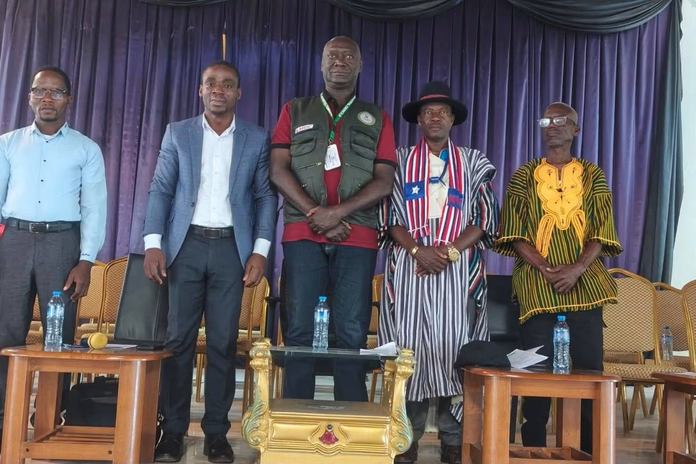
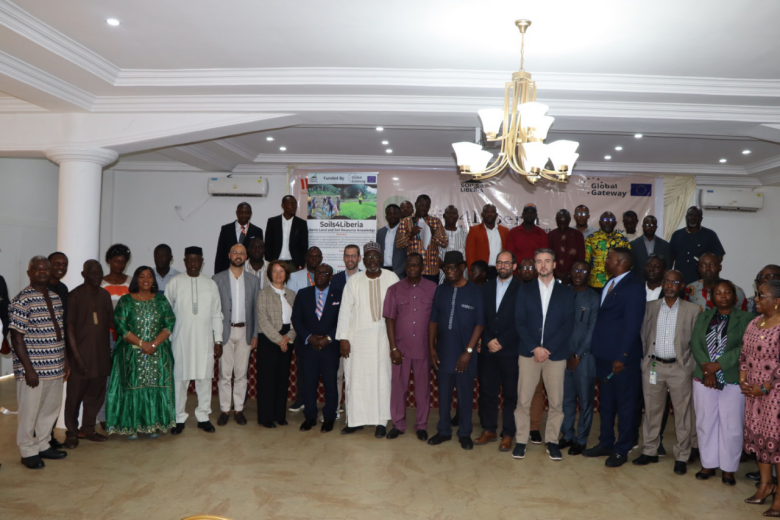
Held at the Sinkor Palace Hotel, the launch ceremony drew representatives from key government institutions, international partners, and development agencies, all rallying around a common goal: ensuring that Liberia’s soils can support sustainable agriculture and future generations.
For Deputy Agriculture Minister for Technical Services, Hon. Solomon Hedd-Williams, who represented Minister Dr. J. Alexander Nuetah at the launch, said the Soils4Liberia Project symbolizes more than just another development program. It marks a turning point in how the country views its natural resources.
“This is not just another event on our calendar,” Hedd-Williams says firmly. “It marks the beginning of a journey toward sustainable agricultural growth, environmental resilience, and national food security. The Soils4Liberia project is a transformative and visionary initiative aimed at laying the very foundation of our nation’s agriculture, which is the soil.”
The project’s centerpiece is the Liberia Land and Soil Resources Knowledge Platform, a digital system that will collect and provide open access to accurate soil and land data and information. With this information, policymakers, researchers, and farmers can make informed decisions about sustainable increase of agricultural productivity, natural resources management, and strengthening of climate resilience among others.
For Dr. Samuel Mesele, a soil scientist and the acting project’s manager at IITA, the relationship between people and soil goes beyond science, it’s existential.
“Soil resources management must be viewed through the lenses of food production, land degradation, climate change, and biodiversity,” Dr. Mesele says. “When the soil is poor, the people become poor — and when the people are poor, the soil becomes poorer. The soil is the foundation and the end of every human being; hence, the need to protect it.”
Liberia, with vast agricultural potential, continues to face challenges of deforestation, unsustainable land use, and declining fertility of farmlands. Many farmers rely on traditional methods, often lacking access to soil data or modern agricultural practices. The Soils4Liberia initiative, experts say, could provide the tools and knowledge needed to reverse that trend.
Representing the IITA Director General, Dr. Tahirou Abdoulaye, the institute’s Deputy Director General for Partnerships and Scaling, described soil information as a critical piece in Africa’s agricultural transformation.
“The importance of soil information in agriculture and decision-making is critical if we are to achieve a sustainable agricultural transformation,” he said.
Since its establishment in 1967, the IITA, a member of the CGIAR global research partnership, has worked across Africa to improve food security, create jobs, and protect natural ecosystems through agricultural innovation. The opening of its Liberia office, coinciding with the project launch, is expected to boost the country’s research capacity and regional collaboration.
Representing the European Union Delegation to Liberia, Ambassador Nona Deprez reaffirmed the EU’s long-standing commitment to Liberia’s development and its belief in agriculture as a driver of peace and prosperity.
“The European Union is committed to being a long-term partner for Liberia, investing in agriculture, but also in the future prosperity and stability of this country,” Deprez says. “We look forward to seeing the positive outcomes of this project and hope it serves as a model for agricultural transformation across the region.”
The launch attracted representatives from the World Bank, IFAD, FAO, ISRIC–World Soil Information, MATE – Hungarian University of Agriculture and Life Sciences, and the Regional Hub for Fertilizer and Soil Health for West Africa and the Sahel.
National partners include the Ministry of Agriculture (MoA), the Central Agricultural Research Institute (CARI), and the University of Liberia (UL). Other national stakeholders and beneficiary institutions are the Forestry Development Authority (FDA), Liberia Land Authority (LLA), National Bureau of Concessions (NBC), National Fisheries and Aquaculture Authority (NaFAA), Liberia Institute of Statistics and Geo-Information Services (LISGIS), Environmental Protection Agency (EPA), and Liberia Agriculture Commodity Regulatory Authority (LACRA). Also in attendance were representatives from the Ministry of Finance and Development.
Also gracing the occasion was former Vice President, Dr. Jewel Howard-Taylor, who lauded the initiative as “a timely intervention to strengthen food security and environmental governance through research and innovation.”
The Soils4Liberia Project aims to bridge one of Liberia’s most critical information gaps, the lack of reliable soil and land data, which has long hindered effective agricultural planning and climate response.
The project will be building of human capacity for conducting soil surveys and data collection in the field, soil analysis, and in processing and management of the data and the generation of data and information products to satisfy the demands of users such as farmers, scientists, and policymakers.
Support Independent Journalism
Your support helps FrontPage Africa continue delivering independent, credible, and impactful journalism. Every contribution strengthens our ability to investigate, inform, and hold power accountable while keeping quality journalism accessible to our readers.
Support our journalism or subscribe to receive the latest FrontPage Africa stories and updates.