Monrovia – The long-running cases of Hummingbird Liberia and Putu Iron Ore Mining have once again, reignited the debate at the Legislature as Liberia’s God-given resources are rather becoming more than a curse rather than a blessing as a result of unpaid taxes and abandonment by these two companies.
By Emmanuel Weedee-Conway
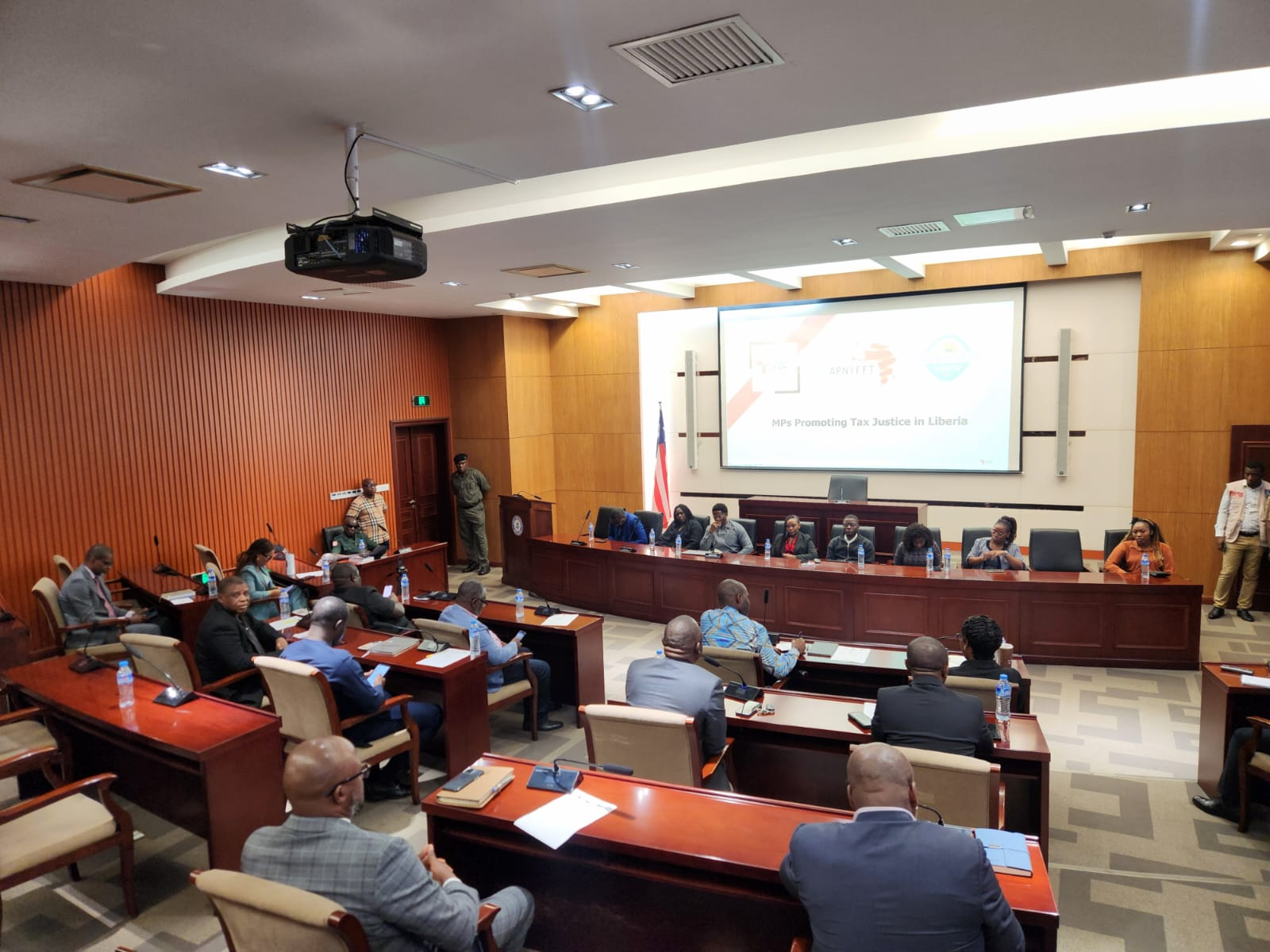
During a two-hour engagement by Tax Justice Network Africa (TJNA) with Liberian Legislative members of the African Parliamentary Network on Illicit Financial Flows and Taxation (APNIFT), there were more lights thrown on how Liberia manages multinational enterprises (MNEs) in its extractive sector.
APNIFT is a platform for African legislators to strategize, build capacity, and advocate against illicit financial flows (IFFs) and tax injustice, aiming to influence equitable development in Africa. Here in Liberia, APNIFFT, coordinated by TJNA, supports legislative action by providing training lawmakers and facilitating workshops on policy tracking and IFFs.
Hummingbird Liberia in particularly, has been repeatedly cited for defaulting on their tax and social contributions as specified in the MDA
During the engagement, which was held in the Senate Chamber of the Capitol Building, experts from the TJNA pointed out weak regulatory enforcement as factor costing the country millions in lost revenues – citing the cases of Hummingbird Resources and Putu Iron Ore Mining Company.
Dormant Licenses and Tax Arrears
Hummingbird Liberia has been repeatedly cited for defaulting on tax payments, while Putu Iron Ore Mining on the other hand, has held one of Liberia’s largest mining concessions for years without carrying out actual operations.
Leading the conversation, Mr. Francis Kairu, Senior Policy Officer at TJNA, highlighted how these two cases have exposed loopholes in Liberia’s taxation and concession frameworks.
Policy recommendations
As a means of reverting the hurts, Kairu craved that the Liberia Revenue Authority (LRA) and the Ministry of Mines and Energy publish lists of arrears owed by mining companies, covering both tax and social development contributions.
He also called for the enforcement of penalties, interest, and possible suspension of operations against companies, such as Hummingbird that failed to meet their tax obligations.
Furthermore, the tax expert recommended the introduction of a bi-annual compliance reporting system for all mining companies, verified by the LRA and submitted directly to Legislature.
Legal Gaps in Mineral Development Agreements
Francis believes that the weaknesses in Liberia’s Mineral Development Agreements (MDAs) have allowed companies to delay payments or escape obligations without consequence.
Predicated upon this, he recommended that a legal review of MDAs involving companies such as Hummingbird and Putu, is conducted annually to close loopholes in dispute resolution clauses.
In the signing or renewal of MDAs, he called on the Legislature to mandate the inclusion of automatic termination clauses for companies that fail to settle tax arrears within a fixed timeframe.
“There is a need for parliamentary audit of all mining licenses to identify dormant concessions, such as Putu, and introducing a “use it or lose it” policy to prevent companies from hoarding rights without operations. Also, explore international arbitration or even asset seizure if companies exit Liberia without settling their dues. This is your country; not for the companies,” he advised.
Multinationals and Tax Planning
Kairu indicated that the current system, where subsidiaries are treated as separate entities, has the propensity to enable MNEs to shift profits to low-tax countries, while leaving resource-rich nations like Liberia shortchanged.
To tackle this, he said a proposed solution would be unitary taxation with formulary apportionment, which pools the global profits of a company and distributes them to countries based on real economic activity, such as assets, payroll, and sales.
“For instance, Firestone Liberia employs 70% of the company’s global workforce and hosts 60% of its global assets, yet Liberia collects only limited revenues because profits are booked abroad. Under unitary taxation, Liberia could claim as much as 37.5% of Firestone’s global profits, reflecting its true economic contribution.”
The Role of The Liberian Legislature
Kairu among other things urged the Legislature play a more proactive role in advancing reforms, including push for international tax information exchange and supporting stronger domestic laws.
“Liberia cannot afford to continue losing revenues while multinational companies exploit our resources. The Hummingbird and Putu cases should be a wake-up call for urgent reform.”
What The Lawmakers Say?
Bong County Electoral District 7 Representative and Chairman of the Committee on Concession and Investment at the House of Representatives, Foday Edward Fahnbulleh, decried the unwillingness of Hummingbird to settle its tax obligation to the state.
“Hummingbird is not even willing to pay, and we are still looking up to the executive for action. We will not stop, we will keep pressing and we are willing to go the extra mile until we get result,” Rep. Fahnbulleh told the gathering.
Rep. Fahnbulleh, who is also a member of the ANIFT Caucus, revealed that most of the current mineral laws used by the country are old and needs to revision.
“We are more into royalty than production sharing. Most of the mining laws are old. The political will is also needed in all of these that we are discussing in here.”
Several lawmakers including the Chairman of the ANIFT Legislative Caucus, River Gee County Senator, Francis Dopoh, Abraham Darius Dillon of Montserrado County and Bong County Senator, Prince K. Moye extoled the TJNA and its local chapter, Integrity Watch Liberia for the support in enlightening the minds of lawmakers.
They described the process by TJNA as a laudable initiative that aims to strengthen transparency and accountability and give legislators the insight of how to go about future MDAs negotiations and signings.
Support Independent Journalism
Your support helps FrontPage Africa continue delivering independent, credible, and impactful journalism. Every contribution strengthens our ability to investigate, inform, and hold power accountable while keeping quality journalism accessible to our readers.
Support our journalism or subscribe to receive the latest FrontPage Africa stories and updates.