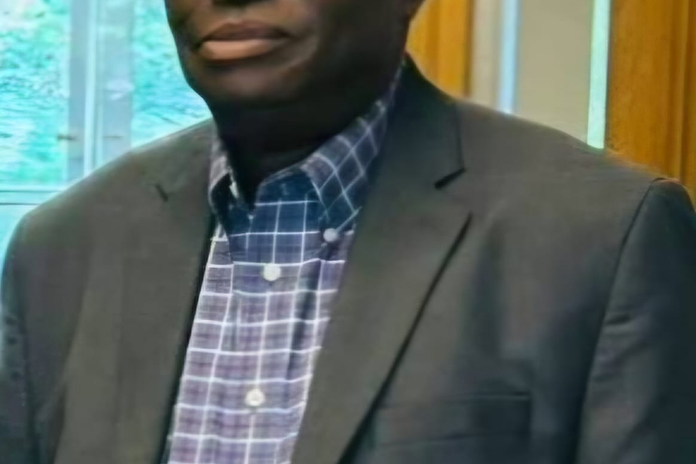
Cllr.Tiawan Saye Gongloe: “We can buy poverty, and we can negotiate poverty.”Source: https://www.facebook.com/share/v/1B7vqX8jAM/
President Joseph Nyuma Boakai (2024 State of the Nation Address)
“We all have what it takes to overcome all the burdens we have imposed on ourselves through greed and corruption.”
President Joseph Nyuma Boakai(Liberian Embassy, Washington DC, USA):
“When we work together, there is nothing we can not overcome as a people.”
Former President Ellen Johnson Sirleaf (Liberian Embassy, Washington DC, USA): “When we took office… institutions of governance had completely collapsed, and corruption was rampant.”
Former President Ellen Johnson Sirleaf (Marquette University): “Today, well over three-quarters of our people live below the poverty line.”
Former UN Secretary-General Kofi Annan:
“Corruption is an insidious plague that has a wide range of corrosive effects on societies.” This is from his message marking the adoption of the UN Convention Against Corruption and is one of the world’s best-known statements connecting corruption to underdevelopment.
Former President of South Africa Nelson Mandela: “Overcoming poverty is not a gesture of charity. It is an act of justice.”
This quotation emphasizes that poverty is a barrier to human and national development.
Pope Francis: “Corruption is paid by the poor.”
A concise and widely cited observation on how greed and corruption deepen poverty.
By: Austin S Fallah – A True Son of the Planet Earth Soil:[email protected].
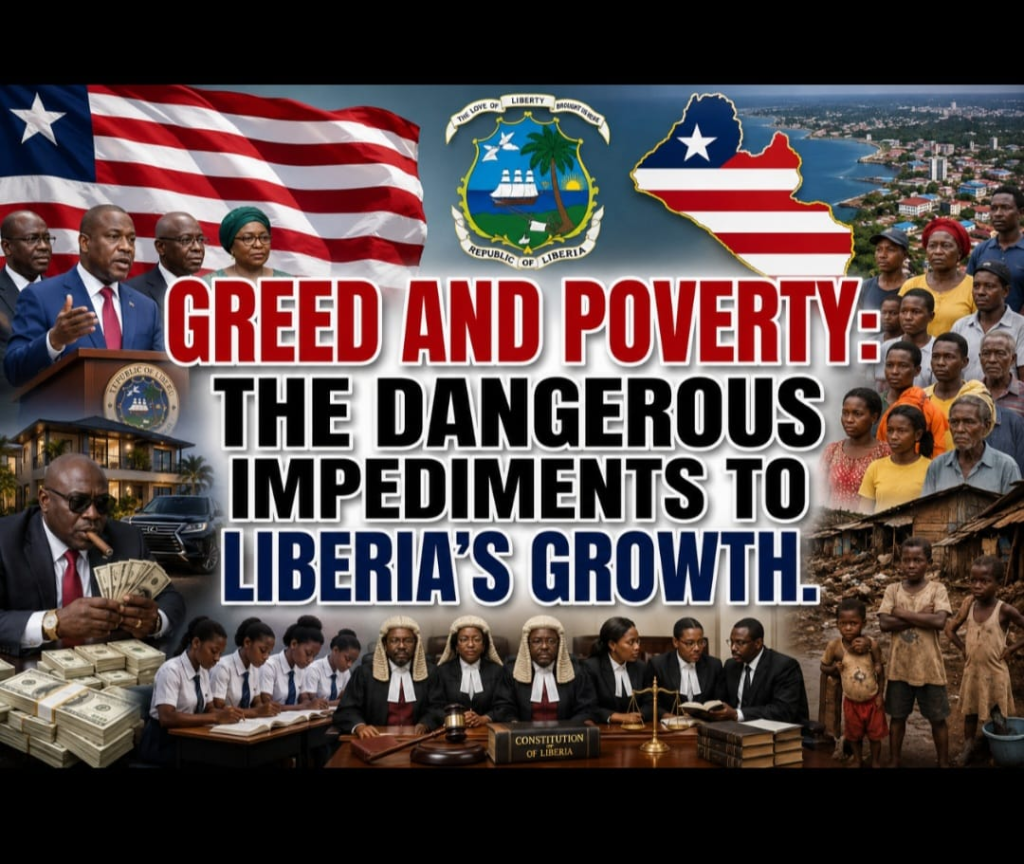
In a country where the weight of history bears heavily upon its citizens, the struggle against corruption and poverty stands as one of Liberia’s most pressing challenges.
Liberia, with its rich natural resources and potential for prosperity, remains beleaguered by greed, poverty, and mismanagement.
This paradox, a land abundant in resources yet entrenched in poverty, raises fundamental questions about the motivations behind political and economic negotiations and the integrity of those acting on behalf of the nation.
As Cllr. Tiawan Saye Gongloe poignantly observed on a local radio station, “We can buy poverty, and we can negotiate poverty.”
This statement encapsulates the grim reality of corruption, where the personal gain of a few overshadows the nation’s collective welfare.
The nexus between greed and poverty is particularly dangerous in Liberia.
The country, having endured protracted conflicts and political instability, now finds itself at a crossroads.
On the one hand lies the opportunity for recovery and sustainable development.
On the other hand, lies the pattern of corrupt negotiations, where individuals prioritize personal enrichment over the country’s growth.
The legacy of corruption in Liberia can not be understated; it stifles economic development, perpetuates poverty, and erodes public trust in governance.
It is imperative to understand how greed continues to triumph over national interests and to identify steps to redirect this trajectory toward a more equitable future.
The Cost of Corruption:
Corruption has deep roots in Liberia’s socio-political landscape.
As some foreign investors seek to exploit the nation’s natural resources, they often encounter a network of negotiators willing to prioritize individual profits over collective prosperity.
This phenomenon is not unique to Liberia but is prevalent in many developing nations where resources are abundant, but governance is weak.
However, in Liberia’s context, this has dire implications.
When contracts for the extraction of timber, minerals, and oil are negotiated, the terms often favor private interests at the expense of the public good.
The ramifications of such corrupt practices extend beyond immediate financial gains.
According to Transparency International, corruption contributes significantly to economic inequality, with the wealth generated from national resources failing to trickle down to the majority of Liberia’s population.
Instead, peripheral elites enrich themselves, further entrenching the cycle of poverty.
Families continue to languish in abject conditions; children are deprived of education; and health care systems are in disarray.
The country’s road to recovery is mired in the grim reality that some in positions of political authority and judicial responsibility often exploit their positions for personal gain, thereby undermining the potential for national growth.
Ethical Integrity and National Interest:
The question then arises: how do negotiators reconcile their personal ambitions with their nation’s broader needs?
The answer lies in a fundamental understanding of ethical integrity and national interest.
Those who negotiate on behalf of Liberia must recognize that their actions carry weight, not only in the present but for generations to come.
Their character and reputation will echo in society long after their terms in office have ended.
Choosing to act in the public good rather than for personal gain lays the groundwork for sustainable development and fosters a culture of accountability.
Negotiators must prioritize Liberia’s social and economic welfare in all dealings with foreign companies and investors.
This involves advocating for transparency in contract negotiations, ensuring that resources are managed to benefit the entire population, and creating frameworks that hold both local and foreign actors accountable.
Involving civil society representatives in these negotiations could also serve as a necessary check on corruption.
Their insight into community needs and priorities can help shape agreements that reflect the interests of the broader population rather than those of a few.
A Call for Systemic Change:
While negotiators’ personal choices are of utmost importance, a systemic approach is necessary to combat the entrenched culture of corruption.
Legislative reforms are essential in establishing a legal framework that prevents corrupt practices from taking root.
For instance, laws that mandate public disclosure of negotiations and contracts could supplement efforts toward transparency.
Moreover, establishing independent agencies to oversee negotiations involving natural resources can help ensure that deals serve the national interest rather than individual gain.
Additionally, fostering a culture of patriotism among leaders and citizens alike would strengthen a united front against corruption.
Public awareness campaigns and education can instill a sense of responsibility within the political class, encouraging leaders to prioritize the nation above their ambitions.
Such cultural shifts are not instantaneous, but they are necessary for long-term change.
Citizens must demand accountability from their leaders and must celebrate and support those who demonstrate integrity and commitment to the nation’s welfare.
The Role of International Actors:
It is also crucial to recognize the role of international actors in perpetuating the cycle of greed and exploitation.
Some foreign investors, too often blinded by profit, must be held accountable for their complicity in the corrupt practices of local negotiators.
Engaging with international corporations to promote ethical business practices can revolutionize how resources in Liberia are managed.
Initiatives such as the Extractive Industries Transparency Initiative (EITI) can play a pivotal role in advocating for transparency, promoting responsible investment, and ensuring that local communities benefit from resource extraction.
International partners should foster a collaborative approach that empowers local governments and positive civil society, rather than enabling corrupt practices.
This would involve investing in Liberia’s institutional capacity building, supporting judicial reforms, and prioritizing projects that directly address poverty alleviation.
By aligning with the goals of good governance and social responsibility, international actors can be instrumental in creating a more equitable political landscape.
A Vision for the Future:
Ultimately, the path forward for Liberia hinges on a collective commitment to confronting corruption and prioritizing national interest.
The struggle against greed and poverty requires solidarity among all stakeholders, government officials, positive civil society, and international actors.
The vision of a prosperous Liberia can only be realized if negotiators and leaders dare to prioritize their citizens’ welfare over personal enrichment.
As Liberia navigates its complex history, it has the opportunity to emerge again as a beacon of hope and resilience in West Africa.
By cultivating a culture of integrity, embracing transparency, and advocating for the collective good, Liberia can break free from the shackles of greed and poverty.
The vision of a nation that promotes the well-being of its citizens, invests in sustainable development, and upholds ethical governance is not just a lofty dream; it is an achievable reality that calls for immediate action and unwavering commitment.
The stakes are clear. The legacies of those who have come before will persist in the minds and hearts of the Liberian people.
History will remember whether negotiators chose the path of greed or the nobler path of national service.
As Liberians look to the future, let them champion the values that encourage integrity, foster growth, and demand accountability.
Liberia stands on the precipice of change; it is up to its people to leap toward a brighter and more equitable future.
Support Independent Journalism
Your support helps FrontPage Africa continue delivering independent, credible, and impactful journalism. Every contribution strengthens our ability to investigate, inform, and hold power accountable while keeping quality journalism accessible to our readers.
Support our journalism or subscribe to receive the latest FrontPage Africa stories and updates.