MONROVIA — Rodney D. Sieh, publisher of FrontPage Africa, said on Tuesday that widespread complaints of injustice, arbitrary arrests and a faltering judiciary echo the conditions that preceded Liberia’s 1980 coup and 14-year civil war. He urged the Chief Justice to assert himself and accused prosecutors of selective treatment in the drug-trafficking case against former Vice President Jewel Howard-Taylor.
By Emmanuel Weedee-Conway
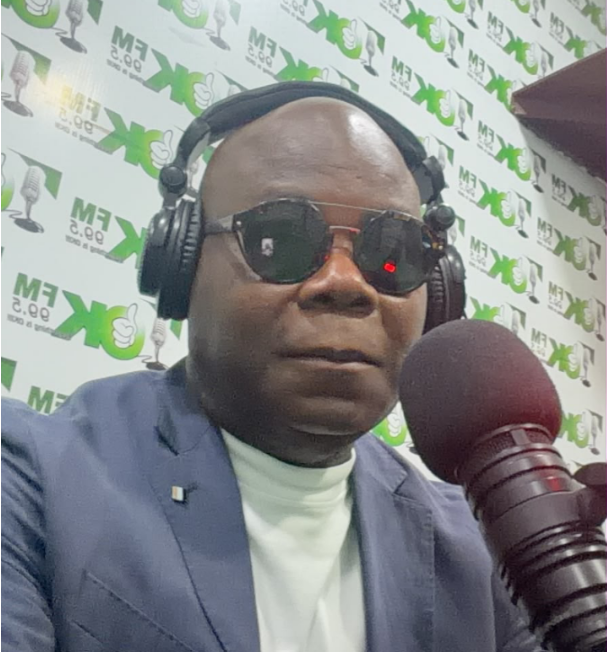
Speaking on the OK Morning Rush program on OK FM in Monrovia, Sieh said the coup and the war grew out of injustice, the arbitrary arrest of people for speaking their minds and unlawful detention. He said similar grievances are building again.
“There are just too many people complaining about injustice. It’s not just the Executive Branch; it’s also the Judiciary,” he said. “People have been arrested, in their minds, for saying things that someone in power feels are against them. I’ve been to prison myself, so I understand that kind of situation.”
Sieh noted that the soldiers who seized power in 1980 said they had come to free Liberia from nepotism, greed and corruption, but they “ended up doing the same thing.”
“The justice system was said to be nonexistent during that period, and people felt they had no choice but to overthrow the government, which eventually led to civil war,” he said. “So all of these little things happening in the country, we cannot take them for granted. I think it behooves us to ensure that the Judiciary guarantees justice for everybody.”
On April 12, 1980, Master Sgt. Samuel K. Doe led a group of enlisted soldiers in a coup that killed President William R. Tolbert Jr. It ended more than a century of rule by the True Whig Party and the Americo-Liberian elite. The coup followed years of resentment over corruption, the concentration of wealth and power in a small minority, and the exclusion of the indigenous majority. Those grievances boiled over in the deadly 1979 rice riots, which were triggered by a proposed increase in the price of the staple. Days after the coup, 13 senior officials of the ousted government were publicly executed on a Monrovia beach.
Doe’s government soon became as repressive as the one it replaced. It was marked by a disputed 1985 election, ethnic favoritism and brutal reprisals in Nimba County after a failed coup attempt that year. In December 1989, Charles Taylor’s National Patriotic Front of Liberia invaded through Nimba, starting a civil war that, with a pause in the late 1990s, lasted until 2003. An estimated 250,000 people were killed before a peace agreement signed in Accra ended the fighting.
Pressure on the Chief Justice
Sieh said the public increasingly believes the judiciary is failing, and he called on the Chief Justice to assert himself. Litigants are losing faith in the courts, he said.
“Their cases are not being resolved in a way that gives them confidence,” he said. “A case goes from the lower court to the Supreme Court, the Supreme Court rules one way, and people are not happy. We have to have a country where people are respected, where the rule of law is protected and preserved. And I just don’t see that happening.”
He cited the prosecution of [Dee-Maxwell Saah] Kemayah. “You may not like him, but … it seems that the case against him is not going anywhere. It looks like a witch hunt, and we can’t have a country like that.”
Sieh also tied the judiciary’s performance to the political future of Nimba County. The Chief Justice comes from Nimba, and so does Vice President Jeremiah Kpan Koung, whom Sieh described as a possible future president.
“If people see that Nimba County officials are not using the power they have properly, why would people give them the power they deserve in the future?” he said. “You can’t have a situation where people are afraid of the Chief Justice. You can’t have a country where people are afraid of the Speaker. You can’t have a country where people are afraid of the Senate Pro Tempore. These people were elected or appointed to serve the people.”
Vacant seat
Sieh also pointed to the case of Yekeh Y. Kolubah, the former representative for Montserrado County’s District 10, who was impeached nearly six months ago. Kolubah has challenged the impeachment before the Supreme Court, and the full bench has yet to rule. The seat remains vacant as the Legislature returns to session this month.
“You cannot wait until the elections come before you decide you want to do the right thing,” Sieh said. “When people feel their rights are being trampled upon, they will not be happy, and they will hold it against you.
You can’t wait until March 2028 or March 2029 to say, ‘Okay, let’s start reaching out to people.’ By then, people’s minds may already be made up.”
Drug case
Sieh also criticized the handling of the drug investigation involving former Vice President Jewel Howard-Taylor. She was arrested on Aug. 19 at Roberts International Airport and charged with drug trafficking, money laundering and conspiracy, and she has denied the charges. Forty-eight days after her arrest, the state has not indicted her.
Sieh said that whether she is guilty or innocent, she is not the only person allegedly involved. He accused the government of shielding others while exposing a few to public ridicule.
“When this thing first started, there were a lot of names being mentioned and a lot of institutions being identified. Today, many of the people who were initially mentioned have simply disappeared from the conversation,” he said.
He pointed to a driver who allegedly recorded Howard-Taylor’s conversation and allegedly introduced her to the people who brought the drugs into Liberia. “He’s still walking around,” Sieh said, adding that the man might be held as a state witness.
“But here’s my problem with that theory: If you’re going to arrest a former vice president on her way to the airport and make a public spectacle of it, make the same spectacle when you arrest the likes of Bashiru Kante,” he said. “Did you ever see [the] Private Bar owner? Did you see him handcuffed? No. Nobody has seen how he was arrested or where he was arrested.”
Support Independent Journalism
Your support helps FrontPage Africa continue delivering independent, credible, and impactful journalism. Every contribution strengthens our ability to investigate, inform, and hold power accountable while keeping quality journalism accessible to our readers.
Support our journalism or subscribe to receive the latest FrontPage Africa stories and updates.