THE GOVERNMENT OF Liberia’s decision to halt the Citizens Movement for Change (CMC)’s bridge construction project in Gbarnga, Bong County, has reignited a familiar and troubling debate in our nation — the politicization of development.
IN A COUNTRY where infrastructure deficits continue to choke local economies and endanger lives, one would expect collaboration, not confrontation, when citizens take initiatives to solve long-standing community problems. Yet, the government’s handling of this matter demonstrates that in Liberia, politics too often takes precedence over progress.
THE BRIDGE AT the center of this controversy is no trivial undertaking. Stretching 38 meters across the Jor River, it was designed to connect several vital communities in Gbarnga, including Civil Compound, Brooklyn, Gboveh Hill, and Jorkpenmue. For years, residents have struggled with unsafe crossings, especially during the rainy season. Many have lost their lives to the river’s unpredictable currents. The bridge promised to change that story — to bring safety, connectivity, and hope.
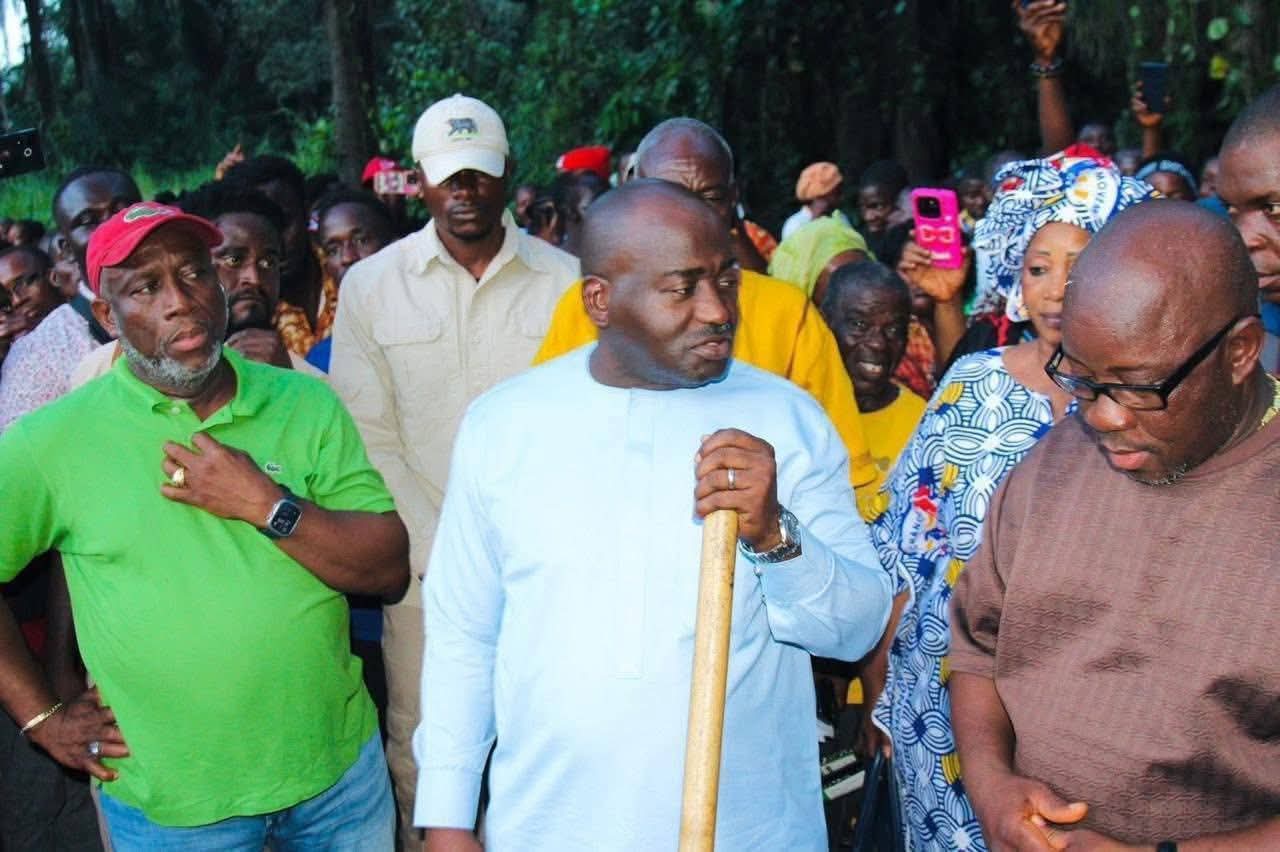
WHEN MUSA HASSAN Bility, political leader of the CMC, broke ground for the project, it was met with widespread local enthusiasm. Materials were already on site, and the project had become a rallying point for community unity and pride.
FOR ONCE, residents were seeing action instead of endless promises. But within weeks, that hope was stifled by the Ministry of Public Works, which issued an immediate stop order, claiming the groundbreaking had taken place without prior approval or submission of technical documentation.
WEEKS LATER, Public Works Minister Roland Lafayette Giddings confirmed in a letter to CMC Chairman James M.V. Yougie that the government had already allocated funds in the national budget for the same bridge. The Minister said the project was part of the government’s infrastructure development plan and would be executed under the Ministry’s supervision.
THIS ANNOUNCEMENT raised more questions than it answered. Before Bility and his team initiated work, there had been no public statement, no press release, and no mention in any previous government briefing about a bridge being budgeted for Bong County. Projects such as the Totota–Sanoyea road rehabilitation had been publicly identified, but the Gbarnga bridge had never surfaced in government communications. The sudden declaration of ownership by the Ministry, therefore, appears more like a political counter-move than a matter of administrative procedure.
THE OPTICS are hard to ignore.
A PRIVATE CITIZEN and political figure launches a project to address an urgent community need — and only then does the government step in to claim it was “already planned.” This timing alone casts serious doubt on the sincerity of the government’s claim. If there truly were budgetary allocations, why was no progress visible? Why had no contractor been engaged? Why did no one hear of it until after Bility broke ground?
THIS IS a familiar pattern in Liberia’s political landscape. Rather than welcoming and partnering with non-state actors or opposition politicians who contribute to national development, successive governments have often sought to control or suppress such initiatives — especially when they originate from perceived political competitors.
THE UNDERLYING message seems to be that only the ruling establishment is allowed to deliver development, and anyone else who attempts to do so must be curtailed. That is not leadership; it is political insecurity disguised as policy.
MINISTER GIDDINGS insists that the project lacked the necessary engineering and environmental assessments. These are valid technical concerns, but they do not justify an outright stop order. A government genuinely committed to progress could have engaged the CMC constructively, reviewing the designs, providing technical oversight, and ensuring the project met national standards. Instead, the Ministry chose obstruction over collaboration, bureaucracy over pragmatism.

IF THE government’s intention is indeed to build the bridge using public funds, then it must show transparency by presenting the budget line and the approved engineering documents. Otherwise, its credibility remains in question. More importantly, if funds have been allocated, those resources could now be redirected toward another critical infrastructure project in Bong County. Why insist on duplicating efforts when there are so many unfulfilled needs?
THE SENATE should not remain silent on this issue. Lawmakers must rise above political alignments and demand accountability. This controversy is not just about a bridge in Gbarnga; it is about how Liberia manages its development priorities. Do we punish initiative simply because it comes from outside the corridors of power, or do we embrace it as a complement to government effort?
AT ITS CORE, the CMC bridge saga exposes how fragile our development process remains when politics overshadows governance. Liberia cannot continue to treat every citizen-led project as a political threat. We cannot continue to destroy momentum because of partisan suspicion. When citizens take initiative to improve their communities, the state’s role should be to support and regulate, not to sabotage.
THE BRIDGE over the Jor River could have been a shared victory — a symbol of partnership between the government and the governed. Instead, it has become a political battlefield, one that leaves ordinary citizens once again stranded, both literally and figuratively, waiting for promises that may never be fulfilled.
THE GOVERNMENT must reconsider its approach. True leadership is not about who cuts the ribbon or who gets the credit. It is about delivering results that improve lives. Liberia’s development journey is too urgent, too fragile, and too important to be trapped in cycles of petty political rivalry.
IN THE END, it is not the politicians who suffer from these games; it is the people of Bong County — the traders, students, farmers, and families — who must still wade through the dangerous waters of the Jor River, wondering why their leaders chose politics over progress.
DEVELOPMENT SHOULD unite us, not divide us. The government’s decision to block the CMC bridge project is more than an administrative act; it is a statement about how we govern, how we value citizen initiative, and how far we still have to go to put national interest above partisan pride.
Support Independent Journalism
Your support helps FrontPage Africa continue delivering independent, credible, and impactful journalism. Every contribution strengthens our ability to investigate, inform, and hold power accountable while keeping quality journalism accessible to our readers.
Support our journalism or subscribe to receive the latest FrontPage Africa stories and updates.