Always come to the fountain of knowledge with an open and intellectual mindset to learn and contribute to any discourse for the common good of yourself, your family, and society.
By: Austin S Fallah – A True Son of Liberia, Africa and the Planet Earth Soil
Do not be an academic fool.
In the autumnal glow of 1999, the verdant campus of the University of Minnesota was not just a cradle for academic pursuits but also a launching pad for the fusion of academia and civic engagement.
Among the myriad requirements for students at the time was to plunge into the heart of community service, not merely as bystanders but as proactive vessels of positive change, and subsequently reflect upon the immersive experience.
My compass pointed towards a beacon of political advocacy known as Positively Minnesota, a group whose name echoed its mission to catalyze transformative growth within the state.
It was a time of pivotal decision-making in the city of St. Paul, the charming capital under the limelight, faced with a referendum of substantial consequence.
The proposition at hand was to nudge the needle on property taxes upwards, a subtle shift to raise a towering aspiration, the enrichment of educational prowess for the community’s future trailblazers.
Positively Minnesota stood as an unwavering advocate for this cause, and I, a mere student, became a conduit for the organization’s fervent message.
My role in this intricate tapestry of civic action transcended the conventional, but it was not shackled by the confines of passivity.
I embarked on an odyssey from one threshold to another, a silent testament to the countless homes that dotted the landscape of St. Paul, where each knock on a door was an opportunity to sew seeds of awareness and understanding.
Flyers were not merely pieces of paper but were the canvas for our message, disseminated with the hope they would take root in the fertile minds of the electorate.
The campaign trail led me to the sanctum of thought and exchange the roundtable discussions where the air was thick with opinions and the spirit of democracy palpable.
In these forums, I stood as the voice of Positively Minnesota, articulating the symbiotic relationship between quality education and societal welfare, a narrative steeped in the collective good.
Throughout this journey of civic persuasion, my arsenal was devoid of verbal slings and arrows, no insults tainted my lips, nor did aggression guide my hand.
Instead, with the composure of a respectful combatant in the arena of civil discourse, I served as a humble emissary of the organization’s ideals, ever adhering to the pillars of respect and democracy that are the bedrock of a flourishing society.
Now, amidst the tumult of political discourse throughout the world, the West African nation of Liberia stands at a crucial juncture in its democratic evolution.
As opposition politicians and political parties navigate the landscape of national debate, it is imperative for the country’s stability and growth that they pivot towards strategies rooted in civility and constructive engagement rather than those marred by aggression and destruction.
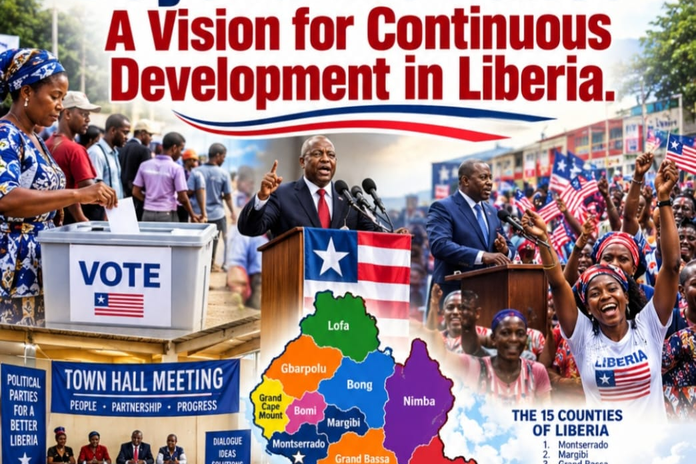
This adda posits that using the tenets of respectful democracy through peaceful demonstrations, petitions, referendums, table engagements, palava hut, flyers, and respectful door-knocking is not only commendable but also essential for the good and safety of the nation, its citizens, and investors.
These methods contrast sharply with tactics that involve ruthlessness, rudeness, destructive criticism, and the destruction of properties and human life approaches, which undermine the foundation of democratic norms and endanger public and economic well-being.
Firstly, it is essential to examine the concept of a “respectful democracy,” which is considered a democracy in which citizens and politicians engage in discussions and debates that honor the dignity of all participants, regardless of differing opinions.
It is a democracy where differences are navigated through dialogue and mutual understanding rather than through force or intimidation.
Such an environment is fertile ground for the germination of ideas that can propel a nation forward, ensuring that all voices are heard and valued in the political process.
Peaceful demonstrations stand as a cornerstone of this respectful civil engagement.
They serve as a powerful medium for expressing grievances and advocating for change.
History is replete with examples of peaceful protests leading to significant political and social transformations without the loss of life or damage to property.
The effectiveness of such movements lies in their ethical integrity and appeal to the morality of the nation.
In Liberia, opposition parties now and in the future must adopt peaceful protests as a viable and sustainable tool for political advocacy, one that underscores the nation’s commitment to human rights and democratic ideals.
Petitions and referendums are other tools at the disposal of Liberian political parties that embody respectful political engagement.
These mechanisms of direct democracy empower citizens to have a tangible impact on legislation and policies.
Petitions can marshal public support for specific causes and concerns without resorting to verbal or physical aggression.
Referendums, on the other hand, offer a platform for the electorate to express their will on significant national issues in a structured and regulated manner.
Both options provide avenues for peaceful political expression and are demonstrative of a responsive and participatory government.
Table engagements and palava hut and fliers represent grassroots approaches to democracy that emphasize local participation and inclusive decision-making.
Table engagements evoke the spirit of community roundtable discussions, giving individuals an equal opportunity to voice their opinions and contribute to building solutions.
Similarly, palava hut fliers, traditional means used to disseminate information within communities, can be repurposed to spread political messages, encouraging an informed electorate that feels more connected to the political process.
Respectful dialogue and informed conversation are hallmarks of these approaches that respect the democratic principle of the active participation of the citizenry.
Respectful door-knocking an act derived from the longstanding cultural practice of respectfully approaching a community elder by knocking on their door before entering their home is symbolic of the veneration of societal norms and etiquette in political engagement.
Translated to the modern political scene, this practice encourages politicians to approach their opposition and the general populace with deference and respect.
Such a gesture can reduce political tension and build mutual understanding, setting the tone for a more congenial political environment.
The framework of respectful democracy, constituted by these practices, is not merely a matter of moral superiority but also a strategy for national development and investor confidence.
Investors, both domestic and international, seek stability and predictability when committing capital to a country.
When they observe that political disagreements are handled with decorum and without harm to life and property, they are more inclined to invest, fostering economic growth and job creation.
On the contrary, ruthless attitudes, rudeness, and destructive criticism erode the foundations of trust and respect necessary for any functioning democracy.
When such negativity prevails, the focus shifts from constructive debate to personal attacks, which ultimately serves no one.
Moreover, the destruction of property and endangerment of human lives not only tarnishes the country’s image but also dissuades investment, leading to economic stagnation and increased hardship for citizens.
These outcomes are antithetical to the aspirations of a nation striving to ensure the well-being and prosperity of its people.
It is incumbent upon Liberia’s opposition, politicians, and political parties to champion the tenets of respectful democracy.
By adopting approaches such as peaceful demonstrations, crafting well-considered petitions, facilitating referendums, engaging in community roundtables, distributing informative palava hut fliers, and exemplifying respectful door-knocking, they can contribute significantly to a culture of political respect, constructive discourse, and mutual progress.
Such methodologies not only safeguard the nation’s interests but also help cultivate a political atmosphere conducive to democratic stability and economic advancement.
Liberia’s course toward an enduring and thriving democracy is contingent upon its political actors’ adherence to the principles of civil engagement, respectful communication, and non-violent advocacy.
Liberian opposition politicians and political parties must learn and implement these normal and respectful tenets of democracy for the good and safety of the nation, its citizens, and investors.
Embracing this approach provides assurance that properties, lives, and freedoms are secure even amidst political disagreement, paving the way for a vibrant democracy and a brighter future for all Liberians.
Support Independent Journalism
Your support helps FrontPage Africa continue delivering independent, credible, and impactful journalism. Every contribution strengthens our ability to investigate, inform, and hold power accountable while keeping quality journalism accessible to our readers.
Support our journalism or subscribe to receive the latest FrontPage Africa stories and updates.