Public leadership survives on trust. Trust is built when citizens believe that those entrusted with power are guided by truth, evidence, and measurable progress. It weakens when rhetoric replaces reality, when applause lines substitute for facts, and when data presented at the highest levels of governance cannot withstand basic scrutiny.
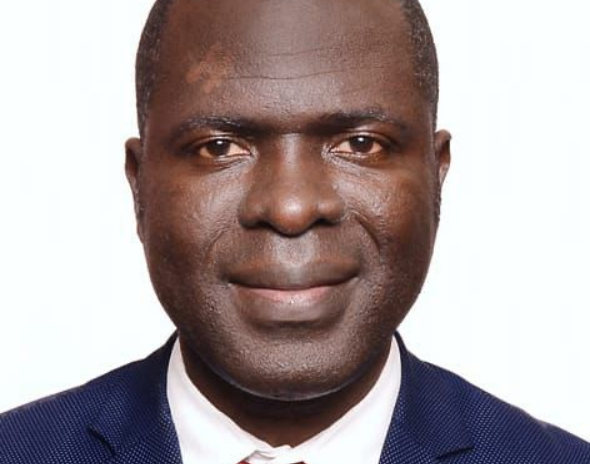
By George S. Tengbeh, contributing writer
Liberia today finds itself at a critical juncture in this regard. Recent national debates, particularly those surrounding figures presented in the President’s 2026 State of the Nation Address, have exposed a recurring challenge in our political culture: the normalization of loose talk in governance. Numbers were presented. Defenses were mounted. Counterarguments emerged. Clarifications followed. In some instances, even officials who initially defended the claims later acknowledged inaccuracies.
This sequence is not merely political drama. It is a warning signal.
A State of the Nation Address is not a campaign rally. It is not a partisan gathering. It is the constitutional moment when the President speaks to the Legislature and the Liberian people about the condition of the Republic. It should reflect the most accurate data available from ministries, agencies, and commissions. When figures are inaccurate, whether by misquotation, administrative oversight, or political enthusiasm, the damage extends beyond a single speech. It chips away at institutional credibility.
Some may argue that such discrepancies are minor or inevitable. But governance is not built on approximations; it is built on precision. When road statistics are overstated, infrastructure planning suffers. When job creation numbers are inflated or unclear, labor policy becomes distorted. When economic growth figures are not aligned with independent fiscal data, investor confidence declines. Numbers are not decorative; they are directional.
The issue before us is not about one administration alone. Liberia’s political history, across parties and personalities, reveals a pattern of bold declarations that sometimes outrun measurable evidence. Campaign seasons are filled with ambitious promises.
Annual addresses highlight achievements in superlative terms. Social media amplifies claims in real time, often without verification. Supporters defend statements passionately. Critics attack aggressively. But in the middle of this contest, the most important stakeholder, the Liberian citizen, deserves clarity grounded in fact.
Loose talk in politics is dangerous for three primary reasons.
First, it erodes public confidence. Liberia’s democratic journey has been hard-earned. From years of conflict to periods of reconstruction and reform, rebuilding trust in public institutions has required enormous sacrifice. When official pronouncements are later corrected or contradicted, it reinforces public skepticism. Citizens begin to question not only the figures presented, but the integrity of the institutions presenting them. Cynicism replaces confidence, and disengagement replaces participation.
Second, inaccurate public data leads to poor policy decisions. Governance depends on reliable inputs. If unemployment data is unclear, youth employment strategies become guesswork. If agricultural production figures are overstated, food security planning becomes flawed.
If revenue projections are misaligned with actual collection, national budgeting suffers. Development planning requires measurable baselines and transparent benchmarks. Without them, policies may be celebrated publicly yet fail quietly in implementation.
Third, loose political communication undermines democratic accountability. A functioning democracy requires that citizens evaluate leadership performance based on verifiable outcomes. When political discourse becomes saturated with unsupported talking points, meaningful evaluation becomes difficult. Debate shifts from substance to sentiment. The result is polarization without progress.
The recent controversy over the State of the Nation Address illustrates how quickly public trust can be strained. Claims regarding infrastructure expansion, employment growth, and economic performance were immediately debated in the public space. Analysts, commentators, and civil society actors requested evidence. Cabinet members offered explanations. Clarifications followed. While it is commendable when officials acknowledge inaccuracies, the larger question remains: why were such discrepancies not prevented before the address was delivered?
Political hygiene begins before the microphone is turned on.
Hygiene in governance means verifying every statistic before presentation. It means cross-checking ministry reports with independent audits. It means ensuring that communication teams work closely with technical departments. It means resisting the temptation to amplify numbers simply because they sound impressive. Strong leadership is not demonstrated by the size of a figure, but by the credibility of it.
The need for sanity in governance is particularly urgent at this stage of Liberia’s development. Our nation continues to confront unemployment, youth frustration, infrastructure deficits, agricultural underperformance, and fiscal constraints. Transparency International’s recent corruption perception assessments show incremental progress, but Liberia still ranks low globally. Incremental improvements are welcome, but they are fragile. Public trust must be nurtured deliberately.
Sanity in governance requires structural solutions.
Liberia must strengthen its independent statistical and data institutions. Agencies responsible for collecting and publishing national data should operate with professional autonomy, shielded from political pressure. Their reports must be timely, accessible, and transparent. When government leaders rely on such institutions for official speeches, the risk of inaccuracies decreases significantly.
Additionally, Parliament has a critical oversight role. Legislative committees should routinely scrutinize official claims through hearings and documented reviews. Oversight should not be adversarial for its own sake, but rigorous for the sake of national integrity. When oversight mechanisms function properly, they protect both the government and the public.
The media also bears responsibility. Journalism must move beyond headline repetition to investigative verification. Fact-checking initiatives should become standard practice during major national addresses. Rather than amplifying claims uncritically, media houses can elevate the quality of discourse by asking informed questions backed by research.
Civil society organizations, think tanks, and academic institutions likewise have a role to play. Evidence-based policy dialogue should become the norm. Universities can contribute through independent research and data analysis. Advocacy groups can engage constructively by grounding their critiques in measurable evidence. A culture of documentation and verification strengthens democracy.
However, institutional reform alone is insufficient without cultural change.
Liberian political culture must evolve to value correction over stubbornness. In mature democracies, admitting an error does not automatically weaken a leader; it can strengthen credibility. A prompt correction demonstrates commitment to truth. Defensiveness in the face of evidence, on the other hand, prolongs controversy and deepens suspicion.
Supporters of political leaders must also resist the instinct to defend every statement reflexively. Loyalty should never override logic. True patriotism requires defending the country’s integrity above any individual’s reputation. When partisanship becomes blind defense, governance becomes theatrical.
Young Liberians, in particular, must demand higher standards. A new generation is digitally connected, informed, and capable of analyzing data independently. They are less likely to accept slogans without substance. If this generation insists on fact-based governance, political culture will inevitably shift.
It is important to emphasize that this call for accountability is not an attack on governance; it is a reinforcement of it. Liberia’s democratic institutions are young but resilient. Public debate around the State of the Nation Address demonstrates that citizens are paying attention. The willingness of officials to clarify inaccuracies shows that scrutiny works. These are positive signs.
Yet we must go further.
Checkmating political loose talk means institutionalizing verification before celebration. It means aligning ambition with measurable reality. It means understanding that the strength of a democracy lies not in how loudly leaders speak, but in how accurately they report.
Liberia deserves governance that reflects discipline, integrity, and factual clarity. Our challenges are significant, but they are not insurmountable. With credible data, transparent communication, and responsible leadership, progress becomes measurable and sustainable.
The path forward is clear: speak truthfully, report accurately, correct swiftly, and govern transparently.
Political hygiene is not optional, it is foundational. Sanity in governance is not a luxury, it is a necessity. If we collectively commit to elevating the quality of our public discourse, Liberia can build a political culture where facts guide policy, accountability strengthens leadership, and trust becomes the cornerstone of national development.
The future of our democracy depends on it.
Support Independent Journalism
Your support helps FrontPage Africa continue delivering independent, credible, and impactful journalism. Every contribution strengthens our ability to investigate, inform, and hold power accountable while keeping quality journalism accessible to our readers.
Support our journalism or subscribe to receive the latest FrontPage Africa stories and updates.