Liberia’s President Joseph Nyuma Boakai is growing increasingly impatient with delays in government execution and will not hesitate to act against officials who undermine the pace of delivery, according to Finance and Development Planning Minister Augustine Kpehe Ngafuan.
By: Julius Konton
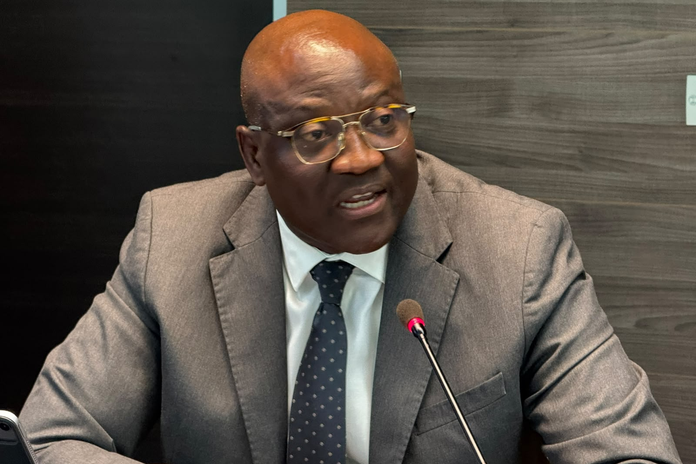
Speaking during a wide-ranging appearance on the nationally syndicated CLASS Reloaded Show, Minister Ngafuan issued one of the clearest warnings yet to public officials across ministries, agencies, and commissions: bureaucratic inertia will no longer be tolerated under the new administration.
“When delays occur without justification, they are not delaying the Minister of Finance , they are delaying the President,” Ngafuan warned. “And when the President is delayed, he will act.” he reemphasized.
From Cash Constraints to Execution Discipline
Ngafuan acknowledged that mandated delays sometimes occur due to short-term revenue constraints, a long-standing feature of Liberia’s public finance system but stressed that such delays must be clearly justified.
“In the past, revenue shortfalls forced contingency measures,” he said. “But in the current fiscal year, we are in a better position.
There will be more predictability, and therefore fewer excuses.”
According to the Ministry of Finance and Development Planning (MFDP), the 2025/2026 fiscal framework reflects improved revenue forecasting, tighter expenditure controls, and upfront funding arrangements designed to accelerate project implementation, a sharp contrast to previous years marked by mid-year budget disruptions.
Liberia’s national budget has historically faced volatility due to external shocks, weak domestic revenue mobilization, and heavy dependence on donor inflows.
However, Minister Ngafuan insist those vulnerabilities are now being addressed incrementally.
President Boakai’s Governance Style: Urgency and Accountability
Minister Ngafuan portrayed President Boakai as deeply engaged, animated, and constantly focused on execution rather than rhetoric.
“He is always thinking about big ideas, but more importantly, how to implement them,” Ngafuan said.
“This administration understands that history alone cannot move the country forward, execution does”, he reechoed.
Liberia, Africa’s oldest republic, gained independence in 1847, yet remains constrained by underdeveloped infrastructure, weak connectivity, and institutional fragility, legacies of conflict, governance breakdowns, and uneven post-war recovery.
“We stand on the shoulders of history,” Ngafuan noted, “but we cannot be trapped by it.”
Infrastructure Ambitions: A First in Liberia’s History
One of the administration’s most ambitious undertakings is national road connectivity, a chronic development gap in a country of just over 5 million people.
Ngafuan questioned why Liberia, despite its small size, remains fragmented by poor road access.
He revealed that under the Unity Party–led government, Liberia is poised to witness an unprecedented milestone:
A paved highway linking Monrovia to Harper, Maryland County
A paved corridor from Gbarnga (Bong County) to Mendicorma (Lofa County)
If completed, these projects would mark the first time in Liberia’s history that paved roads connect the capital to the country’s southeastern and northern regions , a transformative step for trade, mobility, and national cohesion.
Economic Indicators Show Tentative Recovery
Ngafuan cited several early economic signals suggesting stabilization:
Over 8,000 new businesses registered in 2025, according to data from the Ministry of Commerce and Industry
Rising bank deposit rates, signaling improved liquidity and confidence in the financial system
Increased international trade volumes, reflecting gradual recovery in imports and exports
No major budget shortfall recorded in the current fiscal cycle
“These are not miracles,” Ngafuan cautioned. “We are not where we want to be yet, but we are no longer where we used to be”, he added.
Public Sector Reforms and Pay Adjustments
In a politically sensitive move, the government has begun reversing aspects of salary harmonization, particularly for integrity and accountability institutions.
Ngafuan confirmed adjustments for:
Liberia Anti-Corruption Commission (LACC)
General Auditing Commission (GAC)
The Judiciary, including Supreme Court and Judges respectively.
He emphasized that the process is being handled “gingerly” to avoid fiscal shocks.
Additionally, officers of the Liberia Drug Enforcement Agency (LDEA) are expected to receive salary increases within the current fiscal year, a move welcomed by security sector analysts who have long flagged morale and capacity concerns.
Listening to Criticism, Managing Performance
In a rare moment of political candor, Ngafuan acknowledged public frustration and opposition criticism, saying the administration views pressure as necessary.
“Sometimes critics put fire under the rocket,” he said. “That pressure helps us”, he noted.
To improve internal accountability, the Finance Ministry has introduced suggestion boxes at strategic locations, aimed at capturing staff feedback and identifying bottlenecks in real time.
“Tell us the problem,” Ngafuan said. “We will track it.”
A Test of Delivery
As Liberia confronts high youth unemployment, inflationary pressures, and persistent infrastructure gaps, analysts say President Boakai’s insistence on speed and execution could define his legacy.
The message from the country’s economic managers is clear: the era of slow governance is under review.
Whether this urgency translates into sustained reform and measurable improvements for ordinary Liberians remains the defining question, one the Boakai’s administration will be judged on in the months and years ahead.
Support Independent Journalism
Your support helps FrontPage Africa continue delivering independent, credible, and impactful journalism. Every contribution strengthens our ability to investigate, inform, and hold power accountable while keeping quality journalism accessible to our readers.
Support our journalism or subscribe to receive the latest FrontPage Africa stories and updates.