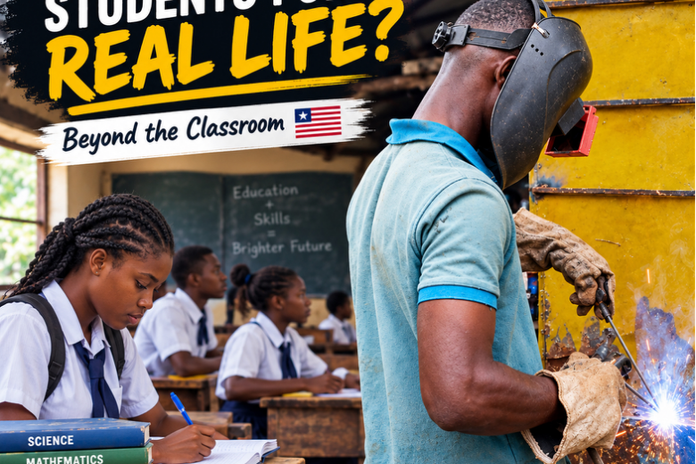
In the contemporary discourse surrounding Liberia’s progress from post-conflict turmoil to a stable and prosperous society, a distinct and pressing call emerges: Liberian intellectuals must cease their persistent immersion in the “coal mines of academia” and evolve into proactive knowledge producers.
By: Austin S Fallah, [email protected], contributing writer
The time has come for these thought leaders, educators, and scholars to engage in a transformative endeavor, a shift from mere critique to substantive contributions that can inspire the younger generation and future leaders.
By publishing books, writing intellectual articles, and producing informative literature, these individuals can serve as beacons of hope and catalysts for Liberia’s renaissance in the second quarter of the 21st century.
At the heart of this argument is recognizing that while critique can foster accountability and critical thinking, it alone will not bring about meaningful societal change.
Liberian intellectuals have dwelt in the shadow of inquiry for too long, often opting to respond to the failures of governance and societal progression without proffering solutions or innovative ideas.
This existing mentality of observation from afar rather than engagement and production has failed to utilize the vast reservoir of knowledge that Liberia’s intellectual community holds.
Thus, this discussion calls upon intellectuals to embrace their roles as knowledgeable producers who can guide and enrich the national dialogue, facilitating positive change in every facet of society.
One of the most pressing calls to action is aimed at government officials (past and present), particularly those who have played (are playing)significant roles in shaping Liberia’s governance and policy.
I urge these leaders to take the initiative to document their journeys, struggles, and triumphs through memoirs or essays, thus ensuring their contributions are etched in the annals of history.
“Anyone who stops learning is old, whether at twenty or eighty. Anyone who keeps learning stays young.” By Henry Ford.
“The only person who is educated is the one who has learned how to learn and change.” By Carl Rogers.
“Develop a passion for learning. If you do, you will never cease to grow.” By Anthony J. D’Angelo.
The importance of recording personal narratives can not be kiosk, as history remembers those who take the time to articulate their stories.
This will safeguard their legacy and serve as a vital resource for understanding governance, policy-making, and Liberia’s socio-political landscape.
Such narratives are invaluable for future generations seeking to navigate the complexities of leadership and public service.
Moreover, writing memoirs propels a culture of transparency and reflection, enabling current and future leaders to learn from successes and mistakes.
Acknowledging the past while guiding the future is crucial in a society that is still healing from the wounds of civil conflict.
By documenting their experiences, Liberian officials can contribute to a collective national narrative that establishes a sense of continuity, responsibility, and civic duty.
As we know, history is often written by those who participate in its making, and Liberian leaders have an opportunity to shape the discourse surrounding their contributions meaningfully.
Many participants in Liberian history are gone and have left nothing behind to be remembered for their contributions or roles to the nation that gave them more for the lives they lived. There is nothing to show of them. Many of Liberia’s positive ideas for growth are buried in graves, never to be retrieved.
The call for Liberian intellectuals to move beyond critique is echoed in memoir writing, as is their need to engage robustly in national discussions.
Intellectuals should be voices of criticism and leverage their expertise to actively inform public discourse.
This includes participating in positive and sensemaking forums, speaking engagements, and respectful and well-informed debates, encouraging substantive dialogue about the nation’s future.
Engaging in these conversations allows intellectuals to challenge the status quo, propose new ideas, and influence policymaking processes.
In doing so, they reaffirm their position as agents of change rather than mere observers, good for nothing, unschooled, and noisemakers—plenty of empty, ungrammatical English and slogans with nonsense.
Furthermore, Liberian intellectuals must also prioritize writing comprehensive and educational literature to uplift the nation’s academic structure.
The lessons learned from Liberia’s past, including its struggles and triumphs, must be documented and packaged in accessible formats that can resonate with younger generations.
Textbooks, handbooks, and journals focusing on economics, governance, peacebuilding, and sustainable development will equip students with the knowledge they need to navigate the complexities of modern Liberia.
Intellectuals are responsible for bridging the gap between academia and practical application by synthesizing their research and insights into actionable resources.
Education is the cornerstone of development, especially for a country like Liberia that has faced substantial challenges rebuilding its educational infrastructure after years of conflict.
Liberian intellectuals can help mold an informed, critical, and solution-oriented generation by investing time and resources into educational literature.
It cannot be stressed enough how important it is to empower young minds with learning materials that reflect the nation’s context; this fosters a sense of belonging, identity, and purpose among Liberia’s young people.
In this era of globalization and rapid technological advancement, Liberian intellectuals also have the opportunity to engage on an international platform.
The internet has dismantled geographical boundaries and has provided an avenue for sharing knowledge and experiences beyond national borders.
By writing and publishing articles in international journals, blogs, and online platforms, Liberian scholars can highlight the unique aspects of their context while participating in global conversations.
These contributions can enhance the visibility of Liberia’s intellectual landscape and position the country as a generator of knowledge rather than merely a consumer.
The imperative for Liberian intellectuals to emerge as knowledge producers also aligns with broader global trends where nations seek to cultivate their intellectual capacities for development.
Countries that have prioritized knowledge production have experienced transformative growth in various sectors.
These nations recognize that intellectual engagement is pivotal in advancing societal goals through arts and culture, social justice movements, or environmental sustainability.
By taking cues from such global exemplars, Liberia can redefine its trajectory as a society that values innovation and intellectual contributions.
The second quarter of the 21st century heralds a remarkable opportunity for Liberia to reclaim its role as a beacon of hope for humanity.
However, this transformation is contingent upon a significant shift in mindset among Liberian intellectuals, from mere critics of the status quo to proactive knowledge producers.
These thought leaders can contribute meaningfully to the nation’s development by writing memoirs, engaging in national discussions, and creating educational literature.
Their involvement is not merely a duty but a necessity for developing Liberia into a nation that thrives on knowledge, creativity, and collaboration.
Now is the time for Liberian intellectuals to rise, share their expertise, and help shape a narrative of progress and hope for future generations.
The legacy they choose to forge today will undoubtedly illuminate the path for tomorrow’s leaders, ensuring that Liberia is remembered for its past and the vibrancy of its intellectual contributions to humanity.
As we embark on this new journey, let us champion the power of knowledge and wisdom within our nation. Only through collective intellectual engagement can Liberia truly transform into a thriving society.
Support Independent Journalism
Your support helps FrontPage Africa continue delivering independent, credible, and impactful journalism. Every contribution strengthens our ability to investigate, inform, and hold power accountable while keeping quality journalism accessible to our readers.
Support our journalism or subscribe to receive the latest FrontPage Africa stories and updates.