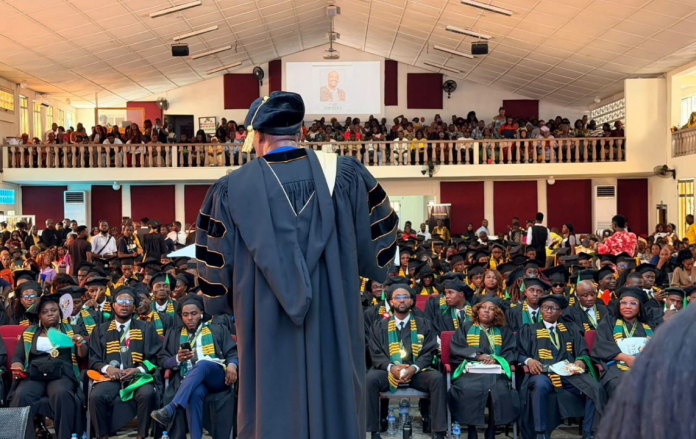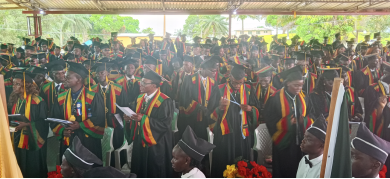
The university’s 13th Commencement Convocation brought together government officials, international guests, education stakeholders and families as President Dr. Olu Q. Menjay outlined institutional progress, Founding President Dr. Elizabeth Davis-Russell urged graduates to provide worthy service, and Valedictorian Abraham Washington challenged them to uphold integrity and contribute to national development.
HARPER, Maryland County — William V.S. Tubman University has graduated 256 students from six colleges, with university officials highlighting developments in research, technology and infrastructure while challenging the graduates to use their education to address Liberia’s development needs.
By Peter P. Toe, Jr., [email protected]
The ceremony, held at the Tubman University Pavilion in Harper on Monday, November 23, 2026, brought together international guests, including representatives of partner institutions and donor organizations, national government officials, members of the university’s Board of Trustees, the Foundational Board, local authorities, education stakeholders, parents, guardians, faculty and staff.
Delivering his institutional message, TU President Dr. Olu Q. Menjay outlined developments in research, academic technology, student services and campus infrastructure, describing them as part of the university’s efforts to improve the quality of higher education.
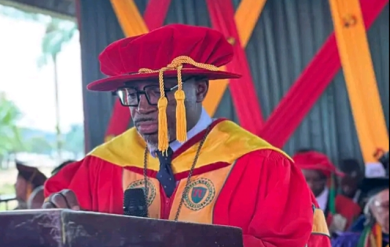
Dr. Menjay said the university had been ranked first among Liberian universities in research publications by the Association of African Universities, of which TU is a full member.
He also announced that the university’s Institutional Review Board is operational, following Federalwide Assurance approval granted on January 28, 2026, and valid through January 28, 2030.
The President said TU’s digital library provides access to more than three million electronic books, journals and research documents. He also cited the introduction of plagiarism detection software as part of efforts to strengthen academic integrity and research standards.
The President further announced plans to introduce a paid campus vacation employment program in 2027. Under the initiative, sixty students, ten from each college, will be selected to gain practical work experience and develop professional skills.
On entrepreneurship, Dr. Menjay challenged graduates to become job creators rather than depend solely on the search for employment. He said the university plans to purchase liquid soap produced by its students for institutional use beginning next year.
The President also reported renovations to the College of Education, named after Dr. Elizabeth Davis-Russell, the academic complex and the capital housing complex. He said renovation work on the university’s College of Arts and Sciences building was continuing, with half of the building fully completed and already in use by students for classes, while the first phase of a new engineering complex was nearing completion.
He also acknowledged international support, including a donation of assorted university supplies from Howard Payne University in Brownwood, Texas, which he said was being shipped to Liberia.
For her part, Keynote speaker and TU Founding President Dr. Elizabeth Davis-Russell challenged graduates to use their education to provide what she described as “worthy service” that makes a meaningful difference in people’s lives.
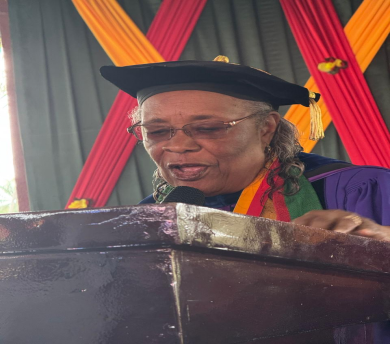
Dr. Davis-Russell, 84, traveled from California, United States, to attend the ceremony. She also chairs the university’s Foundation Board.
She reminded graduates that TU was founded on values including excellence, integrity, civility, ethics, genuine care, professionalism, intellectual engagement, dependability and trustworthiness.
She said the university’s responsibility extends beyond its immediate surroundings, emphasizing that its focus must remain local, national and international.
“This university is not parochial,” she said, adding that its responsibility was to address local and national needs while maintaining an international outlook.
She urged the graduates to use artificial intelligence responsibly to address national challenges, including food insufficiency and diseases such as malaria.
“Are you going to become a passive participant or a diligent mover?” she asked, challenging graduates to use AI ethically to improve the human condition.
Dr. Davis-Russell called on graduates to build on practical projects and community initiatives undertaken by students who preceded them.
She urged graduates of the College of Education to advance earlier efforts in early childhood education that involved parents in children’s learning and care.
Business Administration graduates were challenged to help local business owners improve their practices, while Agriculture graduates were urged to contribute to making Liberia self-sufficient in rice production.
Graduates of Nursing and Health Sciences were reminded of earlier community health screening and public education efforts, including during the Ebola outbreak. She challenged them to continue promoting good health practices in communities.
She also urged Arts and Sciences graduates to preserve Liberia’s cultural heritage and work with health professionals to address infectious diseases and high maternal mortality.
As they enter the workforce or pursue further studies, Dr. Davis-Russell cautioned graduates against allowing rumors, popular opinion or the desire for power to influence their decisions.
“Know which lines you are unwilling to cross,” she told them, warning against compromising personal values to gain access to friendship or positions of power.
She urged the graduates to regularly examine their conduct and decisions by asking whether they could be proud of the person they see when they look in the mirror.
Valedictorian Abraham Washington used his address to reflect on his journey through poverty, hunger and financial hardship, saying determination and the support of others helped him reach graduation.
He paid tribute to his late mother, who raised and supported him throughout his education but died shortly before the ceremony.
Washington said her prayers, sacrifices and guidance would remain part of his success story.
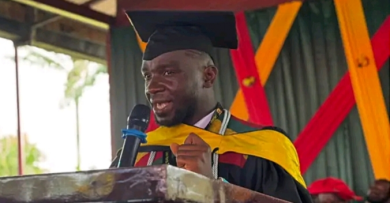
Addressing his fellow graduates, he said the value of their education should not be measured only by the degrees they receive, but by how they use their knowledge to improve the lives of others.
He called on graduates to reject corruption, tribalism, political intolerance and the abuse of public resources, urging them to demonstrate integrity and accountability in their professional and personal lives.
Washington also acknowledged the contributions of the university’s international partners and sponsors, including the Boe Peace Foundation Africa, Waz Foundation, MOPP and other supporters.
He challenged graduates from the different colleges to apply their knowledge to national problems, including challenges in education, business, agriculture and healthcare.
“If our education cannot improve the lives of others, ask yourself, what greater purpose should my education serve?” he asked.
He concluded by reminding his classmates that while their academic journey at the university had ended, their responsibility to learn, serve and lead was only beginning.
With 256 graduates now entering the workforce and other areas of professional life, attention turns to how effectively their academic training will translate into practical solutions to Liberia’s longstanding challenges, from unemployment and food insecurity to poor healthcare, weak infrastructure and governance concerns.
Their contributions in the coming years will ultimately test the value of the education they have received and the university’s promise of producing graduates capable of making a difference.