Summary
- Liberia is offering 15 offshore petroleum blocks to investors while pledging to expand marine conservation and protect coastal livelihoods.
- Fishing communities face existing pressures from coastal erosion, declining catches and industrial fishing, while residents of West Point say they have not been directly consulted about the offshore oil and gas plans.
- With plans for two marine protected areas and four co-managed fisheries areas, questions remain about their locations, potential overlap with petroleum blocks, environmental safeguards and how the government will protect coastal communities.
By Aria Deemie
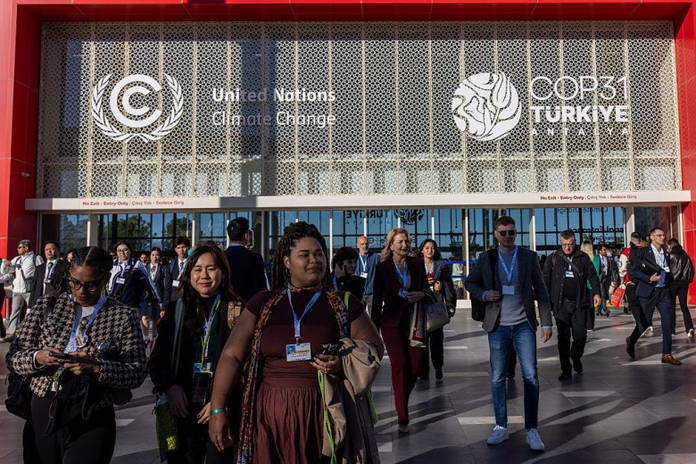
As world leaders negotiate stronger commitments to protect the oceans at COP31 in Türkiye, Liberia is offering 15 offshore petroleum blocks to investors while pledging to expand marine conservation and protect coastal livelihoods.
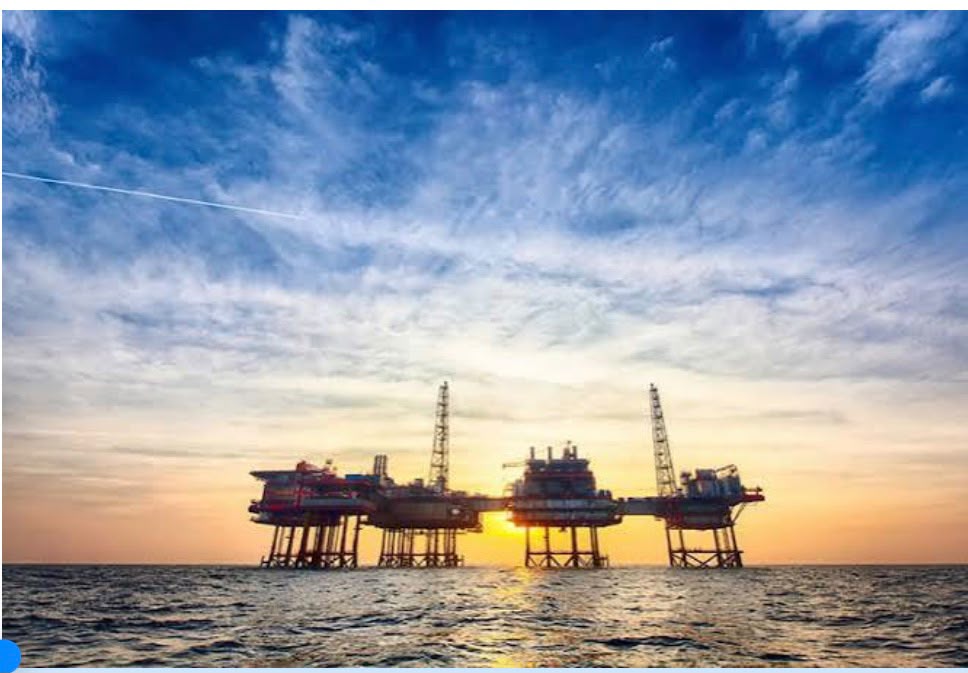
The Liberia Petroleum Regulatory Authority launched its 2026 Offshore Direct Negotiation Licensing Round in October, offering 12 blocks in the Liberia Basin and three in the Harper Basin. Interested companies have until April 15, 2027, to submit letters of intent. The round is intended to attract exploration investment, with the government promoting the country’s offshore petroleum potential to international investors. The LPRA licensing invitation provides details of the blocks and application process.
“The oceans are central to their chances of survival,” Australia’s Climate Change and Energy Minister Chris Bowen said at a COP31 presser, referring to countries and communities whose existence is threatened by rising ocean temperatures and other climate impacts. “We’ve said this would be the implementation COP, the COP of implementation and acceleration.”
For Liberia, the negotiations carry implications beyond climate diplomacy. Its offshore licensing plans are unfolding alongside commitments in its 2035 Nationally Determined Contribution, or NDC 3.0, to establish two marine protected areas and four co-managed fisheries areas by 2035. The country also depends on marine ecosystems for food, employment and income, particularly in coastal communities where fishing and fish processing support household livelihoods.
The potential environmental risks of offshore exploration concern Bruna Campos, an oil and gas campaigner at the Center for International Environmental Law. She said activities associated with oil exploration and production can affect marine life through several pathways, including seismic surveys, drilling waste and accidental spills.
Seismic surveys use powerful sound waves to map geological structures beneath the seabed. Campos said the noise can disturb marine mammals such as whales and dolphins, while other impacts can affect smaller organisms that form the foundation of marine food chains.
One of those groups is zooplankton, tiny drifting animals and larvae that provide food for fish and other marine species. Campos said disruption to these organisms could affect the wider food web.
“So if you’re having a reduction in zooplankton, you’re basically having a reduction on all the fish,” she said.
Drilling can also introduce muds and chemicals into the marine environment, while a blowout or other major accident could release oil into surrounding waters. Campos referred to the Deepwater Horizon disaster in the Gulf of Mexico as an example of the risks associated with offshore exploration. The drilling rig exploded while BP was completing an exploratory well, killing 11 workers. Oil continued leaking from the well for 87 days, releasing millions of barrels into the sea.
Liberia has a history of offshore exploration, but the International Tanker Owners Pollution Federation reported in its Liberia country profile that there did not appear to have been any major oil spills in Liberian waters. The profile is dated October 2008, however, and does not provide a record of incidents covering the years since then.
Campos said marine ecosystems cannot be treated as isolated spaces when assessing risks.
“We don’t think that there is a possibility of safeguarding by not doing it in a specific area or not doing it, because basically, the impact will be felt everywhere,” she said. “In the marine environment there are no borders.”
Liberia’s NDC 3.0 also commits the country to identifying endangered and vulnerable fish species and mapping areas important to their protection by 2028. It calls for increased research into climate-related pressures on fisheries and stronger management systems for fishing communities.
However, publicly available information does not establish where the two planned marine protected areas will be located or whether their proposed boundaries overlap with any of the 15 offshore blocks.
The government has not publicly provided a map showing how the licensing areas relate to planned conservation zones and important fishing grounds.
A 2022 assessment by the International Union for Conservation of Nature identified Margibi Mangrove, Cestos-Senkwehn and Grand Kru-River Gee as potential marine protected areas in Liberia, although the government has not said which two locations it plans to designate.
For people whose livelihoods depend on the sea, the stakes are immediate. In West Point, one of Monrovia’s largest coastal communities, fishing and fish processing remain important sources of income, while erosion continues to threaten homes, landing areas and other infrastructure.
Seaweed and other debris along the shoreline in West Point, Monrovia. Residents say coastal conditions and declining fish catches are adding to the challenges facing fishing communities.
A 2025 environmental and social impact assessment for the Green Climate Fund-supported Monrovia Metropolitan Climate Resilience Project identifies possible restrictions on fishermen’s access to landing sites and beaches, as well as disruption to women engaged in fish processing and trade, as risks that could arise during construction of the coastal defense structure. The assessment says the project design includes protected areas for fishing boats to launch and land.
Thomas Tweh, a West Point community leader, estimated that 92 percent of the community depends on fishing, with the remaining 8 percent relying on other activities such as petty trade and support from friends and relatives.
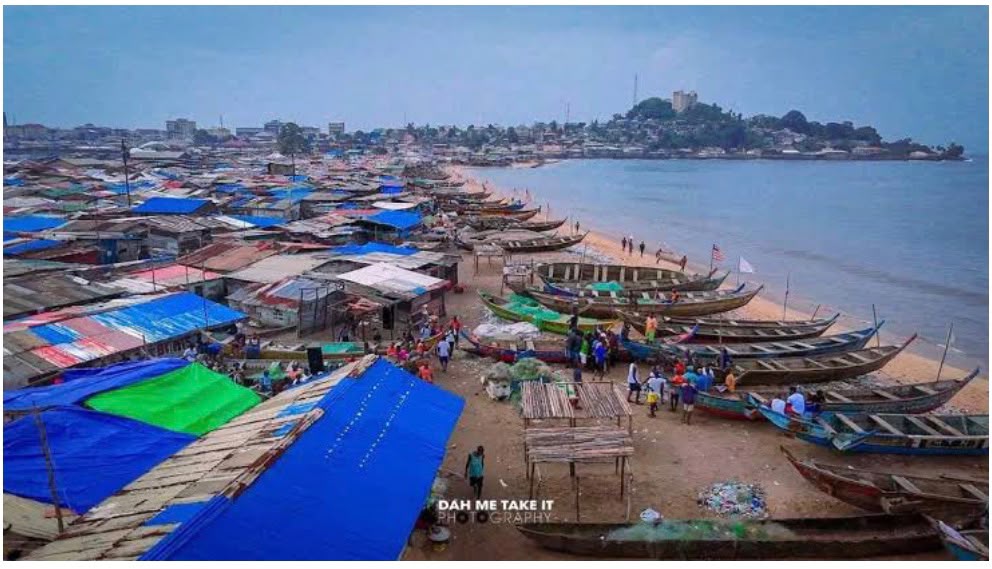
“Today the fishing community is experiencing a bigger challenge because of less quantity of catch due to climate change and other ocean related forces,” Tweh said. He said lower catches reduce income and worsen food insecurity among fishing households.
On the proposed offshore petroleum activities, Tweh said residents had not been adequately informed or consulted. He described the plans as new to the community and said there had been “no direct benefits, no community engagement at the moment.”
He wants the government to consider assistance for coastal communities if offshore operations affect fishing activities and income. He said a special financial support package should be designed for communities whose livelihoods depend on the coast.
The pressures facing fishing communities extend beyond Monrovia. Liberia’s national disaster risk reduction strategy identifies coastal erosion hotspots in several counties, including Grand Cape Mount, Grand Bassa, Margibi, Grand Kru, Rivercess, Sinoe and Maryland. Vulnerable communities listed in Maryland include Harper, Fish Town, Rock Town and Middle Tow.
A 2025 study published in npj Ocean Sustainability examined pressures on small-scale fishing communities along Liberia’s coastline. Based on 337 interviews with fishers, fishmongers and cold-storage employees across all coastal counties, alongside fisheries data from 2004 to 2019, it documented competition between small-scale fishers and distant-water industrial trawling fleets.
Of the fishmongers interviewed, 95 percent reported declining fish availability in their communities, while 96 percent said market prices had increased. Although the study focused on industrial fishing rather than offshore oil and gas, its findings highlight the pressures already facing coastal livelihoods and the need to manage competing demands on Liberia’s marine resources.
A separate report by the Environmental Justice Foundation, published in September 2025, mapped 73 fish landing sites and public fish-smoking facilities across Grand Cape Mount, Margibi, Grand Bassa and Grand Kru counties. It identified coastal erosion, mangrove destruction and insecure land rights as threats to fishing communities. The report said erosion was already destroying landing sites in Robertsport, Buchanan and Marshall, increasing costs for fishers and threatening important infrastructure.
In Maryland County, three communities in Harper District, Fish Town, Worteken and Kablakeh, signed a conservation agreement in June 2025 to protect mangroves and promote sustainable fishing, with support from Conservation International-Liberia.
Experiences elsewhere in Africa offer cautionary examples. In Ghana, an October 2026 investigation by The Fourth Estate reported that the country’s first marine protected area overlaps with existing offshore oil blocks. Petroleum and fisheries regulators discussed the overlap after the protected area was declared, while its management plan and zoning remained unfinished.
In Senegal, Greenpeace Africa reported in September 2026 that coastal communities were organizing against the effects of expanding oil, gas and mining projects on fishing grounds and local livelihoods. In Saint-Louis, residents raised concerns about access to fishing grounds and offshore incidents linked to the Grand Tortue Ahmeyim gas project. Communities in Djiffer also raised concerns about the proximity of the Sangomar oil field and the effects of offshore operations.
In Nigeria’s Ogoniland, a United Nations Environment Programme assessment documented extensive pollution after decades of oil operations, including damage to mangroves and fish habitats.
Liberia’s own coastal protection efforts are also under discussion at COP31. Speaking during a side event at Liberia’s pavilion, Public Works Minister Roland L. Giddings called for greater use of locally available rocks and boulders to protect vulnerable sections of the coastline. He questioned why Liberia would allow foreign companies to extract rocks locally and then sell them back to the country for coastal protection.
“We have rocks in Liberia!” Giddings said. “Our coastline will be eroding and we’re just sitting and the rocks are there and foreigners come here, mine them and then sell them to us?”
He pointed to Cape Coast in Ghana as an example of a place where boulders have been used for coastal protection. His comments focused on local solutions to erosion; he did not announce a funded or approved plan for the proposed works.
Liberia has also received international support for marine conservation through the Blue Ocean Program, funded by Sweden and implemented by Conservation International-Liberia. The program began in December 2019 and is scheduled to end on December 31, 2026.
According to the Liberia Development Dashboard, program results reported for 2023 and 2024 include microloans that supported 506 women to expand their businesses and livelihoods, as well as a revolving fund maintained by the Grandcess Fishing Cooperative that supported 45 women. The program also supported training for 30 professionals in mangrove restoration at the University of Liberia.
Its other work has included support for marine and coastal governance, community stewardship and the development of a national blue economy framework. Its scheduled end makes the question of how these gains will be sustained important as Liberia pursues new investment in its marine environment.
At COP31, African negotiators have continued to emphasize the need for climate finance, technology transfer and capacity building to help countries implement their climate commitments. Civil society representatives have also called for stronger action to move away from fossil fuels and protect vulnerable communities.
As COP31 negotiations entered their final stages on November 19, Mohamed Adow, founder and director of Power Shift Africa, a Nairobi-based climate and energy think tank, criticized revisions to the proposed final agreement that removed references to fossil fuels and weakened commitments on adaptation finance. Speaking to journalists in Antalya, he warned that the summit risked becoming a “ghost COP” if the revised text remained unchanged. “This new text has gone backwards from the one released earlier in the week. If this version of the text remains, it will be a ghost COP. The summit will have nothing to show for what happened here,” he said, according to Power Shift Africa’s COP31 daily coverage.
The Environmental Protection Agency’s Executive Director, Emmanuel King Urey Yarkpawolo, was contacted through WhatsApp about the offshore licensing round, environmental safeguards and the relationship between petroleum development and Liberia’s marine conservation commitments. He said he was occupied with COP31 activities and would revert, but had not provided substantive answers by the time of publication.
The Director General of the National Fisheries and Aquaculture Authority, J. Cyrus Saygbe Sr., was also contacted for comment on fisheries protection and the potential implications for fishing communities but had not responded by publication.
The communications team of the Liberia Petroleum Regulatory Authority was contacted by email with a request for comment from its Director General, Marilyn T. Logan, on the licensing round, environmental assessments, safeguards and the relationship between the offshore blocks and planned marine conservation areas. No response had been received by publication.
As COP31 negotiations continue, Liberia faces the task of turning its ocean and climate commitments into protections that can be measured and enforced. That means identifying conservation areas, assessing environmental risks, making information about offshore activities accessible and ensuring that coastal communities are consulted before decisions affecting their livelihoods are made.
For communities whose food and income depend on the sea, the outcome will be measured not only by the investment attracted offshore, but also by whether the waters and fisheries they depend on remain protected.
This story was produced as part of the COP31 Climate Change Media Partnership, a journalism fellowship organized by Internews’ Earth Journalism Network, Informed Earth and the Stanley Center for Peace and Security.