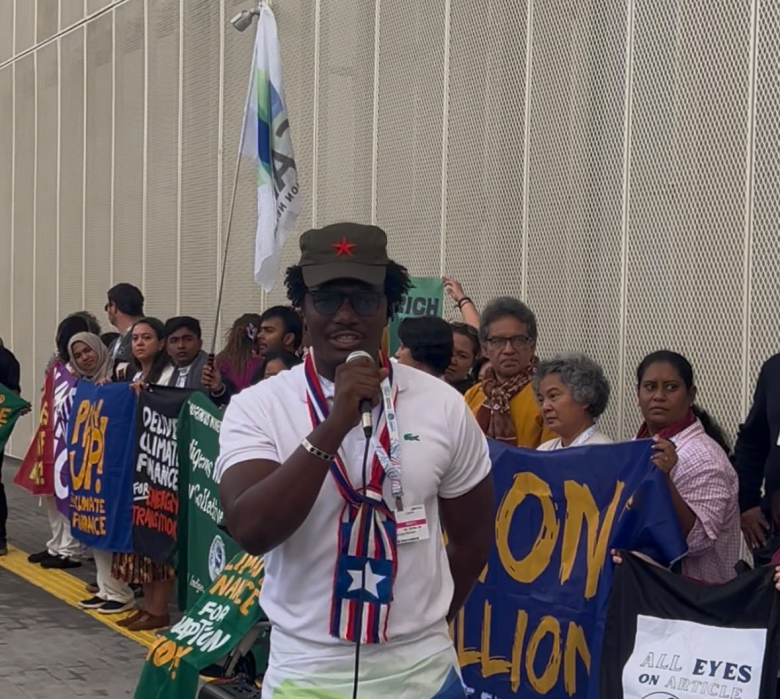
ANTALYA, TÜRKİYE — The Chairman of Liberia’s Student Unification Party (SUP), Odecious Mulbah, has joined international youth climate advocates in organizing a protest at the 31st Conference of the Parties to the United Nations Framework Convention on Climate Change (COP31), demanding increased climate finance for countries of the Global South.
By Francis G. Boayue
Mulbah, who is representing Liberia at the global climate conference in Türkiye, worked alongside international colleagues, including Tylara Pinheiro from France, to plan and organize the protest aimed at drawing global attention to the growing climate finance inequality confronting developing countries.
The protest seeks to amplify the voices of vulnerable nations, particularly African countries, which contribute comparatively little to global greenhouse gas emissions but continue to suffer disproportionately from the devastating consequences of climate change, including flooding, rising temperatures, coastal erosion, food insecurity and environmental degradation.
Speaking on the significance of the protest, Mulbah emphasized that climate finance must be treated as an obligation rooted in historical responsibility rather than an act of generosity toward vulnerable countries.
“We contribute the least to global greenhouse gas emissions, yet we suffer the most from the devastating impacts of climate change. Climate justice is not a philanthropic display. It is a matter of responsibility and justice,” Mulbah stressed.
His participation reflects a broader effort to connect student activism, youth leadership and international climate advocacy in advancing the interests of developing countries.
As Chairman of SUP, Mulbah has consistently emphasized social justice, accountability and the importance of mobilizing young people around issues affecting the future of Liberia and the broader African continent.
The protest at COP31 represents another platform through which young leaders from the Global South are demanding meaningful international commitments, equitable climate financing and stronger support for communities already experiencing the devastating effects of climate change.
At the center of the campaign is a clear demand: wealthy and historically high-emitting nations must honor their climate obligations and provide accessible, adequate and predictable financing to vulnerable countries.
For Mulbah and fellow climate activists, the message is unequivocal — climate justice must translate into concrete financial commitments, not merely political promises and diplomatic declarations.