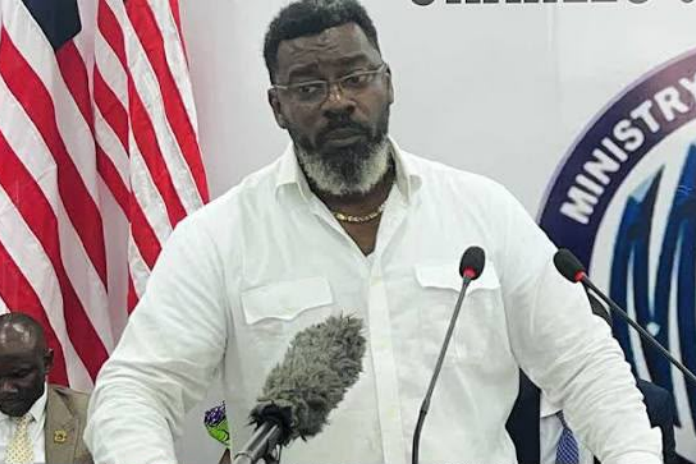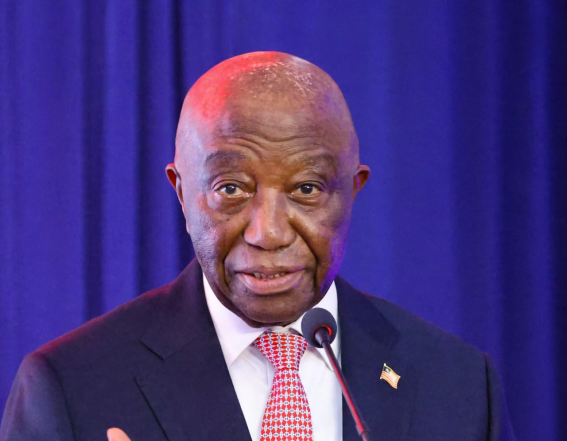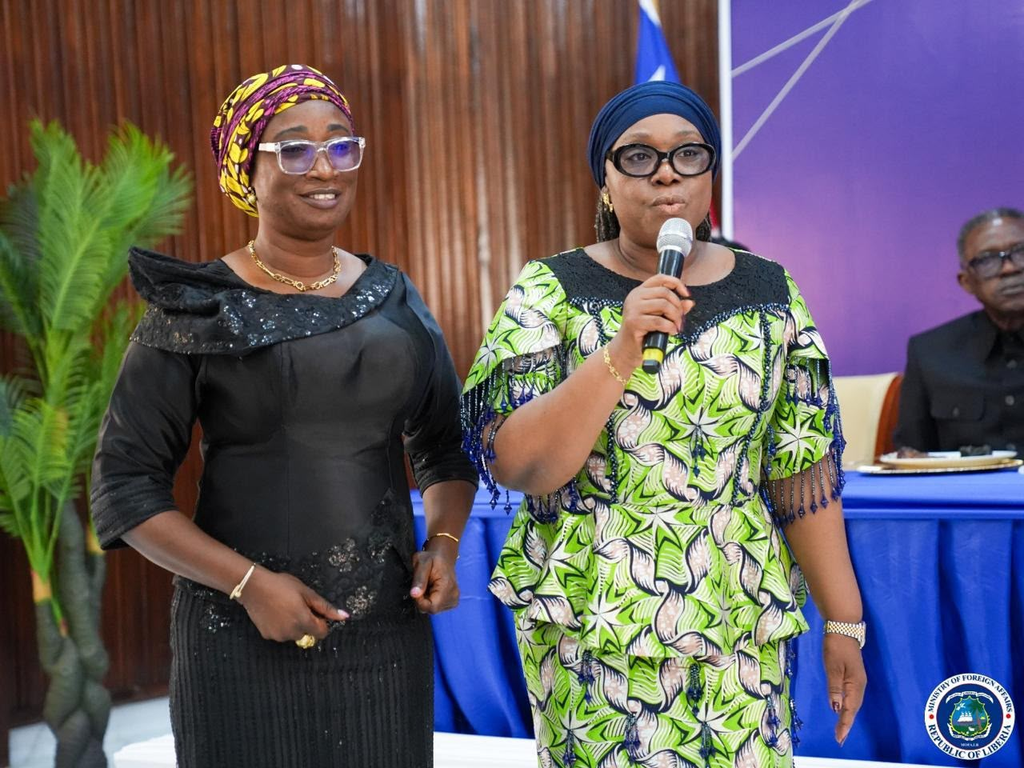
Monrovia – For 179 years, Liberia conducted its foreign relations without a written foreign policy. On Tuesday, November 17, that changed. The Ministry of Foreign Affairs launched what it calls the first foreign policy document in the nation’s history, and with it a Gender-Responsive Foreign Policy that the government bills as Africa’s first.
By Rodney D. Sieh
The launch drew foreign ministers, Nobel Laureate Leymah Gbowee and leading figures of Africa’s women’s movement to Monrovia. It gives Foreign Minister Sara Beysolow Nyanti a signature achievement weeks before Liberia takes the presidency of the United Nations Security Council.
But a close reading of the government’s own announcement raises questions the ceremony did not answer. Who pays for it? How will success be measured? Can it survive a change of government? And how does a policy built around protecting rights square with some of the deals Monrovia has already struck abroad?
From presidential statements to a written policy
Since independence in 1847, Liberia’s foreign policy has lived in the speeches of its presidents rather than in a document. According to the Foreign Ministry, the last update came in 1971, when William R. Tolbert, Jr. restated the country’s foreign policy after succeeding William V. S. Tubman.
Much has changed since Tolbert. The Organization of African Unity became the African Union. ECOWAS and the Mano River Union took on larger roles.
Liberia went through civil war, peacebuilding and democratic consolidation, and is now an elected member of the UN Security Council for 2026–2027.
A written policy is a genuine step. It gives diplomats, investors and partners something to hold the government to. The ministry says the drafting was led by seasoned diplomats, including former ministry officials, with input from ambassadors and missions abroad.
One detail stands out. Cabinet endorsed the policy on May 28, 2026, almost six months before Tuesday’s launch. The ministry has not explained the delay, and the press release does not say where the public can read the full document.
Is it really Africa’s first?
The government’s headline claim needs a qualifier. In 2021, Libya’s then Foreign Minister Najla Mangoush announced at the Generation Equality Forum in Paris that Libya was committing to a feminist foreign policy. At the time, gender-policy trackers recorded Libya as the first African nation to do so.
Libya’s commitment, however, never became a working policy. Analysts noted that its transitional Government of National Unity could not implement it alone, and Mangoush was dismissed in 2023.
Liberian officials have themselves used more careful language in the past. When it validated its feminist foreign policy roadmap, the ministry described Liberia as the first country in Africa to formally commit to a feminist foreign policy, following a government decision in February 2024. The defensible claim is narrower than the headline: Liberia is the first African country to formally adopt and launch a written gender-responsive foreign policy.
Joining a club that is shrinking
Liberia is adopting a feminist foreign policy just as several of its pioneers walk away from it. Sweden coined the concept in 2014 and dropped it in 2022 after a change of government. The Netherlands, Argentina and Germany have since followed, making Germany the fourth country to introduce such a policy and then abandon it.
The pattern is consistent: the policies were tied to a party or a minister, and they did not outlive them. A November 2025 report on the field asked openly whether feminist foreign policy was facing its obituary. Mexico, Chile, Colombia and Spain remain among the active adopters.
The lesson for Liberia is direct. The policy carries the stamp of President Joseph Boakai and Minister Nyanti. Unless it is written into law, funded in the national budget and built into the Foreign Service, it could be shelved by whoever wins the 2029 election.
What the policy promises
The broader foreign policy rests on six priorities: economic diplomacy, national sovereignty, regional integration, peace and security, citizen protection and international cooperation.
The gender-responsive component, which dominates the government’s announcement, has five pillars:
* Women’s rights
* Women’s economic empowerment and inclusive trade
* Women, peace and security
* Climate justice and natural resource governance
* Women’s political representation and leadership
The ministry says the policy grew out of a review that found gaps between Liberia’s gender-equality commitments and the actual presence of women in foreign policy and diplomatic leadership. The Ministry of Gender validated it, and UN Women supported the process, which has run through stakeholder dialogues since at least 2025.
Earlier ministry events produced concrete promises that can now be tested. These include quarterly gender audits at the Foreign Ministry, a Women in Diplomacy Fund, and plans to revise the Foreign Service Manual to require gender parity in training and promotions.
What the announcement leaves out
No price tag. The press release names no budget, no timeline and no targets. A policy without a budget line is a statement of intent, and the government’s reliance on UN Women raises the question of how much of it Liberia owns.
No role for the Legislature. The policy was endorsed by Cabinet, not passed into law. That makes it easy to launch and just as easy to reverse.
Little on hard diplomacy. Six broad priorities get a single sentence. There is nothing on how Liberia will manage relations with the United States and China, its place in a divided ECOWAS, or how economic diplomacy will bring in investment.
The citizen-protection test. “Citizen protection” is listed as a core priority. Yet the government has agreed to accept third-country deportees from the United States, a deal now under scrutiny in the US Senate through Resolution 886. The ministry has not said how that arrangement fits the new framework.
Women at home. A foreign policy that puts women’s political representation at its center will be judged by Liberia’s own numbers. Women remain a small minority in the Legislature, and the ministry has not published how many of Liberia’s ambassadors and senior diplomats are women.
The first test: December at the Security Council
The policy’s first real test comes quickly. Liberia holds the Security Council presidency in December, giving it control of the Council’s agenda for a month. Ministry officials have already pledged to prioritize women’s issues during Liberia’s Council term, and in September President Boakai launched the country’s third National Action Plan on Women, Peace and Security in New York.
If the December agenda carries the policy’s pillars into the Council chamber, the launch will look like the start of something. If not, critics will call it a ceremony.
The questions for the government are plain:
1. How much will the policy cost, and where is it in the budget?
2. Where can the public read the full document?
3. What will change in Liberia’s embassies by the end of 2027?
4. Will the government ask the Legislature to write the policy into law so it outlasts this administration?
5. Why did the launch come almost six months after Cabinet’s endorsement?