Monrovia — Former Liberian President Ellen Johnson Sirleaf has issued a strong warning to those in positions of power, urging them to prioritize national unity, political inclusion and equal opportunities as essential safeguards against a return to conflict.
By Patience Jones
Sirleaf cautioned that Liberia’s hard-earned peace must not be taken for granted, emphasizing that maintaining stability requires deliberate efforts from political leaders and every Liberian.
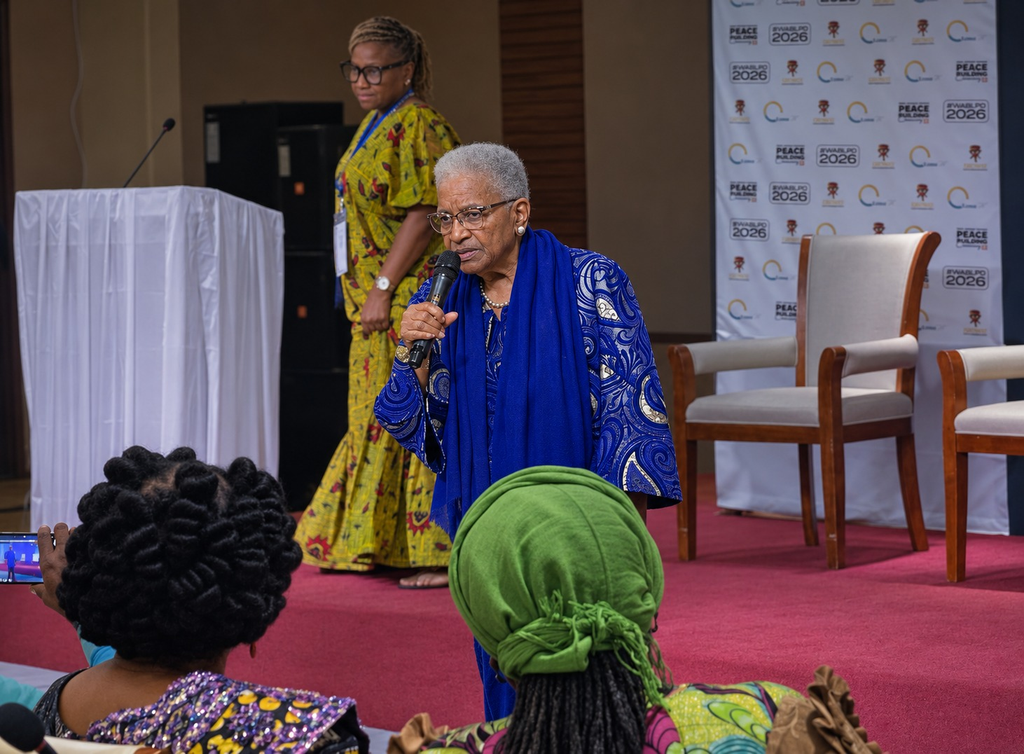
“My message is to those in power: Beware. You need inclusion. You need equal opportunity. You need true unity,” Sirleaf declared while delivering a goodwill message at the 2026 West African Women Peacebuilding Convening in Monrovia.
The conference, held at the Ministerial Complex Conference Hall under the theme, “Honoring the Past, Strengthening the Present, and Co-Designing the Future of Women’s Leadership for Peace,” brought together women leaders and peace advocates to reflect on women’s contributions to peacebuilding and discuss strategies for sustaining peace across the West African region.
The GBOWEE Peace Foundation Africa hosted the gathering, with LUMA serving as co-host.
Reflecting on Liberia’s turbulent history, Sirleaf reminded participants that the country’s peace before the April 12, 1980, coup was not built on genuine national unity, inclusion, or equal opportunities.
She explained that the absence of these fundamental values eventually undermined the country’s stability, leading to decades of conflict, destruction of infrastructure, weakened institutions and widespread hopelessness.
According to her, Liberia’s experience demonstrates that peace cannot survive on the mere absence of war; it must be supported by justice, national cohesion, equal participation, and opportunities for all citizens.
Sirleaf also acknowledged the critical role Liberian women played in the country’s peace process, particularly during the negotiations in Accra, Ghana, where women peace advocates remained engaged despite difficult circumstances and uncertainty surrounding the outcome of the talks.
She credited the women who participated in the peace negotiations and continued advocating for an end to the conflict, noting that their determination helped create the conditions for Liberia to begin rebuilding.
“When the peace talks were going on in Accra and there were difficulties, and we didn’t know whether the war leaders would ever give up on Liberia, you and your group of women sat for days and nights,” she recalled.
The former president stressed that rebuilding Liberia after the war required more than restoring damaged infrastructure and institutions. It also demanded a new approach to leadership, with women taking an active role in restoring hope and rebuilding the nation.
Sirleaf, who became Africa’s first elected female head of state in 2006, said the country’s continued peace should be celebrated but must also serve as a reminder of the collective responsibility to protect it.
She noted that Liberia has enjoyed 23 consecutive years of peace, urging citizens not to become complacent about the progress made since the end of the civil conflict.
“Peace is not enough. That peace must be accompanied by unity, by inclusion, by equal opportunity. It is through unity that it will last,” she emphasized.
Beyond those occupying the highest political offices, Sirleaf challenged every Liberian entrusted with responsibility to recognize their role in protecting the country’s stability.
She argued that the responsibility for sustaining peace does not rest solely with the president or other national leaders but extends to every citizen, regardless of position or influence.
“It’s not just the head that carries the banner. It’s not just the head that has the responsibility. It’s the responsibility for each and every Liberian to know that peace is what we need, but peace is what we have to earn,” she said.
Sirleaf further urged participants to leave the convening with renewed commitments to patriotism, gender equality, inclusion, and national development.
She also acknowledged the difficult period Liberia is navigating, calling on citizens to work collectively toward addressing the country’s challenges and restoring the aspirations that inspired voters during the 2005 elections.
Her message places renewed attention on the responsibility of political leadership to preserve Liberia’s post-war stability, particularly through inclusive governance and equal participation in national decision-making.
As women leaders from across West Africa gathered to reflect on their contributions to peacebuilding, Sirleaf’s warning served as a reminder that the preservation of peace requires more than political declarations. It demands responsible leadership, genuine inclusion, equal opportunities, and the commitment of every citizen.
Support Independent Journalism
Your support helps FrontPage Africa continue delivering independent, credible, and impactful journalism. Every contribution strengthens our ability to investigate, inform, and hold power accountable while keeping quality journalism accessible to our readers.
Support our journalism or subscribe to receive the latest FrontPage Africa stories and updates.